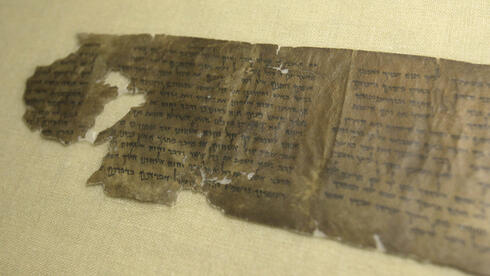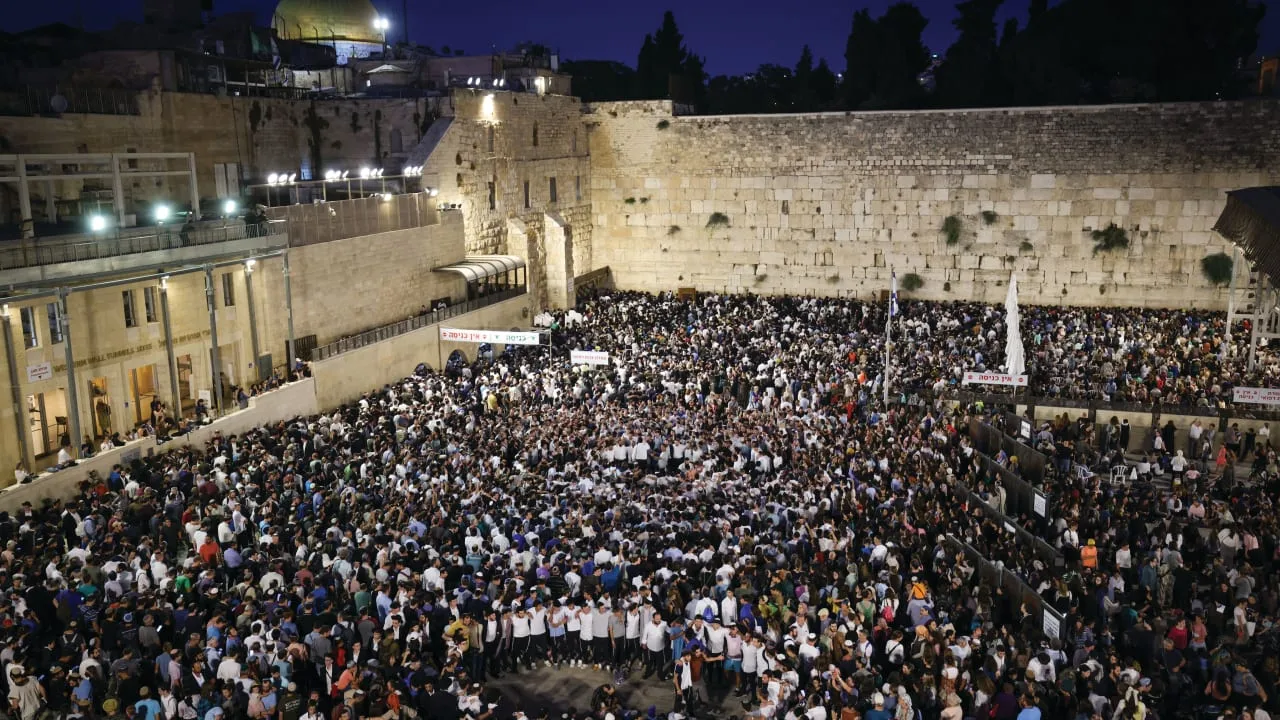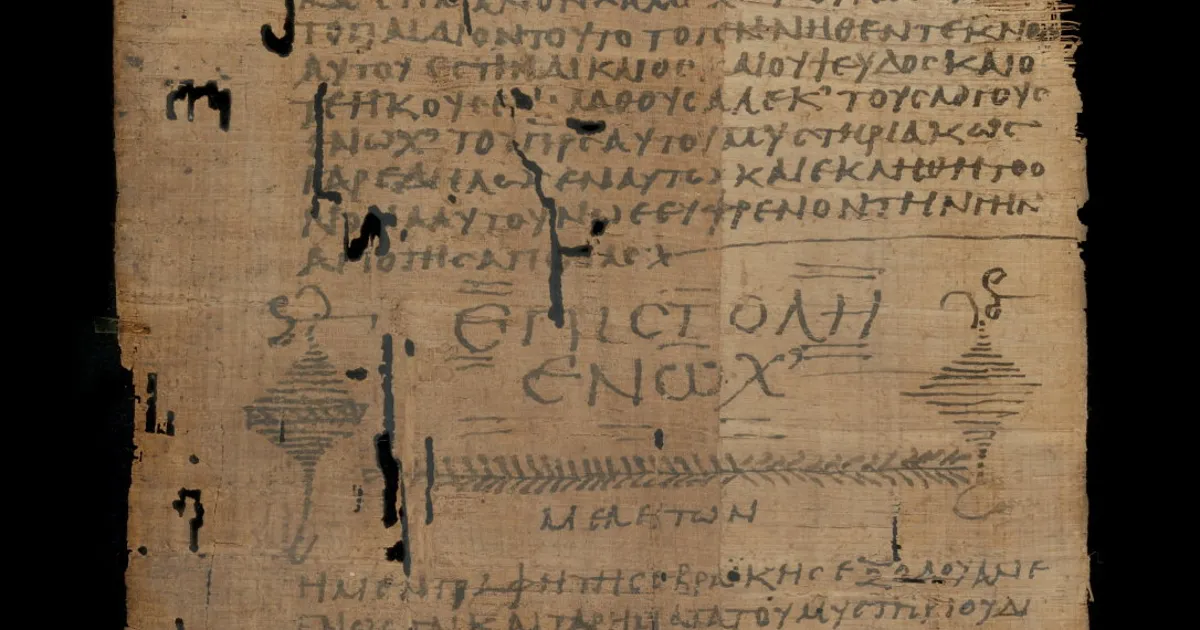
While grimly pitted against the Romans, the Jews hated each other too, which may have led some to adopt an alternative calendar handed down to Moses, according to the apocryphaThe ancient Jews were a fractious bunch, they were. And opinionated. This may explain how the 364-day calendar described in apocryphal texts found among the Dead Sea Scrolls came into being. It was mathematically beautiful, but its use would have led to a disturbing creep in time, which has led scholars to wonder. Perhaps the 364-day "divine calendar" described in the Book of Jubilees and Enoch, among others, and dubbed the "Qumran calendar" (even though it predated the village of Qumran by 200 to 100 years) was a mere mental exercise? Was it actually used? If so, why?Prof. Eshbal Ratzon of Tel Aviv University believes that the 364-day calendar predated sectarianism in Judaism. She posits that it was used, a century or two after its compilation, by the split-off sect that established itself at Qumran. It may even have been central to the controversy that drove these Jews to isolate themselves from their peers in the desert by the Dead Sea. The paper on the possible provenance and use of the 364-day calendar was published in the Hebrew-language Tarbiz Quarterly for Jewish Studies.A fragment from Chapter 23 of the Book of Jubilees. It didn't make the cut for the Jewish canon. Credit: Shai Halevi, Israel Antiquities Authority A fragment from Chapter 23 of the Book of Jubilees. It didn't make the cut for the Jewish canon. Credit: Shai Halevi, Israel Antiquities Authority Better call Sol Humankind has been designing calendars based on solar and lunar cycles for thousands of years; how many thousands we do not know, but more than a few. It hasn't been a secret that a year is 365 days long for, at the very least, 5,000 years. Early Egyptians, for instance, observing star systems and seasonal flooding, invented a "civil" calendar with 12 months of 30 days, plus five festival days = 365. Not bad. Come the Iron Age, the Jews used a lunar calendar and had to adjust it to the diktats of Sol, because 12 lunar months are about 12 days shorter than the solar year. Without adjustment, one would wind up with seasonal creep. How was adjustment done? Probably by the priests in Jerusalem, as Haaretz writer Elon Gilad has explained. For example, take the official onset of spring. The priests would rule at the end of the 12th lunar month, if sowing season had arrived or not. If it had, messengers were sent out to announce that Passover was two weeks away. If not? They'd add a leap month, and messengers would only be sent out a month later.Prof. Eshbal Ratzon. Credit: Tel Aviv UniversityProf. Eshbal Ratzon. Credit: Tel Aviv UniversityWhat an opening for potential error and hubris. At some point, Ratzon explains – apparently as early as the fourth or third century B.C.E., a group of Jews created a mathematically beautiful calendar of 364 days, a number perfectly divisible by seven; the year consisted of 52 perfect weeks; and every holiday always fell on the same day of the week. Passover always fell on a Wednesday, for instance, obviating the heated squabbling during the Second Temple period over what to do when Passover fell on Shabbat, when one isn't supposed to kill sheep for the deity, let alone burn the offering. Thus the 364-day calendar invention would have eliminated the need for subjective views over whether a new month or season had officially arrived. Reality, however, had its own agenda. That 1.25-day discrepancy from the astronomic calendar meant that the longer the "divine" calendar was used, the wider the gap between the 365-day and 364-day count would grow. After some decades, Passover would be marked in the winter rather than spring, Sukkot in spring instead of fall, and so on. That is terrible. Like a clock that misses a minute every hour – after some time, it loses connection with reality. Qumran, the archaeological site turned national park, in 2019. Credit: Moti MilrodQumran, the archaeological site turned national park, in 2019. Credit: Moti MilrodSo scholars began to wonder if the weird calendar had been a theoretical exercise. It bears keeping in mind that the ancient Jews, not necessarily the so-called "Dead Sea sect," were deeply intrigued by astronomical matters of the sun, moon and time. Note that the Dead Sea Scrolls date from the fourth or third century B.C.E. to the second century C.E. and were not the product of any one sect; and that no less than 20 of the scrolls engage in astronomic and calendar issues.The Book of Jubilees (Sefer Hayovelim), a 50-chapter Jewish apocryphal text from the second century B.C.E., was left out of the Bible but did make it into the Ethiopian Orthodox canon. It retells Genesis and early Exodus, and howls against the lunar calendar, instead promoting 49-year "jubilee" cycles and 364-day calendar as divinely ordained. Note that just fragments of it in Hebrew were found at Qumran; we know of it mainly from surviving texts in Ge'ez (Classical Ethiopic). The Book of Enoch written in Ge'ez, an ancient Ethiopian language. Credit: SrnecThe Book of Enoch written in Ge'ez, an ancient Ethiopian language. Credit: SrnecDitto the Book of Enoch, a literary collection written over the fourth and third centuries B.C.E. that discusses astronomy at length. Its authors, who wrote in Aramaic and Hebrew and likely lived somewhere in Judea (not at Qumran!), knew of and described the lunar calendar in order to argue the case for the 364-day one, reportedly handed down to Moses at Mount Sinai, no less. Insistence on the 364-day calendar may be why these texts were rejected from the Bible, as they bucked Jewish tradition, some scholars posit. Another kind of civil strife So when is it from? The 364-day calendar must have originated in the late Persian period or early Hellenistic period, and it was designed to obviate subjective observational influence on religious events and festivities, Ratzon concludes. Its inventors didn't use it; they just described astronomical phenomena to advocate for their great idea of basing time management on whole, exact numbers. They knew the astronomical theories of Mesopotamia and Egypt and loved the mathematical harmony. A 14th-century fresca depicting Enoch, by Theophanes the Greek. Credit: Theophanes the GreekA 14th-century fresca depicting Enoch, by Theophanes the Greek. Credit: Theophanes the Greek"As I think of it, they were trying to convert global science into a Jewish perspective, trying to create 'Jewish time,'" she suggests, and again, the "Qumran sect" didn't exist yet. So who invented it? We don't know anything about the apocryphal authors, but based on what we know of ancient Jewish disharmony, they were pre-sectarian Jews."We don't know a lot about this period," she adds, and qualifies: "I can't imagine a time when everybody agreed with one another." Maybe when there was only Adam. She posits that the Jews had disagreements, as happens, but when the calendar appeared, there hadn't been any social splits yet.They would come, though. The classic answer to when Jewish sectarianism began is with the establishment of the Hasmonean state in the second century B.C.E., which imposed Jewish law: halakha. Which meant, decisions had to be made on which halakha. Who gets to interpret the Torah?Qumran National Park, located near the Dead Sea, 2019. Credit: Moti MilrodQumran National Park, located near the Dead Sea, 2019. Credit: Moti MilrodThe Roman Jewish historian Josephus describes the disputes – as much as the ancient Jews hated the filthy Romans, they despised each other no less. For her part, Ratzon suspects the ancients in the second century B.C.E. exploited the halakhic disagreements in order to split, and not vice versa. "The issues were social and political. You can fight over anything yet find practical ways to live together. They did it the other way around – they were fighting and may have made the calendar into something that they couldn't live with together, because they wanted to separate." Thus people, "Jewish rebels" against other Jews, started celebrating the festivals according to the 364-day calendar, bucking the calendar in the Temple in Jerusalem. Yes, Passover and the rest would be celebrated on different dates, and no, the splitters wouldn't have celebrated at the Temple anyway, because they also disagreed about whether it was fit."We have no Temple now," she points out, since the Romans destroyed it in 70 C.E., so issues of purity among Temple officials or in respect to the edifice itself were rendered irrelevant. But then, it mattered enormously. "If they thought the other groups had different, wrong purity laws then they thought the Temple was impure and all the rest of Israel were impure, so they didn't want to go to the Temple anyway," she says. The others presumably wouldn't have wanted them there either. "It was very emotional," she adds.Page from the apocryphal Book of Enoch, written in Greek. Credit: University of Michigan, Ann ArborPage from the apocryphal Book of Enoch, written in Greek. Credit: University of Michigan, Ann ArborThe creep So, the new calendar would have challenged the Hasmonean political authority on theology and seasonality, which cast on a host of interests, including taxing the crops. The king wanted that power in his hands, through the priesthood and the mathematical sectarians stuck in his craw. "We have testimony from the scrolls that 'evil' Hasmonean priests persecuted the sectarian leader, the Teacher of Righteousness, forcing him to break Yom Kippur," she adds. Why? Because the sectarians imply that the Temple was marking the wrong Yom Kippur and the high priests were wrong too. That is political rebellion.That tale in and of itself suggests the 364-day calendar went beyond theory, because if it was just an idea, why would the high priest persecute his Righteousness? So, she sums up, a sect of Jews – possibly at Qumran – may have started practicing the shorter calendar under in the early Hasmonean period, but it isn't a true solar calendar. It misses 1.25 days a year, and that accrues. An agricultural society can't celebrate the harvest festival of Sukkot in spring.Photos of fragments from scroll 4Q176, with passages from Isaiah (chapters 40–43). Credit: Shai Halevi, Israel Antiquities AuthorityPhotos of fragments from scroll 4Q176, with passages from Isaiah (chapters 40–43). Credit: Shai Halevi, Israel Antiquities AuthorityAt no point do the scrolls admit to any problem with the 364-day calendar. Some suggest there were adjustments for it too, but there's no evidence for that, Ratzon says. If anything, there's contradicting evidence that they didn't adjust. Other scholars say that the relevant scrolls have a deeply eschatological bent, and seasonal creep may not have mattered to people anticipating the End of Days, thinking they'd wind up in the Good Place while those hideous Hasmoneans wouldn't. But after years, maybe decades, reality couldn't be ignored any more. The end of days failed to ensue, and the creep would have become chasmic. Passover in the snow… When a tolerable Hasmonean leader arose, Alexander Jannaeus (who Josephus hated, but the sect loved), they relented. Under him, the Temple was no longer impure. Also, he killed a lot of Pharisees, which they appreciated; they were the enemy in the Jewish internal civil war. Note that Josephus for a time identified with the Pharisees.So it came to pass that the creep coincided with a blessed leader and gave the sectarians an excuse to climb down from the calendrical tree. Not that they admitted it in writing. When the Temple was destroyed by Titus in 70 C.E., the adjustment of the lunar calendar passed from the priests to the Great Sanhedrin. Over the centuries, the adjustment formulae would become fixed, losing the need for human observation and frailties. We never do stop fighting though.
Did breakoff ancient Jews really use a 'divine' 364-day calendar?
While grimly pitted against the Romans, the Jews hated each other too, which may have led some to adopt an alternative calendar handed down to Moses, according to the apocrypha
1,964 words~9 min read