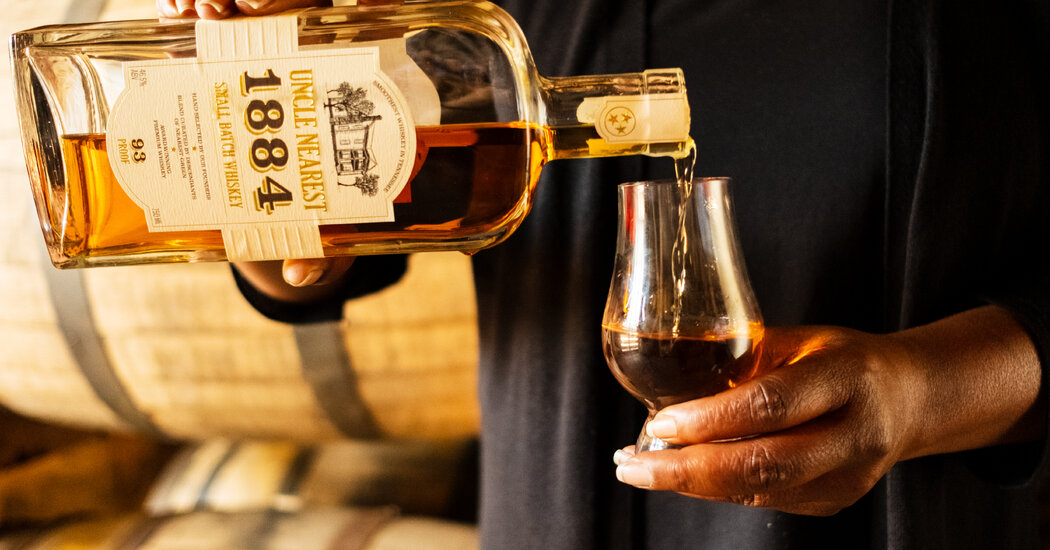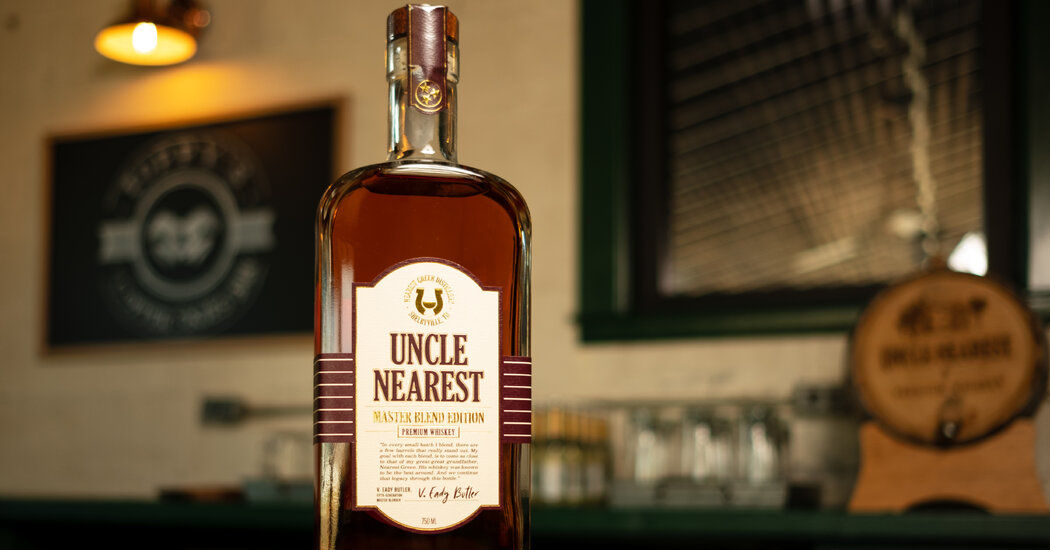
AdvertisementSKIP ADVERTISEMENTOne of the few Black-owned operations in the spirits industry, the Tennessee distillery had grown rapidly before unraveling in recent years.Listen · 6:39 min The Uncle Nearest distillery, founded in 2017 by Fawn Weaver, went from high-flying success story to receivership.Credit...Laura Partain for The New York TimesJuly 14, 2026, 1:31 p.m. ETThe nearly yearlong courtroom drama surrounding the embattled Uncle Nearest distillery took a sharp turn on Friday, when the receiver appointed to manage its finances reported that two federal agencies were investigating potential financial misconduct involving the once-high-flying Tennessee whiskey company.The receiver, Phillip Young, wrote in a second-quarter status update that he had turned over documents to both the Securities and Exchange Commission and the U.S. attorney’s office for the Southern District of New York, which often investigates banking fraud.While Mr. Young did not provide details about the investigations, the company’s founder, Fawn Weaver, has come under scrutiny for a $20 million loan from MarcyPen, a venture capital firm owned in part by the music mogul Jay-Z. In a court appearance in February, she said that she had initially hidden the loan from her company’s creditors, a potential violation of federal banking laws.Spokespeople for the S.E.C. and the Southern District declined to comment on the report.Mr. Young also reported that he had fired Mrs. Weaver and her husband, Keith Weaver, the company’s chief executive. They had already been sidelined after a Tennessee judge appointed Mr. Young in August, but remained in their positions at the company and often portrayed themselves in public as still being in charge.“While this decision was not made lightly,” Mr. Young wrote, “it has resulted in significantly less confusion among employees and vendors, and has made business operations significantly smoother.”ImageMrs. Weaver and her husband, Keith, have both been fired from Uncle Nearest, but they still control a majority of its shares.Credit...Serena Xu Ning/Alamy But in the 10 months since Mr. Young was appointed, a different picture of the company has emerged. Among other things, he revealed that Mrs. Weaver did not keep a complete list of investors, called a “cap table,” and that the company had not paid federal income taxes since 2018.“The skills that you require to grow a business are not the same that you require to operate a business,” said Stephen Montgomery, an expert in bankruptcy law and partner at the Nashville firm of Dickinson Wright. “The growth and the marketing story — there was emphasis on that, but there really wasn’t an emphasis on the blocking and tackling of the business.”The judge in the case, Charles Atchley, went further in a May ruling, writing that the Weavers had engaged in “fraudulent conduct” by placing the $20 million from MarcyPen in an account owned by her holding company, Grant Sidney, a move he contended was a way of hiding the money from Farm Credit.In one particularly pointed section of the ruling, he all but accused her of lying to the court.“Fawn Weaver’s testimony thus far," he wrote, “has been guided by the story she believes best serves her personal interests, irrespective of its relation to the truth.”Mrs. Weaver is under a gag order that prevents her from speaking about the case in public. But in court filings, Mrs. Weaver has blamed the company’s troubles on Michael Senzaki, the company’s former chief finance officer. In December, the Weavers filed a lawsuit against him.ImageUnder receivership, the operations at the Uncle Nearest visitor center in Shelbyville, Tenn., have been scaled back considerably.Credit...Laura Partain for The New York TimesAlthough Mrs. Weaver had initially lauded the court’s choice of Mr. Young as receiver, she soon turned against him, accusing him of secretly siding with Farm Credit in an attempt to take the company away from her.In another twist, on July 7 Mr. Young filed a lawsuit against Farm Credit, accusing it of gross negligence for overlooking repeated misconduct on Mr. Senzaki’s part.He may file more suits soon: In his filing last week, Mr. Young wrote that he, as the company’s court-appointed director, “likely has viable causes of action against a number of parties, including Mike Senzaki, Fawn Weaver, Keith Weaver, and/or entities controlled by these former officers and directors,” though he did not offer specifics.Mr. Young said the company continues to operate at a loss, despite laying off 40 percent of its employees and arranging for buyers for a vineyard the company owns in France and a house on Martha’s Vineyard.He has also worked to shrink the operations at the company’s expansive visitor center in Shelbyville, Tenn., about an hour south of Nashville. He has filed eviction notices for its two dining and entertainment venues, the Humble Baron bar and the Shelbyville Barrel House restaurant, which were legally separate entities from Uncle Nearest but controlled by Mr. Weaver.Litigation related to the company will likely continue for years. Along with potential legal action by federal authorities, Mr. Young said that dozens of creditors and vendors are planning to sue the company once the receivership ends, including several in France.However, he also said that he is proceeding to negotiate a sale of the company’s assets to a group of investors whom he declined to name, but in a separate filing he identified it as Black-led.As part of the negotiations, Mr. Young said that he is exploring the possibility of filing for Chapter 11 bankruptcy, which would wipe out Uncle Nearest’s debts, as well as the stakes owned by its investors — above all the Weavers, who still own a majority of the company’s shares.Follow New York Times Cooking on Instagram, Facebook, YouTube, TikTok and Pinterest. Get regular updates from New York Times Cooking, with recipe suggestions, cooking tips and shopping advice.Clay Risen is a Times reporter on the Obituaries desk.AdvertisementSKIP ADVERTISEMENT
The Latest in the Uncle Nearest Whiskey Saga: Federal Fraud Investigations
One of the few Black-owned operations in the spirits industry, the Tennessee distillery had grown rapidly before unraveling in recent years.
953 words~4 min read