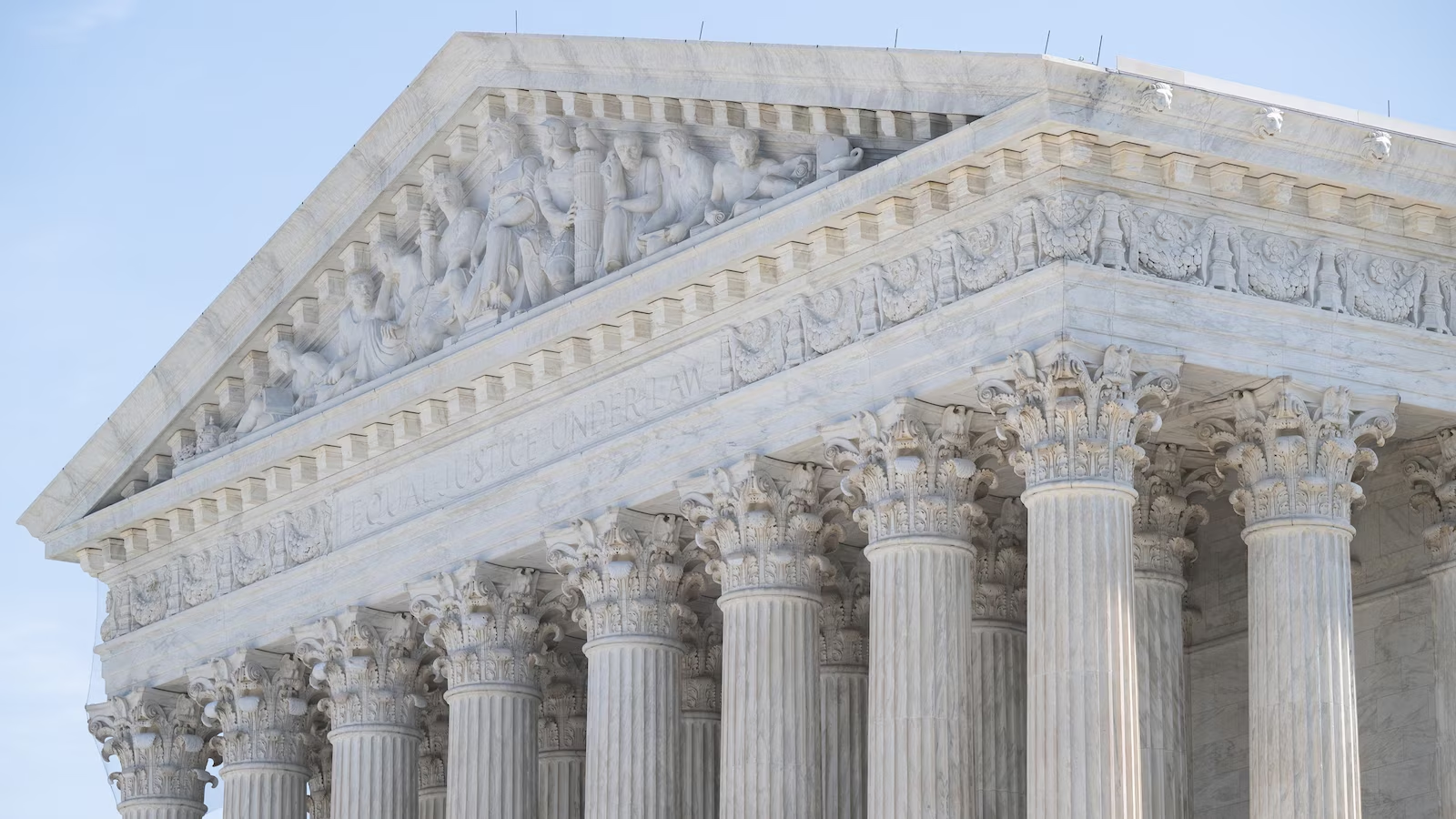
Fifty years ago, the U.S. Supreme Court struck down campaign spending limits in the landmark decision Buckley v. Valeo, finding the curbs violated First Amendment free-speech protections. Since then, several rulings, including the 2010 Citizens United case, which ended restrictions on election donations by corporations, nonprofits, and labor unions, have further loosened campaign finance regulations.
In this interview, which has been edited and condensed for length and clarity, Nicholas Stephanopoulos, Kirkland & Ellis Professor of Law at Harvard Law School, spoke about the recent ruling by the Supreme Court that lifted restrictions on how much money political parties can spend in coordination with candidates, its downside and potential upside, and its possible impact on the midterm elections.
Can you explain what the recent campaign finance ruling means? How is it going to affect political parties?
The recent decision is a not a huge blockbuster like some other campaign finance cases we’ve seen in recent years. That’s because the decision only involves limits on political parties’ coordinated expenditures with candidates, and that pool of money, both today and potentially in the future, is not enormous.