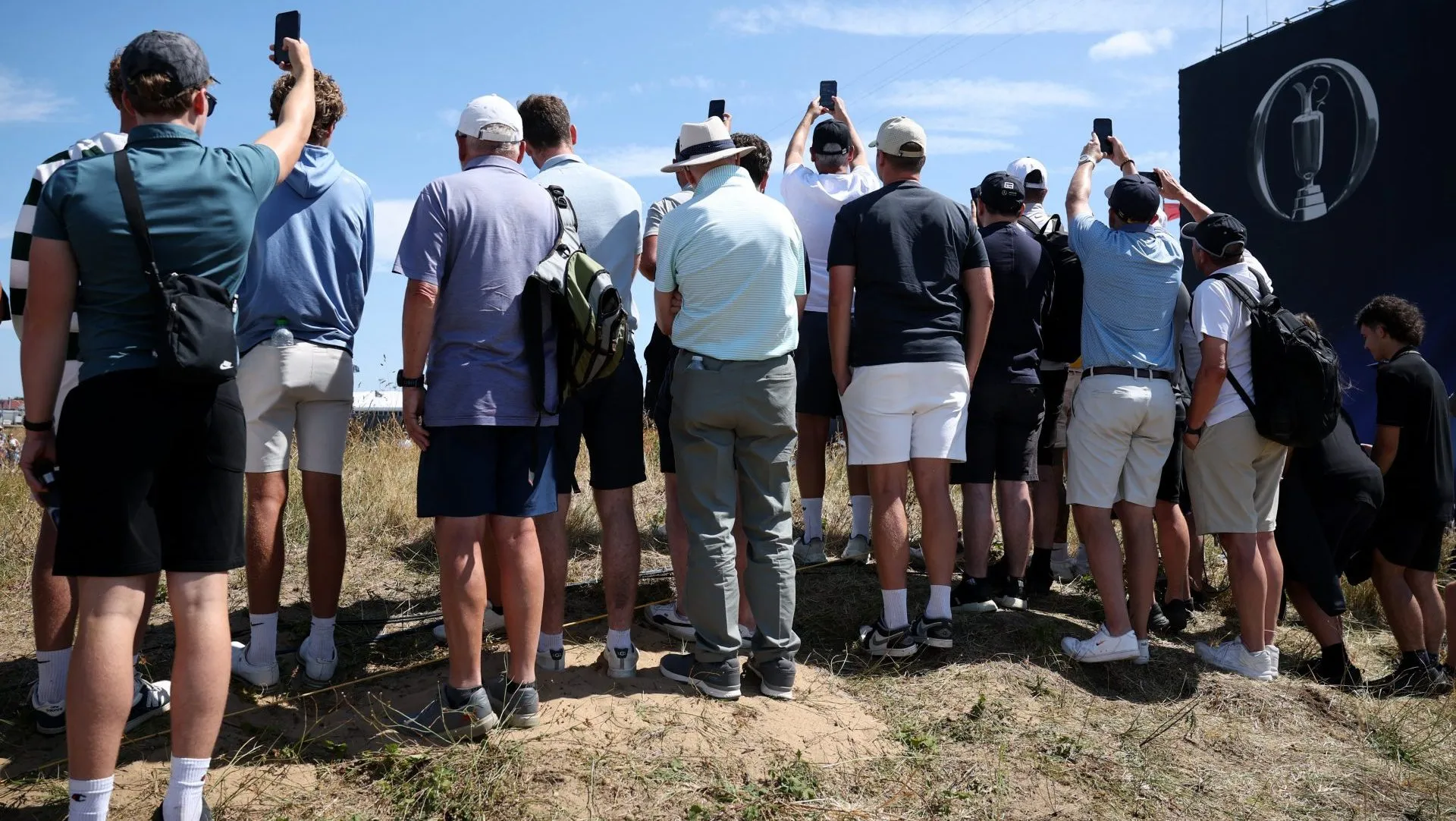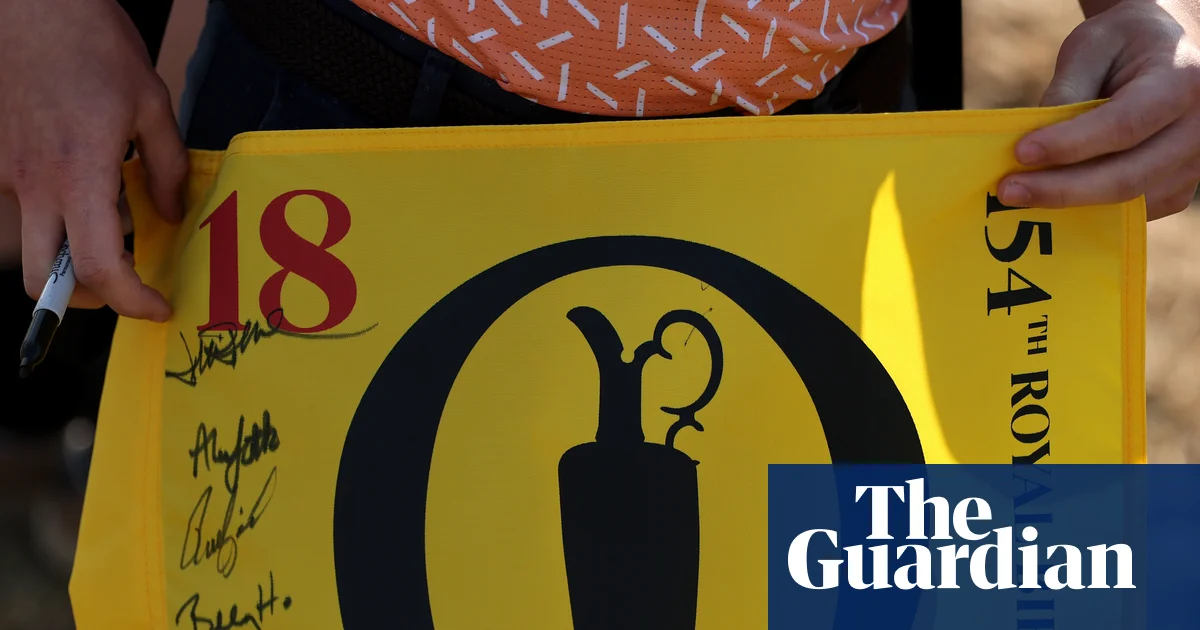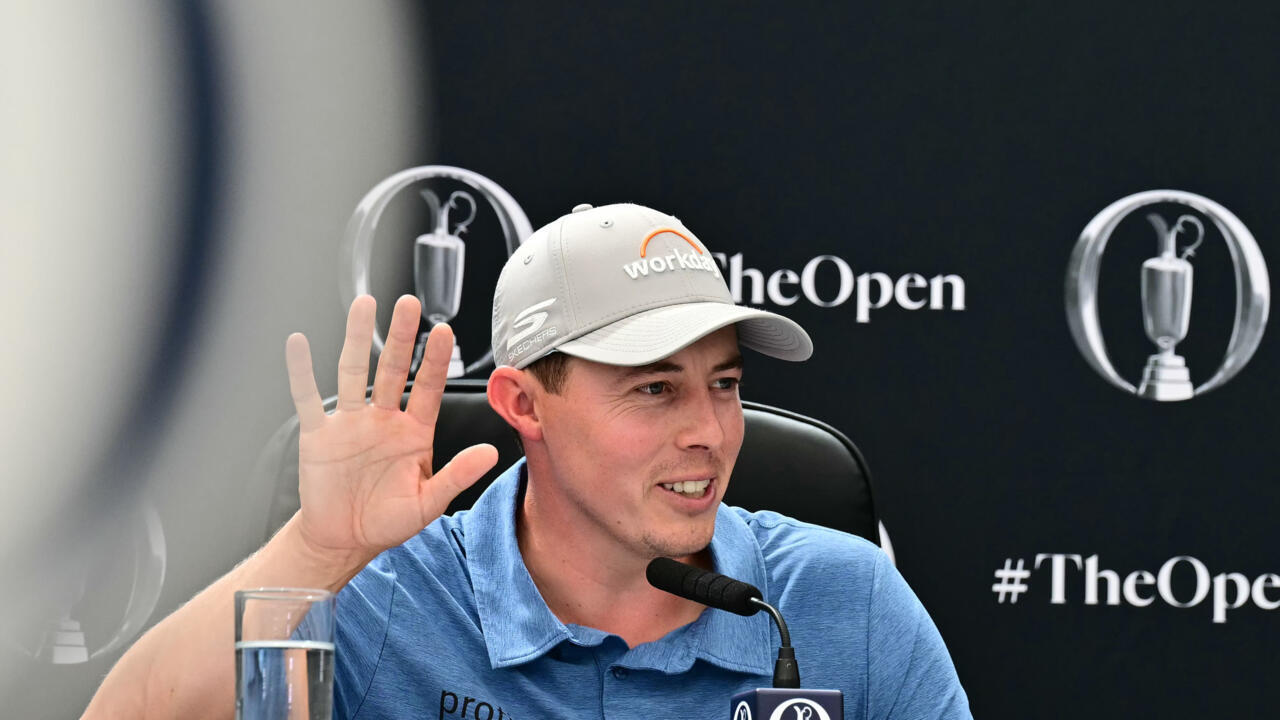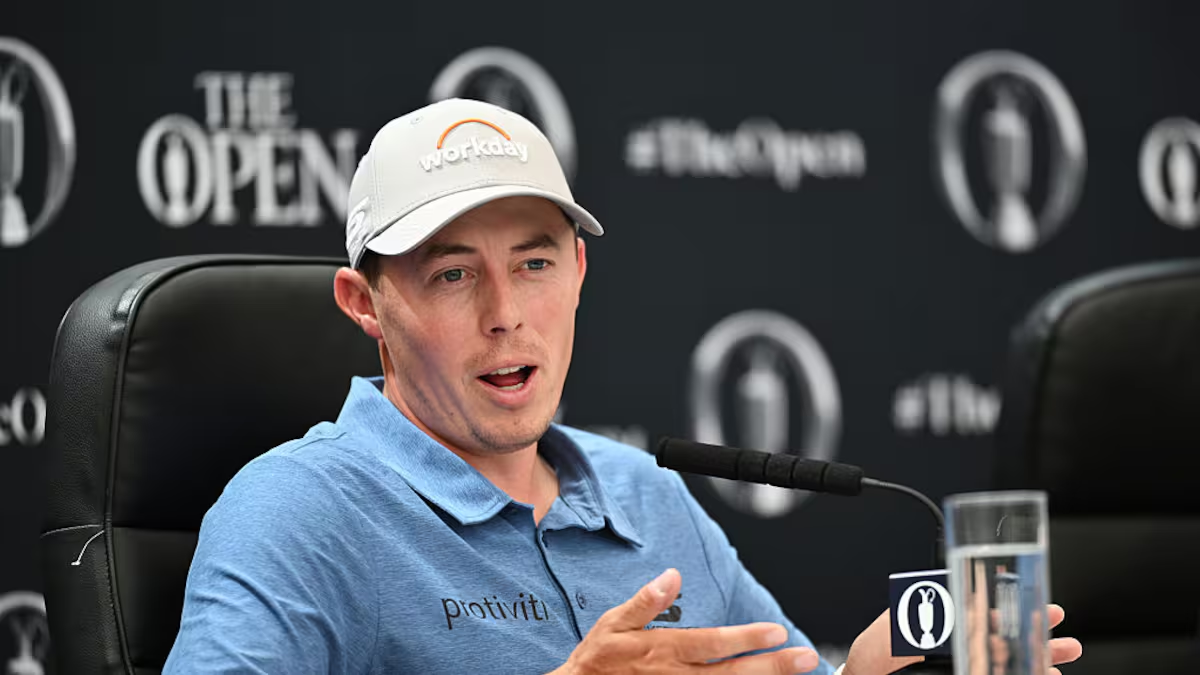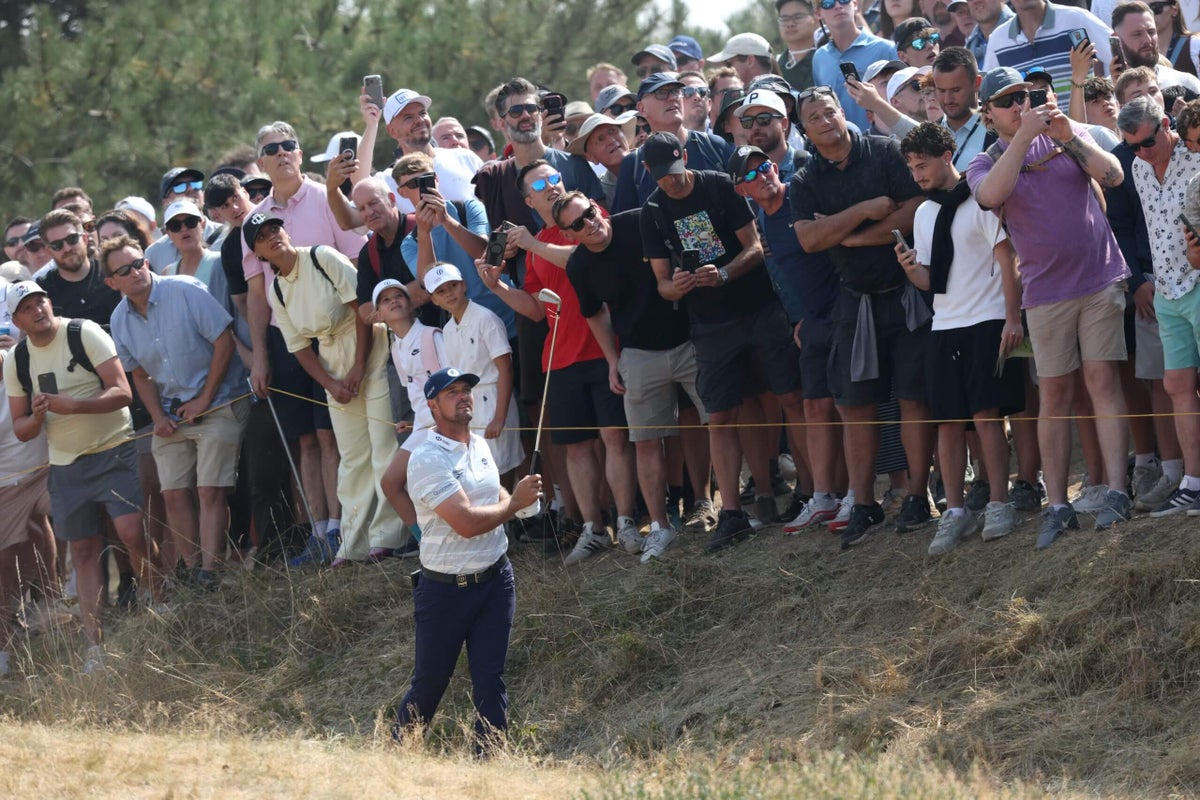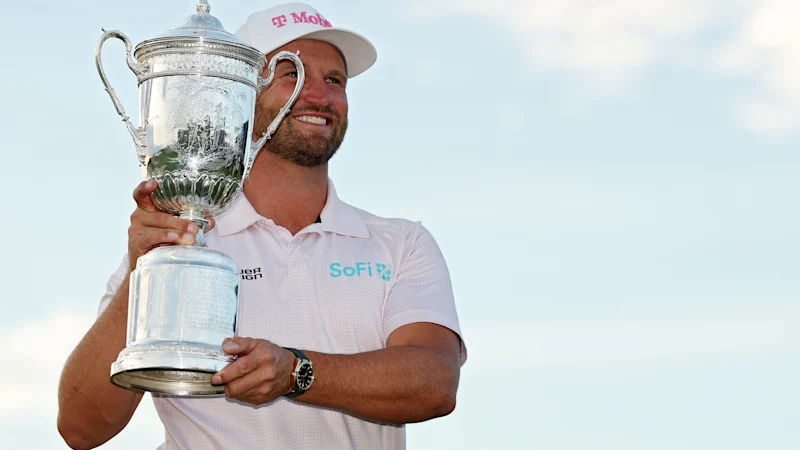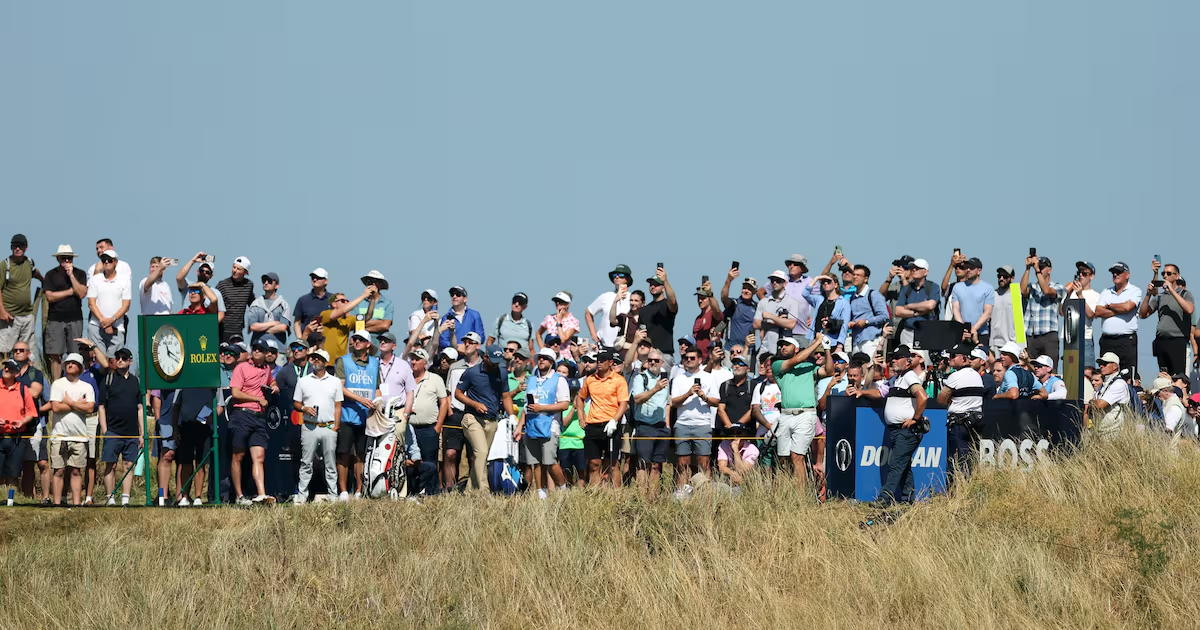
Fans at the Open Championship this week have been handed a new code of conduct, a charter to ensure players are not goaded or disturbed by anybody on the other side of the ropes. Spectators have been warned to drink responsibly and respect the players, as repeated violations will lead to expulsion without refund. An online reporting mechanism has also been introduced for any bystanders to bad behaviour.That golf fans would act with respect was hitherto understood and unwritten, so that the R&A now have to legislate for decency is emblematic of something gone badly awry. Last year’s Ryder Cup at Bethpage Black was the day of egregious sin in this respect, where the venom spat at the European players crossed all lines of acceptability. The abuse is not exclusive to the fervid atmosphere of a Ryder Cup and neither can it be quarantined away in the United States.Matt Fitzpatrick was harangued by American fans on his way to victory at the RBC Heritage at Hilton Head this year, while Wyndham Clark won the US Open in front of a Long Island crowd that cheered his wayward shots and sat silent through his better moments. Brian Harman meanwhile said he endured some “unrepeatable” abuse on his way to winning the 2023 Open at Royal Liverpool, while Scottie Scheffler said he heard some comments that were “very far over the line” at Royal Portrush last year. These are the high-profile examples – players now talk of fan abuse as a quotidian experience.Fans look on during the Saturday morning foursomes matches of the 2025 Ryder Cup at Bethpage Black. Photograph: Carl Recine/Getty There is no single reason underpinning this coarsening of behaviour. Scheffler said with understatement at Portrush last year that he wasn’t exactly the fan favourite, and it’s hard to divorce the loud needling of Scheffler from the gallery’s almost desperate desire to see Rory McIlroy make the Sunday charge for which they all came to witness.Ticket prices have played a role too. This writer vividly recalls an American fan hurling abuse at McIlroy at Bethpage last year and responding to the police officer who collared him that he paid a thousand dollars for his ticket, and so he could do whatever he wanted.Speaking from Birkdale, Justin Rose partly attributed the trend to social media, where algorithms amplify the most extreme behaviour. “People have access to how they’ve seen moments unfold on the golf course or other behaviours and it becomes the norm,” says Rose. “Everything becomes normalised.”Rose also mentioned another factor: gambling. Matt Fitzpatrick expanded on the same topic.“Every golfer that’s played a professional tournament has had a message of abuse from someone that is related to gambling,” says Fitzpatrick. Athletes have been chastised by gamblers for decades, but the problem is exacerbated today by the twin facts of access and scale.Social media has allowed for a corrosive direct line from gambler to subject. Signify, a company which is hired by sports teams and leagues to monitor and report online abuse of athletes, found in a recent report conducted with the NCAA in America that “angry sports bettors” accounted for 12 per cent of all public abuse of sportspeople. When private messages are included, they estimate that angry gamblers are responsible for around 45 per cent of all abuse.In a separate interview with The 42FM podcast earlier this year, Signify co-founder Jonathan Seibre says his organisation have noticed a growing trend of gamblers sending pre-emptive abuse to athletes against whom they have bet, in order to unsettle them ahead of the relevant event. Seibre also said that individual sportspeople receive a higher share of online abuse than players involved in team sports.There are also more people betting than ever before, with a 2018 Supreme Court ruling ending America’s federal ban on gambling and throwing away the guardrails in golf’s biggest market – a study earlier this year found more than 90 million Americans held an online betting account. There was almost $16 billion wagered on sports in the US last year alone.There are also more markets on which to bet than ever before, and golf is uniquely vulnerable in this noxious context.Gamblers are no longer limited to picking a tournament’s outright winner, with prediction markets allowing for bets to be placed on the outcome of every single tournament pairing.“Particularly in golf, it would be very easy to influence a bet,” says Fitzpatrick, “whether it’s you’re shouting on someone’s backswing, shouting on a putting stroke. It’s really easy. Obviously that is really hard to monitor, but it is definitely an issue.”The R&A’s new charter for fan behaviour merely addresses symptoms rather than any root cause. Given the strengths of the aforementioned currents, this is the limit of what they can do.
The Open’s new fan behaviour charter merely addresses symptoms rather than any root cause
Golf is uniquely vulnerable to being influenced by gamblers hurling abuse from the crowd
790 words~4 min read