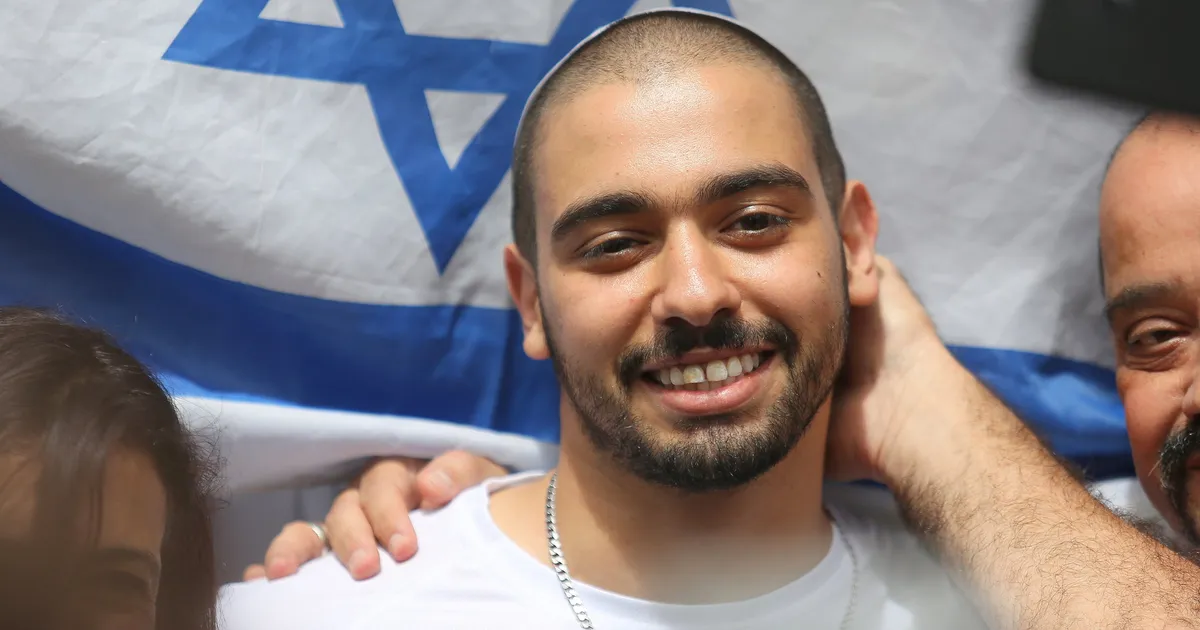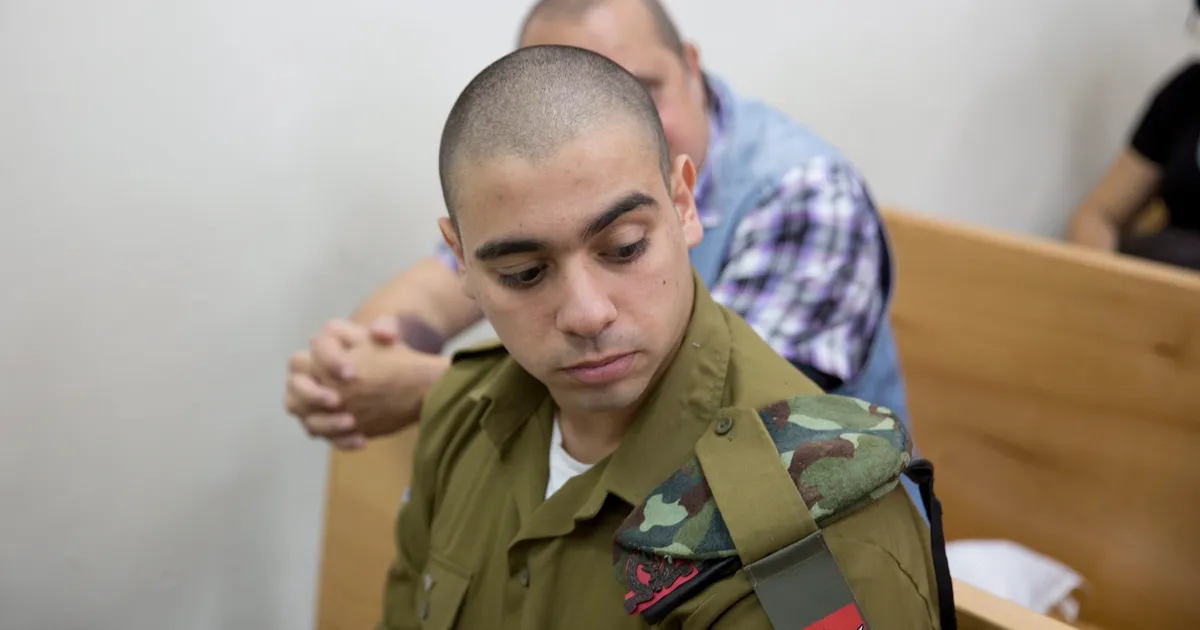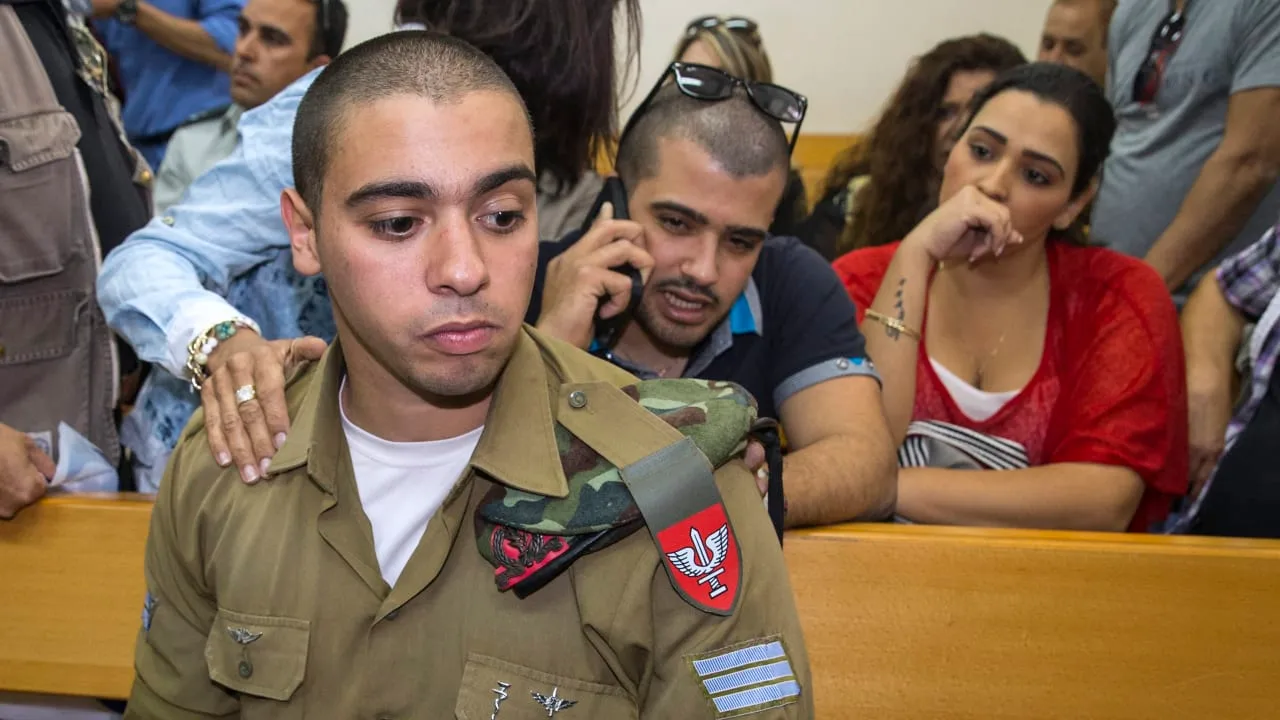
ByYONAH JEREMY BOBJULY 14, 2026 19:39Defense Minister Israel Katz's request to pardon Hebron shooter Elor Azaria is a new low in acting purely from populist political instincts, which will only harm Israel's national interests both domestically and especially globally.Katz acknowledged up front that the IDF opposed his request for a pardon. Previously, then-president Reuben Rivlin also took a hard pass on granting Azaria a pardon.Most of Azaria's legal team, who had defended him throughout the trial, resigned when he tried to appeal his 18-month sentence, telling him he had been given a gift.Azaria was not convicted of mere "negligent homicide", but of manslaughter for his actions in 2016.IDF Sgt. Elor Azaria, the Israeli soldier, who shot dead a disarmed and injured Palestinian attacker in the West Bank city of Hebron on March 24, 2016, seen with supporters and family as he arrives serve his sentence at the Army Jail in Tzrifin, on August 9, 2017. (credit: FLASH90)He got off easy because of the extreme circumstancesHe was sentenced to 18 months in prison, with the prosecution arguing on appeal that the severity of his actions warranted a 36-60 month sentence.All of the reasons for going easy on Azaria: he was young, had no criminal record, was in a stressful situation where his friends had been harmed, and had shot a terrorist - were already taken into account to given him the relatively light 18 month sentence as well as when that sentence was reduced twice by the IDF chief and parole boards down to 14 months and then nine months.Put differently, if Azaria had faced just the law for his actions of killing a Palestinian attacker who was incapacitated, and had been barely moving on the ground for 10 minutes after already being shot by another soldier, he would have served twice as long in jail or up to six times as long in jail.He got off easy because of the extreme circumstances.Why did Azaria deserve such a harsh sentence?I was there for dozens of hearings and heard very clearly, as did the judges, that both witnesses who were "against" Azaria, and those who remained his friend and wanted to try to help him with their testimony, agreed that he had killed the Palestinian attacker, who had been no threat for over 10 minutes, out of revenge. Azaria admitted this in real time to at least two commanders.There was no place for revenge killings in the IDF in 2016, and there is no place for it in 2026.But Katz's reference to October 7, 2023 is telling and is the main difference now.Only the ethical lesson to be learned is how much more important it is today - after October 7 - that Israel convicted Azaria, sent him to prison, and is not giving him an early release from the criminal record rules, than it even was in 2016.In 2016, Israel did not face arrest warrants before the International Criminal Court, genocide charges before the International Court of Justice, a tidal wave of potential economic sanctions, a global wave of antisemitism not seen possibly since World War II, and a loss of allies worldwide, with even loss of American support in play in the coming years. All of these dangers were theoretical and were held at bay for several more years.For sure, some of these problems are flat-out antisemitism, anti-Israel bias (to the extent the two can ever be separated), and a naive lack of understanding of what Israel is up against versus Hamas-Hezbollah-Houthis-Iran.But some of this is that Israel has hardly prosecuted any of its own during this war, when new highs of Palestinian civilians were killed along with tens of thousands of Hamas terrorists, and when it has prosecuted or probed its own, it has kept the results under wraps or at least under the radar.Few people know that Israel did prosecute and convict a soldier for beating a Palestinian detainee at Sdei Teiman in 2025.Many more know that the IDF prosecution withdrew an indictment against five other soldiers for beating a different Palestinian detainee at Sdei Teiman due to illegal conduct by the prior IDF prosecutor, but not due to the innocence of the soldiers, as IDF sources have made clear to The Jerusalem Post.Few people know that the IDF has over 100 criminal probes open and over 3,000 disciplinary probes open against its own soldiers, because the IDF has, in a shortsighted decision, kept the results of those probes quiet to date.In fact, the Hebron shooter case is one of the few instances (there are a few others that are less famous) in the last decade when an IDF soldier went to jail for killing a Palestinian.It can still be held up to show that Israel is capable of such a moral action against domestic populism, something that its enemies would never do, or even think of.It is still a case which tells Westerners and Americans who still want to believe that Israelis value democracy, human rights, and the rule of law, that "we are like you" and not like many of Israel's dictatorial, non-democratic, terrorist enemies.Internally, it is a case where Israelis can look in the mirror and say "we are more moral than our enemies" and they have not brought us down to their level.Soldiers cannot decide for themselves what IDF values should beFinally, it is a case which shows that IDF orders must be followed by soldiers, and that soldiers cannot decide for themselves what IDF values should be. This is hugely important after October 7 when many soldiers started to ignore their commanders orders, sometimes swimming in the Mediterranean in defiance of safety protocols, failing to have helmets on in danger zones, or blowing up buildings without proper higher officer approvals.Katz's pardon request does not care about any of that, but it is catering solely to score some narrow and temporary points internally within a specific part of the coalition's constituency.In a time when US Senate Democrats voting against some Israeli weapons sales have jumped from around 10-15 to around 35-40 out of 47 and when young isolationist Republicans are turning on Israel in droves guided by Tucker Carlson-types, such a pardon request is pouring buckets of gasoline on an out-of-control fire which desperately needs water.By the way, there might have been a scenario where Azaria could have gotten a pardon - if he was helping with the larger problem by taking responsibility.If he stepped up and admitted he had been wrong and publicly told this generation's IDF soldiers that it is wrong to kill a neutralized person, even an attacker.But he has done the opposite.He is proud of what he did, has said so repeatedly, and is now only complaining that some of the social and economic consequences of Israelis who do not want to deal with a convicted killer are grating on him.Azaria will get his reprieve around 2032, according to set Israeli law and timelines, like anyone else facing a similar manslaughter conviction.If that law is going to count for something, Azaria needs to serve his time on the criminal registry and remain a symbol that there are consequences for revenge killing - killing that is not in self-defense.Follow us on Google
Israel Katz’s request to pardon Hebron shooter harms Israel | The Jerusalem Post
Azaria was not convicted of mere "negligent homicide", but of manslaughter for his actions in 2016.
1,201 words~5 min read