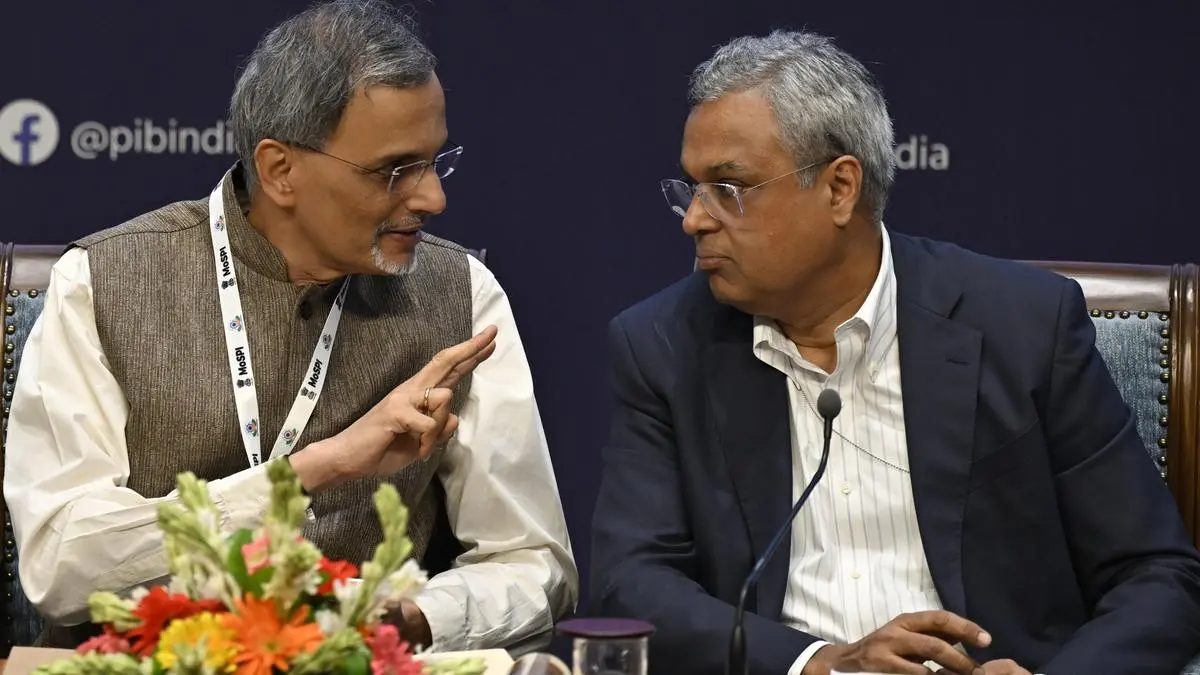
V Anantha Nageswaran, CEA, with Saurabh Garg Secretary, Ministry of Statistics and Programme Implementation (MoSPI), at the press conference on Release of Index of Service Production-Trial Series in New Delhi on Tuesday.
| Photo Credit:
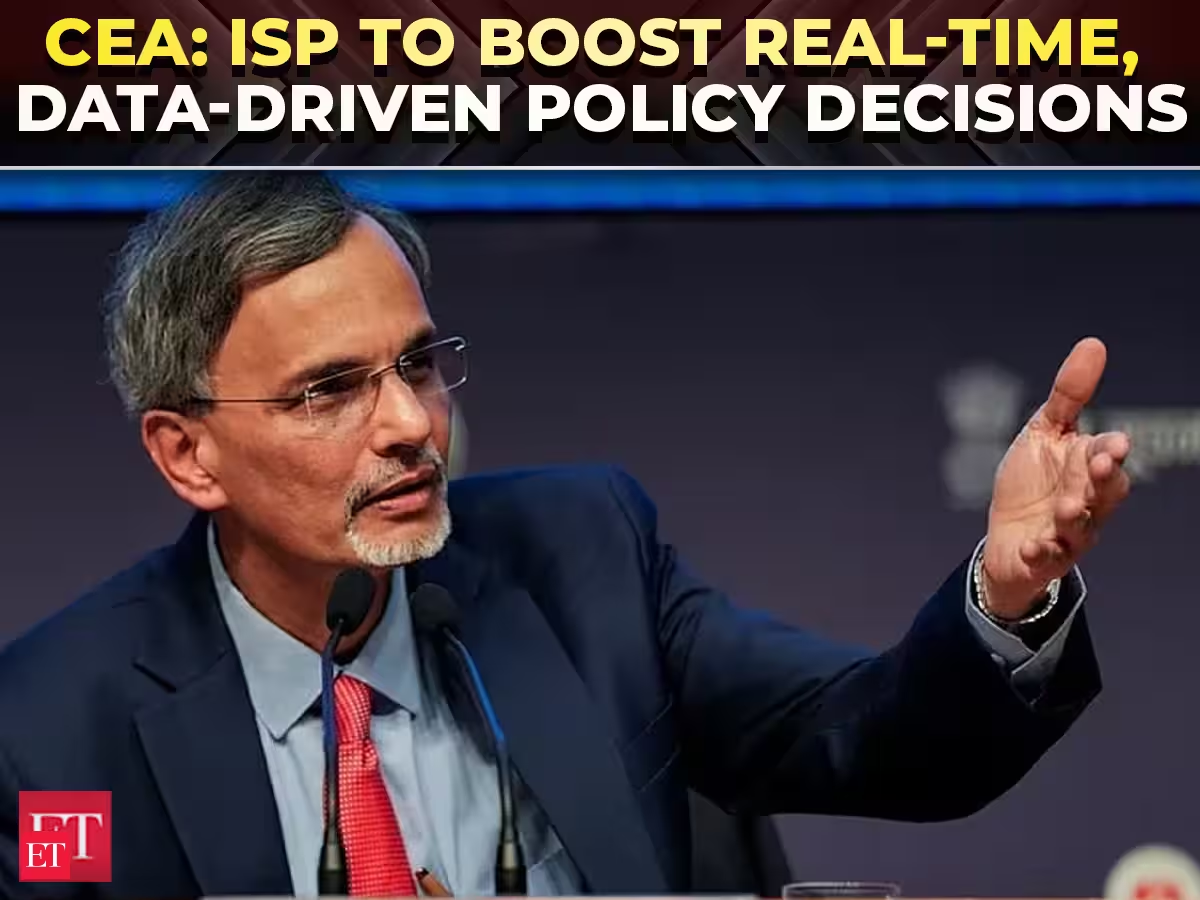
The government on Tuesday unveiled the trial Index of Services Production (ISP), a new high-frequency indicator that showed formal services activity remained resilient in April despite the West Asia conflict, with 14 of the 19 tracked sub-sectors recording double-digit growth over the previous year.The inaugural monthly series, with 2024-25 as the base year, covers 19 sub-sectors, including wholesale and retail trade, accommodation and food services, road and air transport, telecommunications and banking, which together account for around 60 per cent of India's services sector. The services sector contributes more than half of the country's gross value added (GVA). With the launch of the ISP, all three broad sectors of the economy, services, industry and agriculture, will now have regular monthly or quarterly production indicators.ISP for sub-sectorsDalip Singh, Additional Director General, Ministry of Statistics and Programme Implementation (MoSPI), said work is underway to compile the ISP for sub-sectors such as health and residential care, education, and ownership of dwellings using administrative data, with the aim of expanding coverage to more than 80 per cent of services activity. He also said the April data reflects the impact of the West Asia conflict."The new series will help put the services sector on the same footing as industrial production data," Chief Economic Adviser V. Anantha Nageswaran said at a media briefing in New Delhi. Releasing the trial series would ensure that the dataset is tested and validated by users before it is transformed into a regular index, he added.He said the new index would help policymakers identify slowdowns in the services sector much sooner. "When a sector slows, we would like to know within weeks and not after months. Services Production Index does just that," he said.He said that while the ISP measures production volumes, the underlying data are reported in value terms and therefore depend on appropriate deflation. He added that the coverage of the index would be expanded over time.First set of dataThe first set of data showed accommodation and food services recorded the highest annual growth at 37.2 per cent in April, followed by retail trade (30.8 per cent), administrative and support services (28.7 per cent) and real estate activities (27.7 per cent). Transport was the weakest-performing segment, with air transport contracting 13.9 per cent and rail transport declining 0.4 per cent to an index level of 99.59. Higher fuel prices and geopolitical uncertainty may have weighed on activity.The Technical Advisory Committee on Index of Services Production (TAC-ISP), constituted in May 2025, provided the conceptual and methodological guidance for compiling the index. According to MoSPI, the ISP uses a differentiated approach for compiling sub-sectoral indices based on the nature and availability of data, drawing primarily on administrative data, GST data and the Annual Survey of Incorporated Services Sector Enterprises (ASISSE).MoSPI said the ISP currently covers only formal sector enterprises because it is based on GST and administrative data. "Accordingly, services which are not covered in ISP are those which are either related to core government activities or are dominated by non-market activities and the informal sector," the Ministry said. The Ministry added that the ISP will be released on the 29th of every month, with future revisions and expansion in coverage as more data sources become available.Published on July 14, 2026