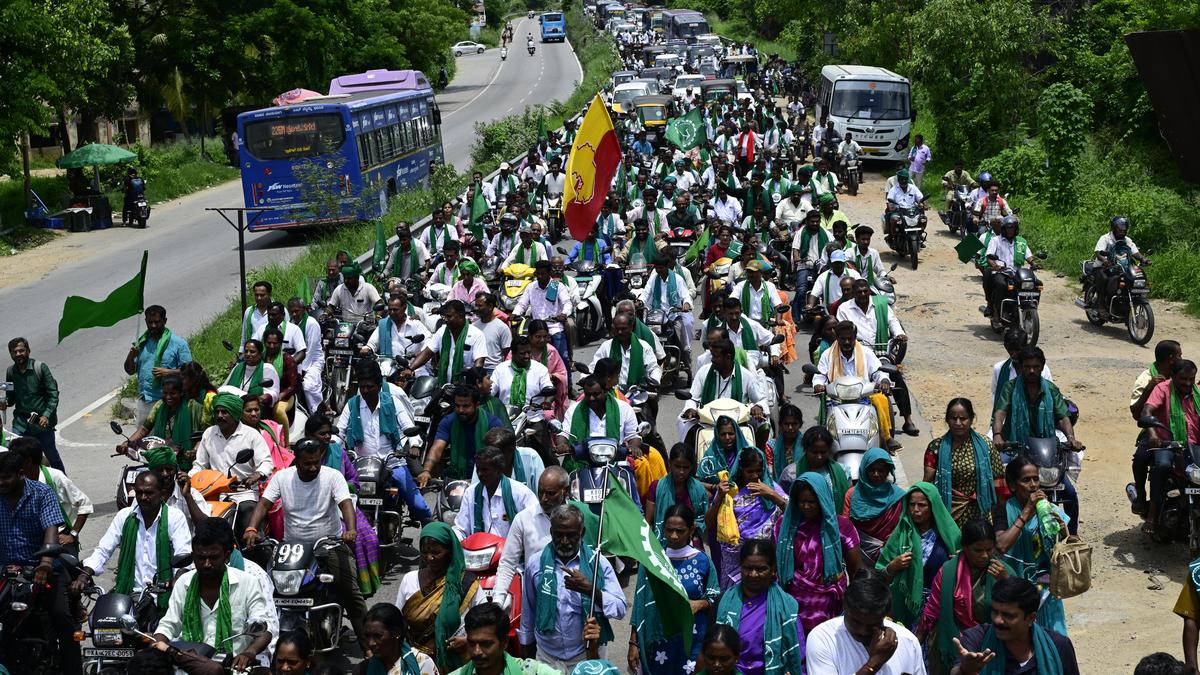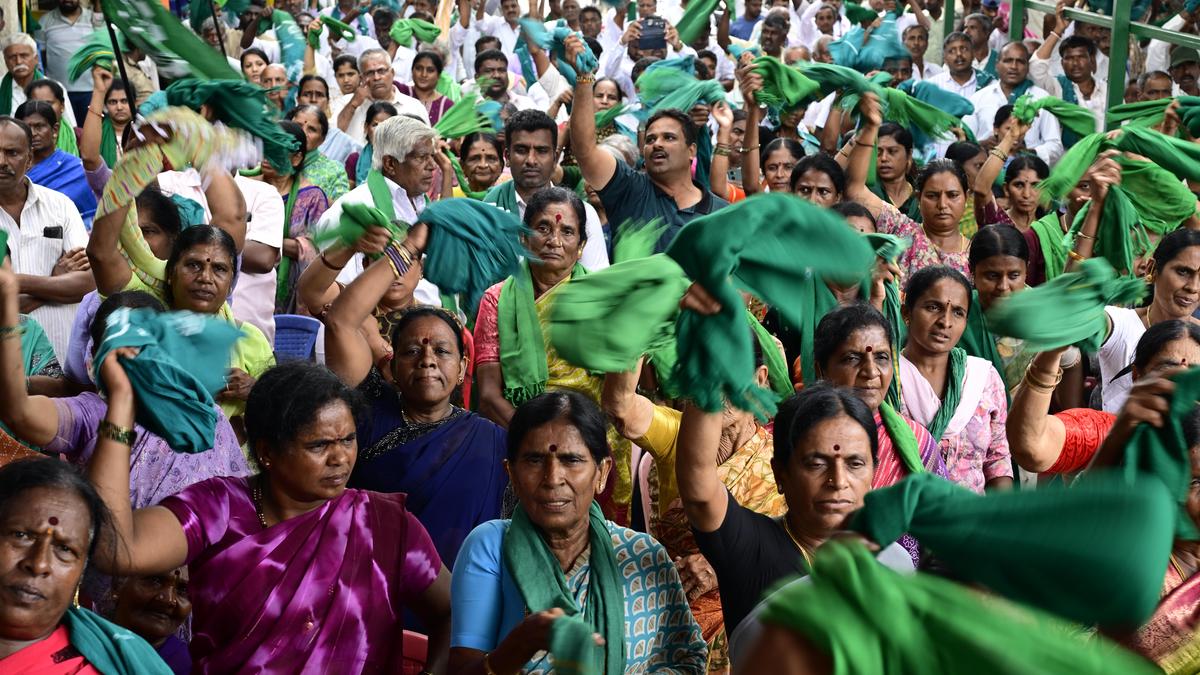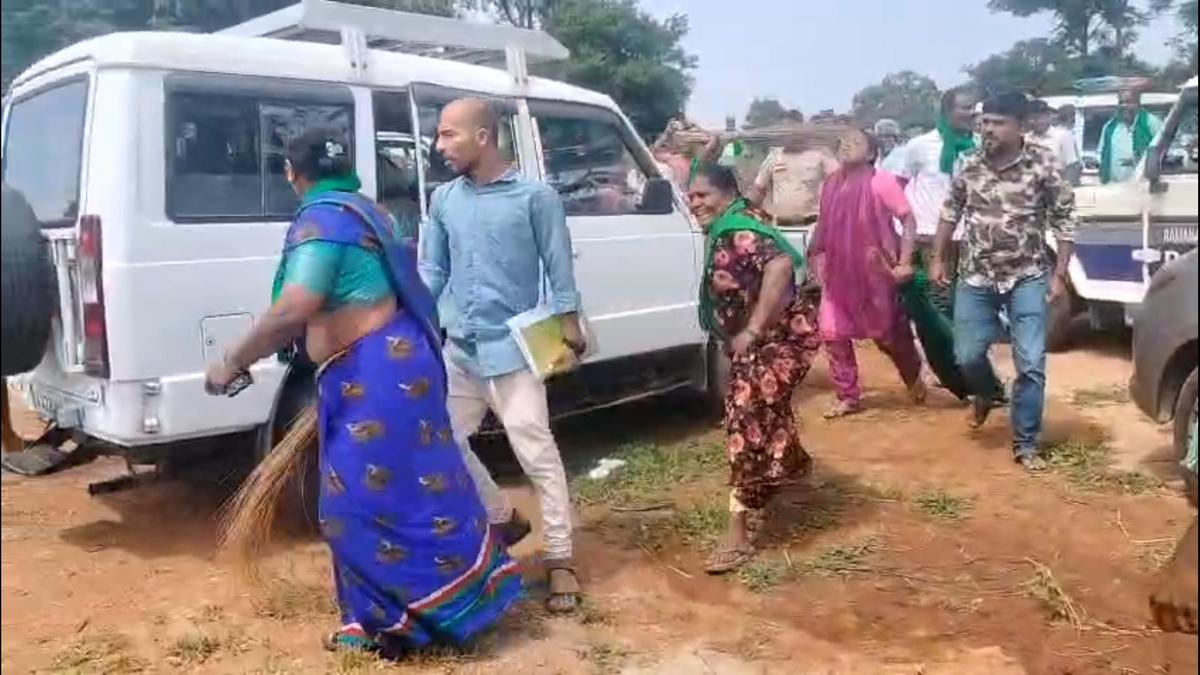
The participation of women in the protests against the Bidai project, including Monday’s demonstration in which they confronted officials with broomsticks during a land survey, has added a new political symbolism to the agitation.
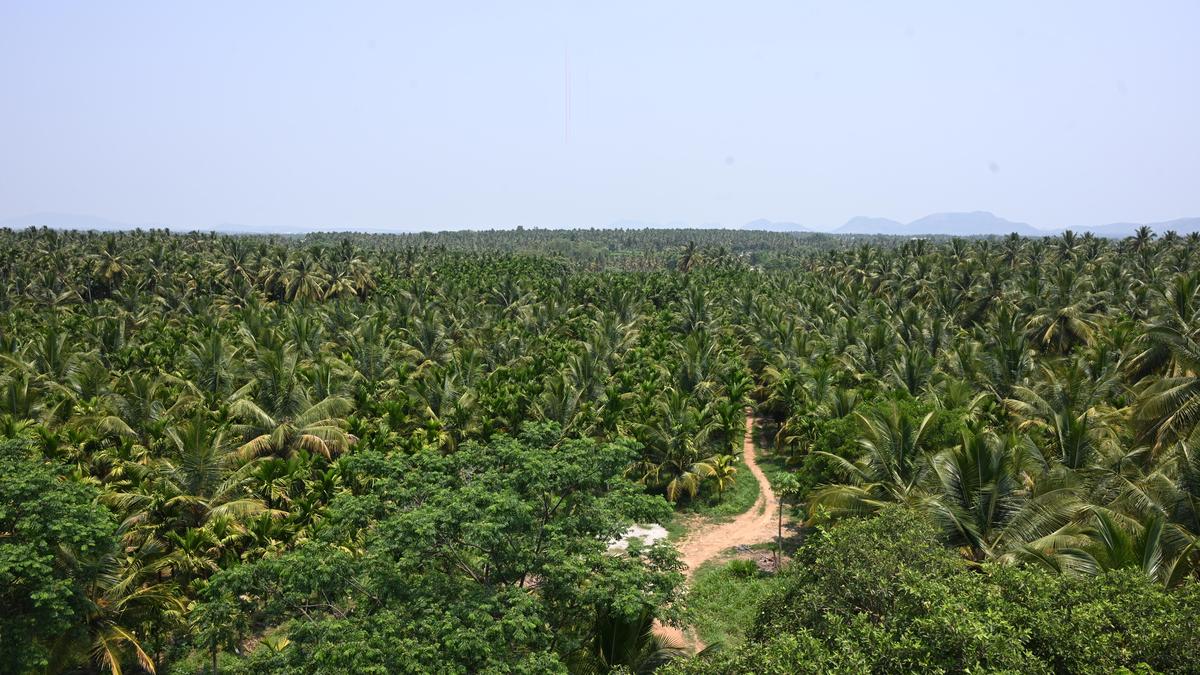
Opposition to the proposed Bidadi Township Project on the outskirts of Bengaluru, which had so far been projected largely as a farmers’ agitation led by landowners and backed by the BJP and the JD(S), appears to be widening both in its social base and geographical spread.The participation of women in the protests, including Monday’s demonstration in which they confronted officials with broomsticks during a land survey, has added a new political symbolism to the agitation. It projects ordinary rural households resisting State authority rather than organised political workers leading a protest.Women’s roleWomen are often perceived as protectors of household livelihoods, making it more difficult for the ruling Congress to dismiss the protests as being driven solely by political parties. The visuals of women leading the agitation have also attracted considerable attention.Criticising the registration of FIRs against protesters and demanding that the cases be withdrawn, sugarcane growers staged a demonstration on the Mysuru-Ooty Road on Tuesday. Action against women protesters could prove politically sensitive, given that women constitute a significant section of the electorate.Opposition to the project is also beginning to find resonance in other districts, with farmers’ organisations voicing concern over the proposed acquisition of agricultural land and condemning the cases filed.Different viewsA day after the women’s protest, while Rural Development and Panchayat Raj Minister Eshwar Khandre described the agitation as “politically motivated”, saying that “everybody knows who is behind the protest”, Revenue Minister G. Parameshwara maintained that the project would not be pursued without the consent of farmers. He reiterated that the township was intended to ease Bengaluru’s growing urban pressure and that farmers’ interests would be protected.Public Works Minister Satish Jarkiholi sought to distance Chief Minister D.K. Shivakumar from the controversy, stating that the project had no direct connection with the Chief Minister and would be implemented only through consensus.The BJP and the JD(S), meanwhile, have sought to portray the project as evidence of the Congress government’s “anti-farmer” approach despite its welfare initiatives.The JD(S), which is attempting to consolidate its support in the Old Mysore region, has intensified its attack on the government. Party leader Nikhil Kumaraswamy alleged that the government’s handling of the issue would prove to be the “death knell” for the ruling party.Within the Congress, the controversy has exposed differing views. Karnataka Pradesh Congress Committee president B.K. Hariprasad has already expressed reservations about acquiring fertile agricultural land. Party sources indicated that if the agitation intensifies, more legislators from the region could press the leadership to revisit the project to minimise political damage.On the horns of a dilemmaCongress leaders also acknowledge the dilemma before the government. While a forceful push to acquire land could alienate farmers and rural voters, abandoning or substantially scaling down the project could weaken the government’s development narrative and be seen as yielding to Opposition-backed protests. Published - July 14, 2026 08:05 pm IST