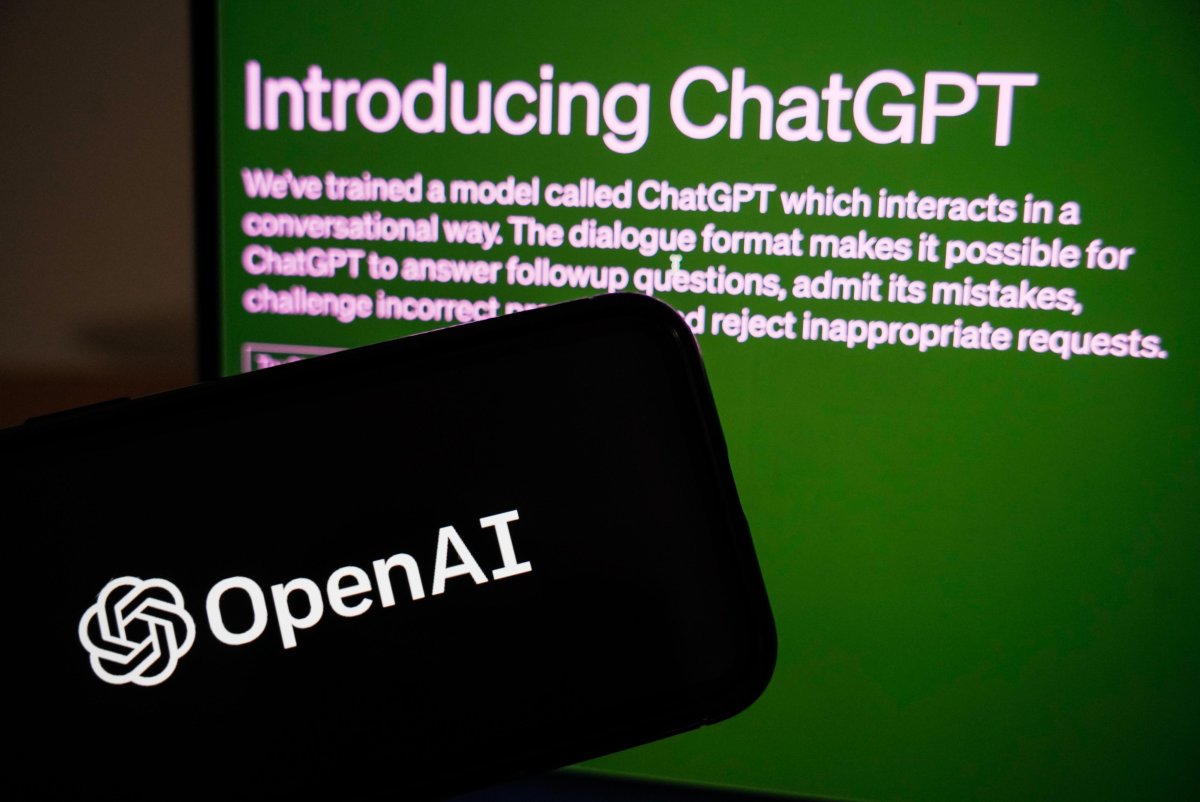
Large language artificial intelligence models, such as ChatGPT, often misjudge what people outside the West might value as a moral priority. File Photo by Wu Hao/EPA
Large language artificial intelligence models, such as ChatGPT, often misjudge what people outside the West might value as a moral priority, according to our new research published in the Proceedings of the National Academy of Sciences.
In 2024 we asked OpenAI's GPT-3.5, GPT-4 and GPT-4o models to estimate the moral norms -- shared ideas about right and wrong -- of 48 nations and then compared them with a global sample of over 90,000 human participants.
Both humans and AI models were asked to complete a moral foundations questionnaire, in which we measured the extent to which they endorsed six moral values.
These foundations were care, equality, proportionality (rewarding individuals relative to their contribution), loyalty, authority or respect for legitimate authorities, and purity (concern with preserving what is seen as natural or sacred).