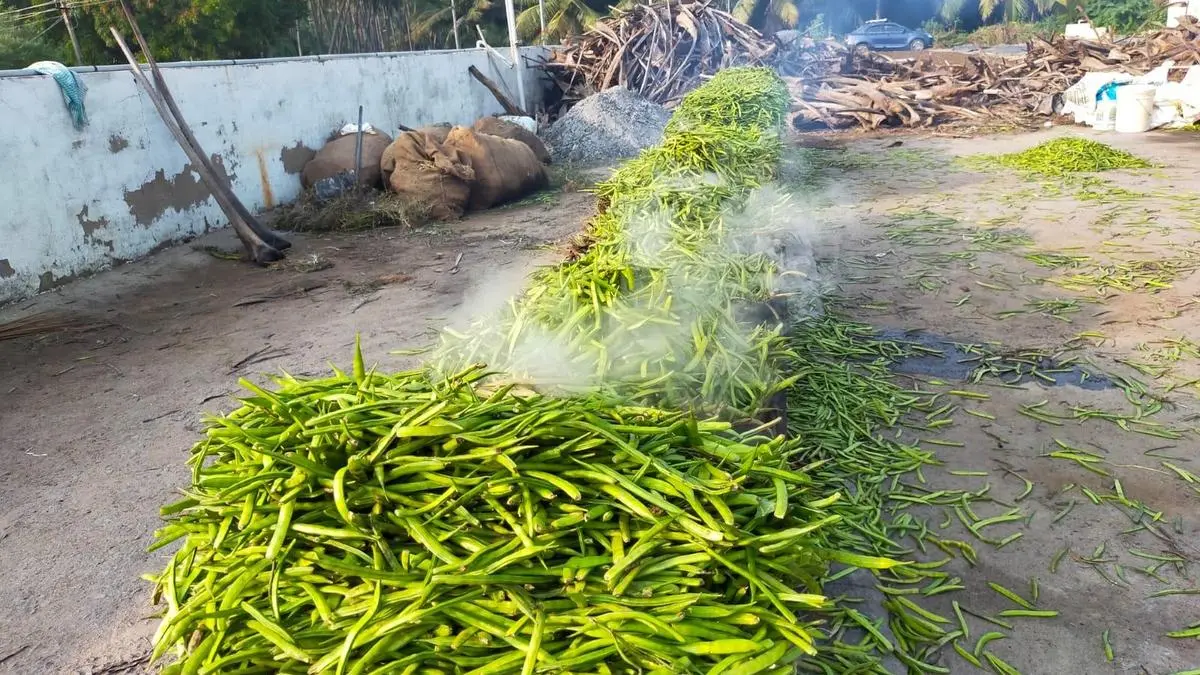
NCDEX will launch guar korma futures from July 24, providing exporters, processors and cattle-feed manufacturers a regulated hedge for the commodity in which India makes up 80 per cent of the global production. The country is a leading shipper of guar korma, which is a byproduct obtained from the germ part of guarseeds, to Europe’s dairy belt. Guar is commonly known as cluster beans. The contracts in the futures will expire from September 2026 to January 2027. Further expiries will be in line with the exchange’s launch calendar, said a NCDEX statement. The contract will be ex-warehouse Jodhpur with a trading unit of 5 tonnes and it will have to be compulsorily delivered on expiry. Managing price risksThe statement said the exchange will bring the same institutional rigour that it applies to guarseed and guar gum futures. Guar korma has not been hedged until now. Kedar Deshpande, NCDEX Chief Business Officer, said the price risk of guar korma, which plays a crucial role in the animal feed industry as a high-protein feed ingredient, has been entirely not managed. “For exporters shipping to Europe on extended timelines, the gap between contracting a price and delivering the cargo is where the real risk sits. A transparent futures market lets them close that gap. It also strengthens price transmission back to the farm gate, connecting guar growers in Rajasthan, Gujarat and Haryana more directly to the value being created downstream in this export chain,” he said.Guar korma has never had an organised, exchange-based platform for price discovery and risk until now, the statement said.Its price is determined by an unusually layered set of forces: domestic guar-processing economics (the split between guar gum, guar korma and guar churi yields), competing protein substitutes such as soymeal and cottonseed oil cake in domestic as well as international feed markets, and demand cycles in the dairy, poultry, fishery and piggery industries of importing nations. Strengthen competitivenessWith regulated futures contracts, exporters can now lock in forward prices against confirmed shipments, processors can hedge inventory between guar-crushing and export cycles, and cattle-feed manufacturers gain a transparent, exchange-discovered reference price.“This will strengthen the competitiveness of India’s guar-based protein exports at a time when global buyers are actively seeking natural, non-GMO alternatives to soymeal,” the statement said. Guar Korma is one of the three products obtained by milling guarseed alongside guar gum (28–30%) and guar churi (35–50%). Rich in protein (up to 55 per cent on roasting), guar korma is a natural, vegetarian, nonGMO protein source widely used in cattle, poultry, fishery and piggery feed. It is valued internationally as a cost-effective alternative to soymeal, cottonseed oil cake and mustard-based proteins. Norway, the Netherlands, Germany, China and the United Kingdom together account for the bulk of India’s guar korma exports over the past five years, led overwhelmingly by demand from the European dairy industry. Published on July 14, 2026
NCDEX to launch guar korma futures to help exporters hedge their risks
India is a leading shipper of guar korma, which is a byproduct obtained from the germ part of guarseeds, to Europe’s dairy belt; Guar is commonly known as cluster beans
478 words~2 min read