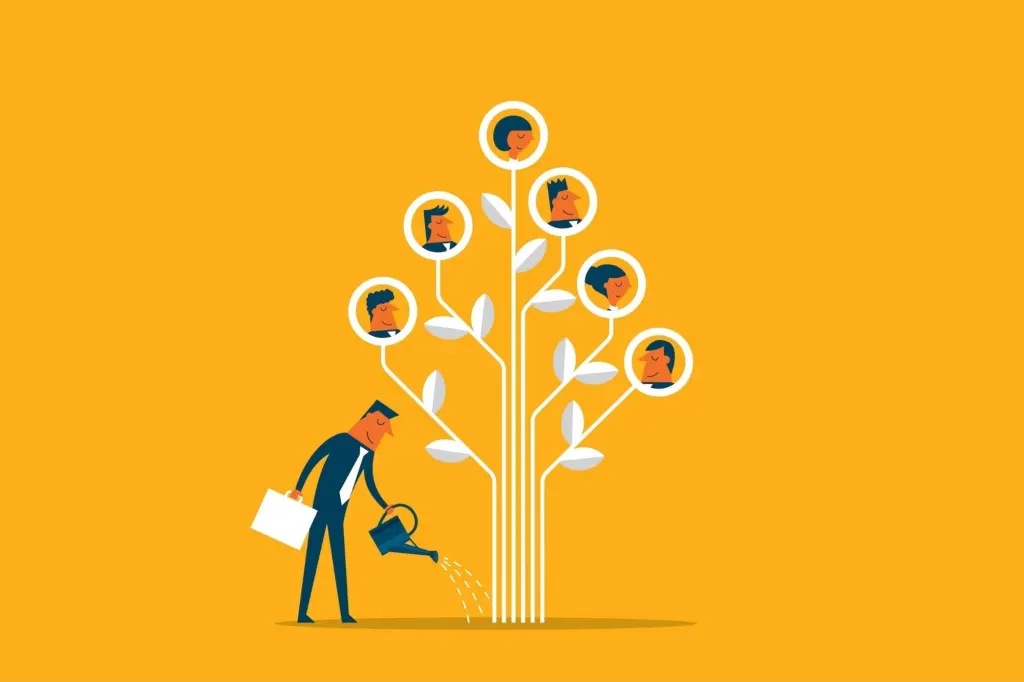
Employees who enjoy their work are 49% less likely to consider leaving, and that "doing work I enjoy" ranks third among retention factors.gettyWhen banks were failing and bread lines forming during the Great Depression, cosmetic sales rose 25%. In 2008, as the global economy collapsed, Lego posted record profits. In 2020, as the pandemic shuttered industries, the pet sector grew 16%.These industries weren't selling products. They were selling joy. And in every moment of profound collective anxiety, that turned out to be the most recession-proof offering on the market.Trend analysts have a name for what's happening now, at scale and with new urgency: the Joyconomy. And for leaders who are still running their organizations on fear-based operating assumptions, it represents a more fundamental disruption than AI.From Trend to Economic ShiftThe term emerged in 2023, when intelligence firm VML identified the Joyconomy as a defining consumer trend: brands offering bold color, positive connectivity, uninhibited play, and movement designed for mood rather than metrics were gaining ground across categories. By 2025, Forbes had declared it a major force reshaping how successful businesses operate.This was not a rebranding of optimism. It was a structural observation about where consumer attention, loyalty, and spending were migrating – and why. The question for leaders is not whether to join the Joyconomy. It's what to subtract from their current operating model to make room for it.MORE FOR YOUThe underlying driver is anxiety. Against a backdrop of persistent uncertainty (geopolitical instability, AI-driven economic disruption, information overload), consumers are making a quiet but consequential shift. They are moving toward brands that make them feel something generative rather than brands that exploit their fear. They are, increasingly, learning to use their spending as their voice: 64% of global consumers now report boycotting brands that don't align with their values. Fear-based marketing, which has dominated brand strategy for decades, is losing its grip precisely as the conditions that once made it effective have become intolerable.What AI Has to Do With ItThe Joyconomy and the AI revolution are not separate trends. They are responses to the same underlying pressure.As artificial intelligence absorbs more of the productivity layer (automating analysis, accelerating execution, compressing timelines) what remains irreducibly human becomes the actual differentiator. Purpose, play, emotional resonance, community, the capacity to make someone feel genuinely seen: these are not soft skills. They are the ones AI cannot replicate, and they are increasingly what consumers, employees, and investors are selecting for.J.Nichole Smith, brand strategist and founder of Joy First® Brand Studio, who has spent two decades building what she calls ‘Joy First brands’, frames this with precision: we are entering an economy where purpose-driven, playful, transparent organizations (ones that make wellbeing central to their products, marketing, and team culture) will have a structural advantage over those still optimizing for fear-based engagement.The data is already making the case. Purpose-driven brands have seen brand valuation grow 175% over twelve years, compared to 70% for the rest. B Corps in the UK outperformed the national average, growing revenues by 23.2% versus the national SME average of 16.8%. And purpose-led brands are growing revenue at 2.3 times the rate of their category averages, according to the Kantar BrandZ Global Report tracking more than 4,500 brands across 23 markets.These are not niche findings. They are a signal about where durable competitive advantage is being built.What Joyconomy Leaders Actually Do DifferentlySmith identifies five dimensions that separate organizations winning in the Joyconomy from those being left behind: purpose clarity, playfulness, transparency, wellbeing integration, and community orientation. None of these are new as concepts. What is new is their commercial urgency.Consider the language gap alone. Luxury brands, among the most commercially sophisticated marketers in the world, already use 40% more positive emotional language than their mass-market competitors. This is not accidental sentimentality. It is a deliberate architecture of desire, built on joy rather than anxiety. The Joyconomy is, in part, the democratization of what luxury has always understood: people pay more, stay longer, and evangelize harder for brands that make them feel genuinely good.Consumers are gravitating toward positive feeds and social circles, showing resilience and joy in the face of continued hardship. McDonald's introduced adult Happy Meals. Brands from cannabis companies to fitness trackers are pivoting from performance metrics to mood and play. Ulta Beauty launched a Joy Project with a formal council of joy advocates to address what it called a documented joy deficit plaguing American teens and adults. These are not feel-good experiments. They are strategic bets on where consumer psychology is moving.Research shows 85% of consumers globally are keen to incorporate more play into their lives: a figure that should reframe every product roadmap, every employee experience strategy, and every leadership development curriculum in the room.The internal math is equally stark. BCG found that individual contributors, often the people closest to your customers and your product, spend only 5% of their time on work that generates high joy, compared to 56% for managers and executives. That gap is not accidental. It is the accumulated result of a thousand fear-based operational decisions, and it shows up directly in attrition risk.The Leadership Problem Nobody Is NamingHere is where the Joyconomy becomes a leadership challenge, not just a brand one.And most leadership cultures – however high-performing, however values-articulated – are still running on fear. Fear of underperformance. Fear of disruption. Fear of being overtaken. Fear dressed as rigor, discipline, excellence, and urgency.Smith puts it plainly: our obsession with productivity is fear. The metrics we track, the pace we maintain, the tolerance for ambiguity we demand of our teams: much of it is not strategy. It is much more like anxiety alchemized into an obsession with spreadsheets. The cost of that fear-driven culture is measurable. BCG research found that employees who enjoy their work are 49% less likely to consider leaving, and that "doing work I enjoy" ranks third among retention factors globally, behind only job security and feeling respected. Joy isn't a perk. It's a retention strategy that most leadership cultures are actively undermining, and the first step toward changing that is subtracting the fear-based assumptions driving it.Real challenges exist. Existential ones, even. But fear compromises exactly the decision-making and creativity we need to meet them.The leaders who are already winning in the Joyconomy share a recognizable quality: they have done the internal work that the external brand demands. They have let go of fear for long enough to lead with purpose that is specific enough to guide decisions, not vague enough to decorate a lobby wall. They design for delight (in products, team culture, and even mundane interactions) rather than defaulting to friction reduction as the highest aspiration. They understand that joy is contagious in exactly the direction that fear is: outward and fast.The Subtractive ChallengeThe Joyconomy does not ask leaders to be cheerful. It asks them to be honest about what is actually driving their decisions. And to subtract the fear-based ones that are no longer serving their people, their customers, or their mission.There is one decision currently on most leadership desks that is being made primarily to avoid a bad outcome rather than to create a good one. It might be a talent decision, a product call, a communication strategy, a return-to-office policy. Fear-first and joy-first will produce different answers, and increasingly, the market is telling us which one was right.The Joyconomy is not coming. It arrived during a pandemic, survived a recession, and is now being turbocharged by an AI economy that has made human feeling the scarcest resource in the room. The leaders worth watching are the ones who noticed, and started subtracting accordingly.
The Joyconomy Is Here. Is Your Leadership Ready?
The Joyconomy isn't a trend or gimmick: it's a structural shift. Fear-based leadership is losing ground to purpose, play, and joy. Here's what to subtract to catch up.
1,266 words~6 min read