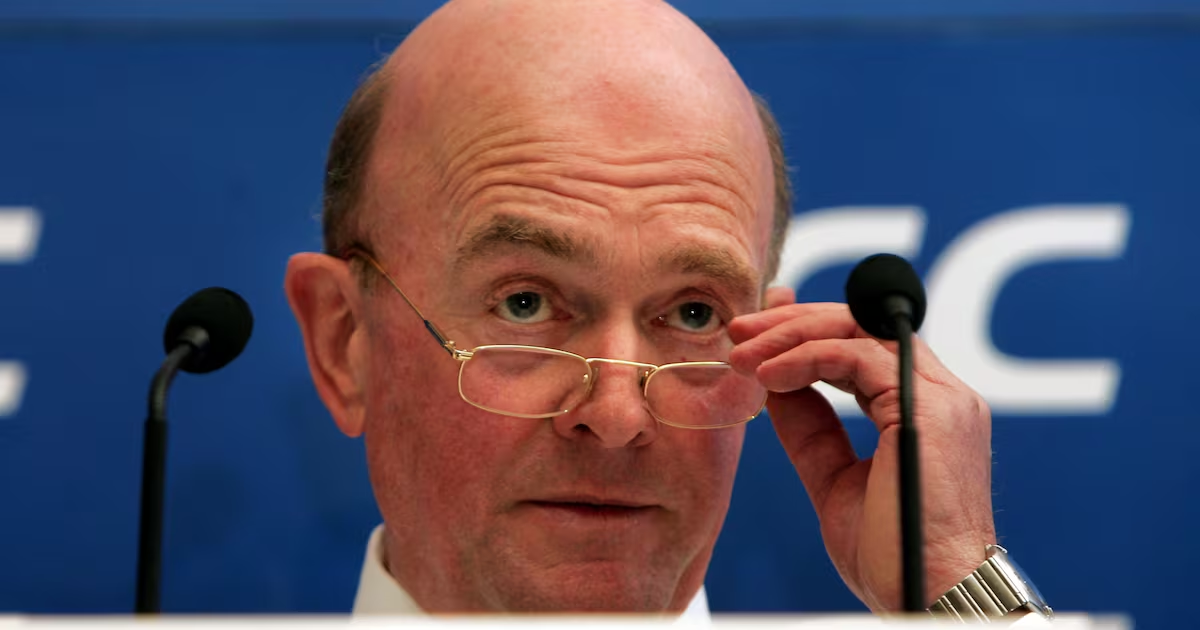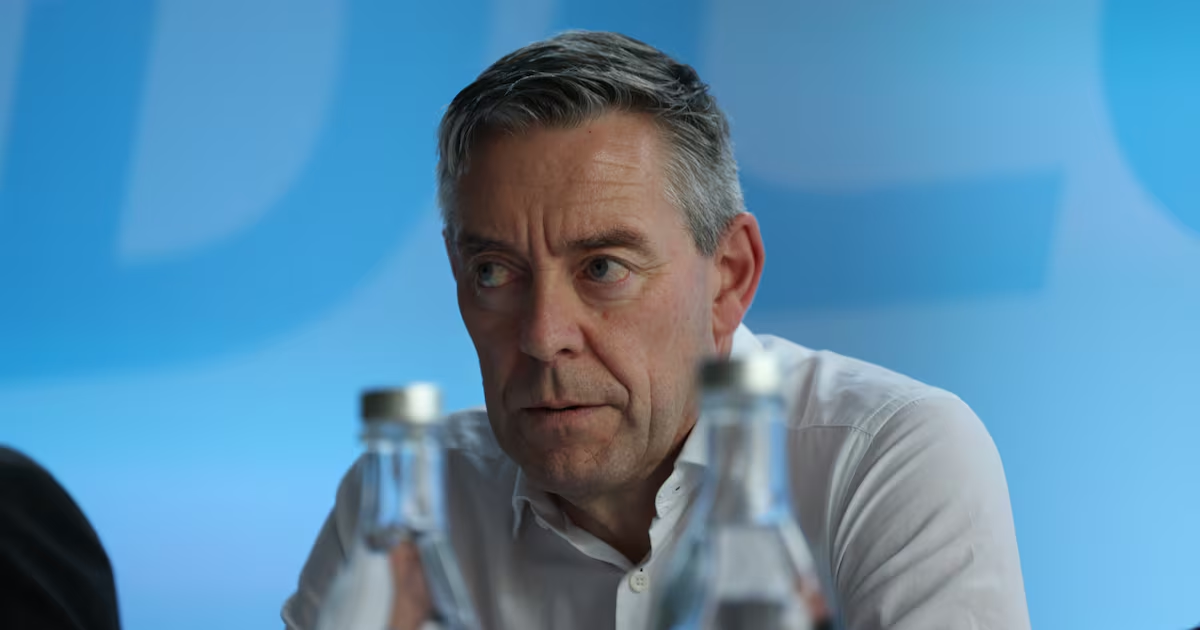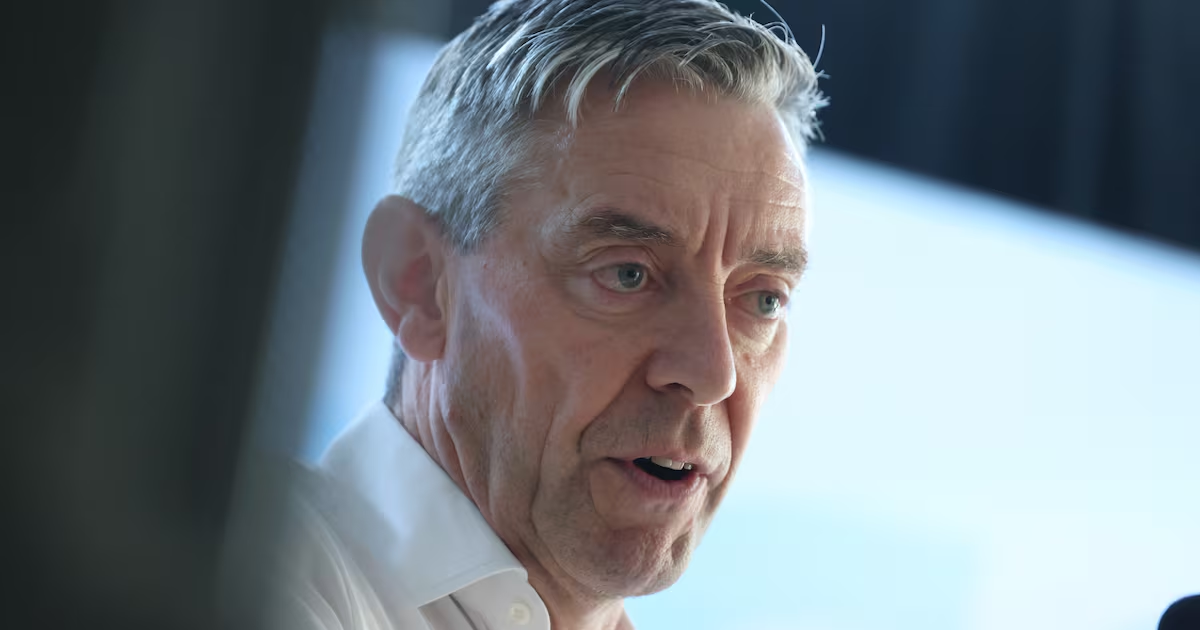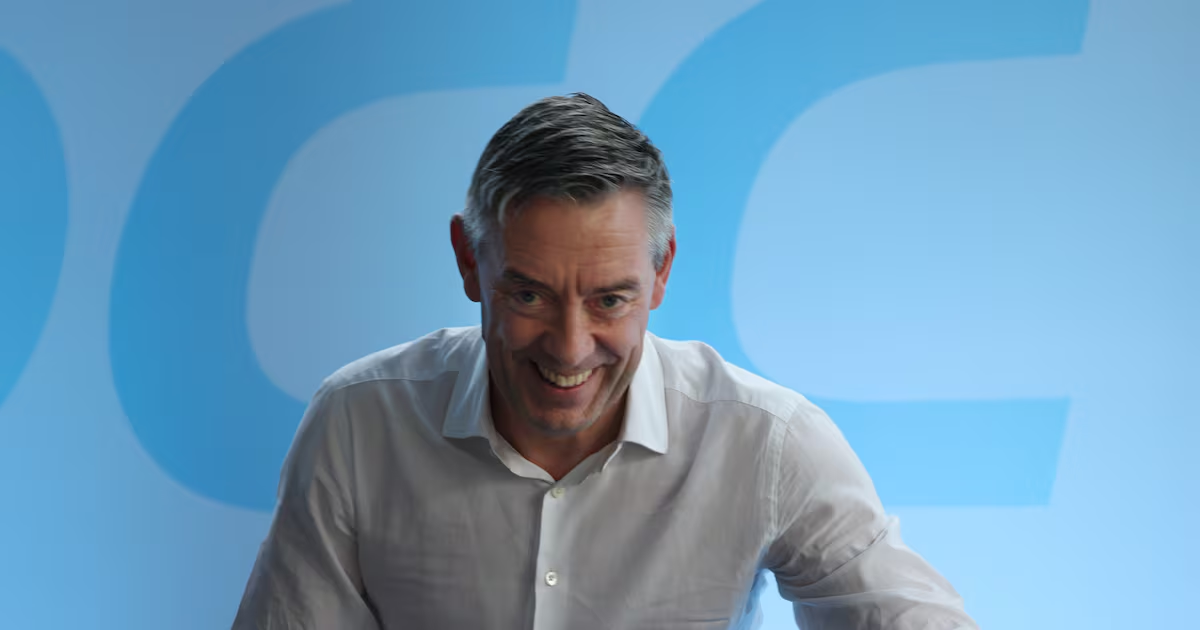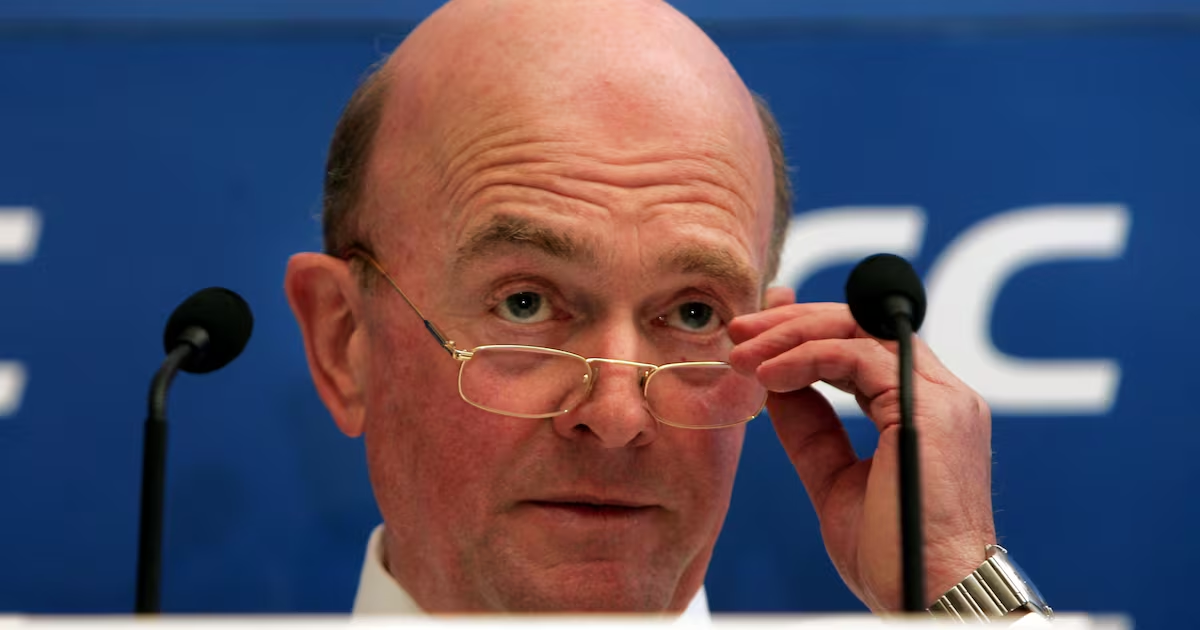
DCC founder Jim Flavin has urged the board to aspire to build a CRH of the global energy solutions industry as he stepped up his campaign against a sale of the group, as two US private equity firms circling the business face a bid deadline on Wednesday. CRH has grown to become one of the world’s largest building materials and solutions groups, with market value of about $70 billion (€61.3 billion), through decades of deal making. Flavin (83), who stepped down as executive chairman DCC in 2008 but continues to own 3.2 per cent of its stock, said the group’s board should resist the temptation to sell, double down on delivering its growth plan, and aspire to become a “world leading multi-energy solutions company”. “I believe management have done a very good job in completing the evolution of the group into an energy solutions company. If I were running DCC today I’d say, ‘Let’s go for it, let’s be ambitious, let’s be entrepreneurial’,” Flavin told The Irish Times. “Properly articulated, I think that would get the market’s support – particularly as DCC is set to be a clearer company after the technology business is sold.” DCC, led by chief executive Donal Murphy, said on June 10th that its board was “minded to recommend” a £5.7 billion (€6.67 billion) – or £66.72-a-share – proposal from US-based Energy Capital Partners and KKR.[ DCC under pressure to secure higher price despite doubts over Flavin’s call for 50% moreOpens in new window ] It represented a 15 per cent improvement on an initial pitch made in April that was rejected as “fundamentally” undervaluing the company. The bid includes the payment of a final £1.47 dividend that would ordinarily be payable next week, subject to approval at DCC’s annual general meeting on Thursday. The US consortium has until the 5pm on Wednesday to make a formal bid or announce a firm intention to do so.Flavin said that if DCC is to be sold, the board should hold out for an offer of at least £100, even if analysts only had an average price target of £57.83 on the stock before news of the US consortium emerged in April. How can tech offer solutions for obesity and weight management? Listen | 35:38He estimates that the current offer on the table values the energy business at “only 10.8 times” expected earnings for the current year, which is “a ludicrous valuation”. He said that “a more reasonable” multiple of 16.5 times “would get you to £100 per share”. “We are talking about a company that is unquestionably undervalued by the market,” said Flavin. DCC’s shares were trading at £63.40 at midday in London on Tuesday. The energy unit – which spans petrol stations in Europe and liquid gas to distributing bio fuels and solar panels – turned in a £554.2 million operating profit in DCC’s financial year through March. The technology arm, which is currently on the market and is the last vestige of its conglomerate roots, delivered a £79.9 million profit. [ DCC founder Jim Flavin blasts board for backing takeover ‘on the cheap’Opens in new window ]“If the company achieves the £830 million operating profit target they’ve set out to deliver by 2030, you’re talking of a business being worth well in excess of £100 a share,” said Flavin. “I cannot understand the about turn of the board from the time of its excellent results presentation [on May 19th] and the decision [on June 10th] to say it is minded to back the proposal.” DCC’s largest shareholder, Fidelity International, came out last week against the latest as failing to reflect its real value. Aviva Investors, with a 2.2 per cent stake, and 1.1 per cent shoulder Ninety One, formerly known as Investec Asset Management, subsequently said that they were not in favour of selling at the planned price.Flavin said he will not be attending the group’s annual general meeting on Thursday. The current bid values Flavin’s stake at about £183.5 million, including the committed dividend, which he said should not be considered as of an offer. He said that capital gains tax (CGT) that would be triggered by a sale, and potential for a further capital acquisitions tax (CAT) hit for his family in the future “have not been a consideration” as he campaigns against the sale. “My principle point is that I think DCC is a company that should stay as a public company and take the long road – which would lead to a much better return for shareholders,” he said. A spokeswoman for DCC said that the company “has a duty to act in the best interests of its shareholders”.
DCC founder calls for ‘CRH-like ambition’ as he steps up anti-sale campaign
US consortium has until 5pm on Wednesday to at least declare firm intention to bid for company
777 words~4 min read