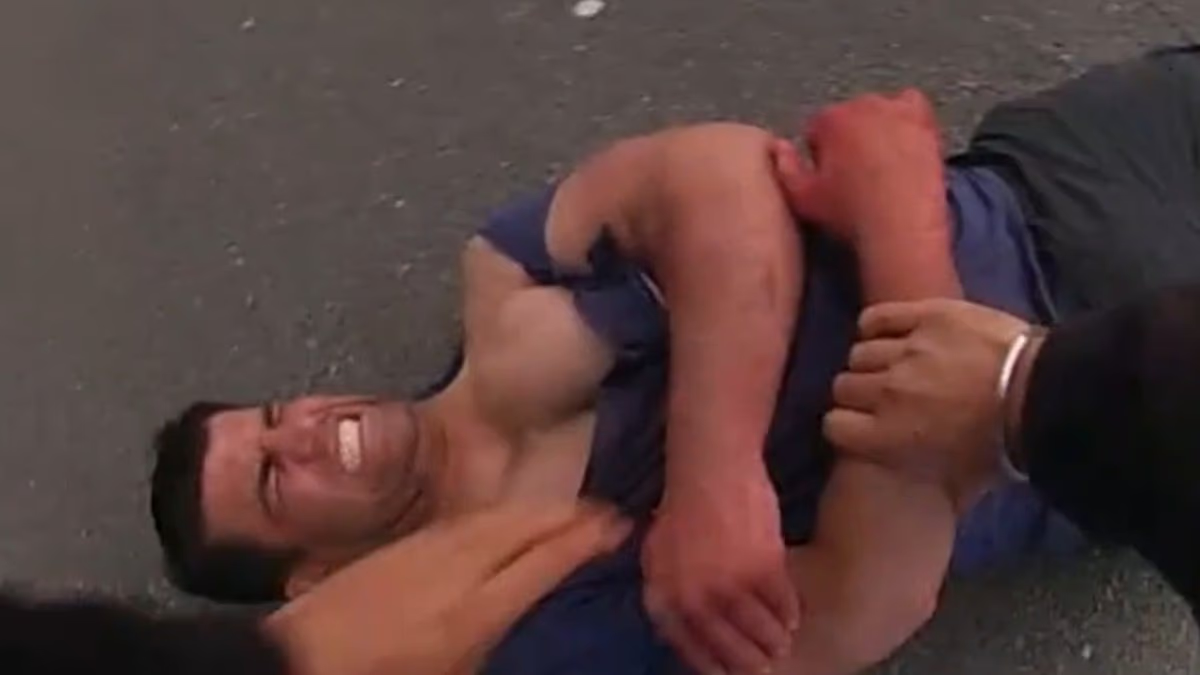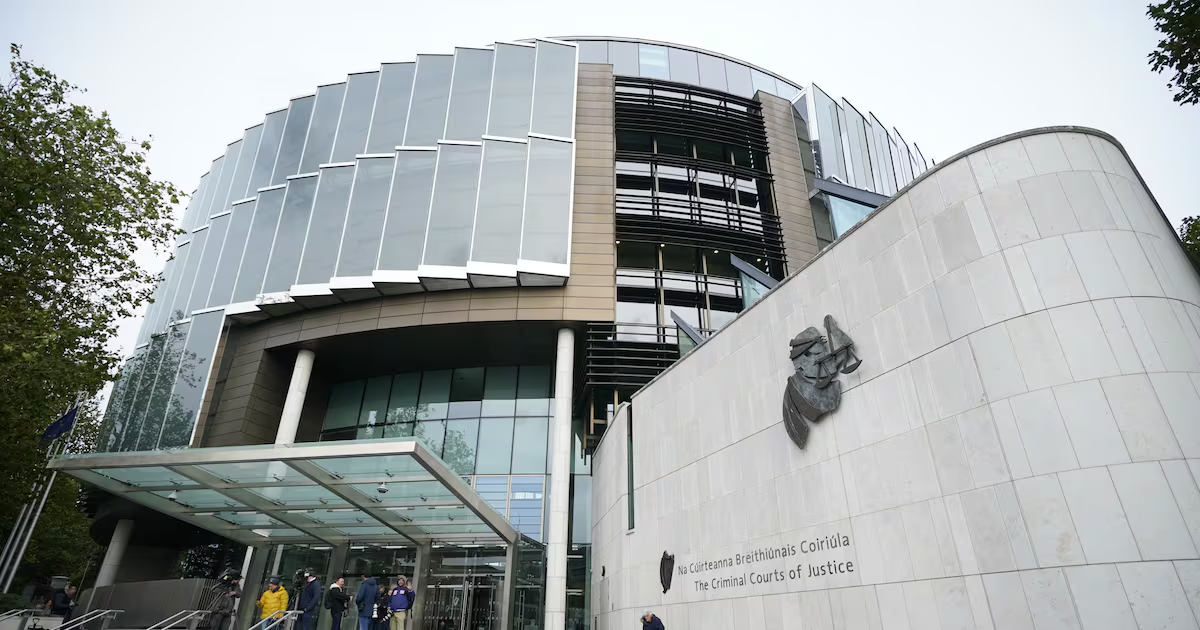
A self-described jihadist has not co-operated with a psychologist trying to carry out an assessment of the risk he poses, the Special Criminal Court has heard. Abdullah Khan (24) had previously been inspired by Isis to set fire to a pub owned by mixed martial artist Conor McGregor before stabbing a garda on a Dublin street while shouting “Allahu akbar”. However, barristers for Khan court on Monday that the defendant has agreed to undergo a full assessment by a prison psychologist before the court finalises sentencing. Khan, with an address in Dublin that cannot be published due to a court order, previously pleaded guilty to eight charges. He was charged that on July 25th, 2025, at the Black Forge Inn, Drimnagh Road, Dublin 12, he committed arson by pouring petrol on the front door of the pub and lighting it with a match. He was charged that four days later, on July 29th, 2025, at Capel Street, he assaulted Garda Gary Lynch causing him harm, and attempted to assault Garda Patrick Nevin. He was further charged with producing a knife during the same incident and two counts of endangerment. Khan was further charged with two counts of engaging in terrorist activity or terrorist-linked activity on the dates of each offence. When the case came before the court in April, Det Insp Gavin Ross told prosecution counsel Gerardine Small that Khan was part of a wider group of like-minded radicals. He said the Special Detective Unit (SDU) became involved in the investigation due to the concern that Khan had been radicalised. The use of the term “Allahu akbar” and attacking police was similar to terrorist attacks elsewhere in Europe, he said. At that April court sitting, Judge Karen O’Connor said Khan would require “significant post-release supervision”, and therefore the court wished to have the assistance of a probation report. She said the court was requesting a structured report from the probation service that would address Khan’s radicalisation. To assist the service, the judge ordered that they be furnished with an expert report drawn up as part of the prosecution case. When the case returned to the Special Criminal Court on Monday, O’Connor said the court had had the opportunity to consider the probation report, with the probation services constrained in carrying out a risk assessment because of the nature of the co-operation given by Khan. She said the court would require comprehensive pre-release planning, so it was essential that effective risk-assessment management was carried out. Counsel for Khan told the court that the defendant was willing to abide by the conditions set out in the probation report and would undergo a full assessment by a prison psychologist. In those circumstances, the judge said she would send the matter back to the probation services to see if Khan engages as indicated. The case was adjourned to July 27th.
Sentencing of self-described jihadist who stabbed garda put back for psychological assessment
Abdullah Khan (24) admitted various charges including arson at Conor McGregor’s Black Forge Inn in Dublin
476 words~2 min read