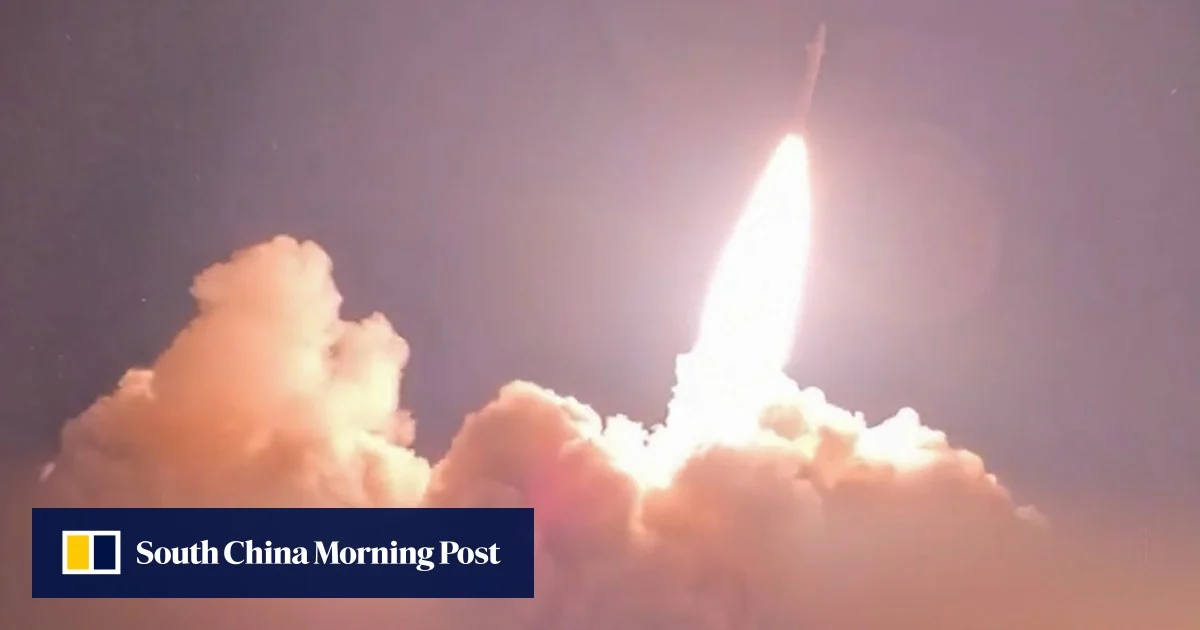
President Donald Trump is back at war with Iran after the fragile ceasefire crumbled last week, but the commander in chief might have more leverage to prosecute the conflict this time.On Monday, the Trump administration announced that U.S. forces would once again blockade the Strait of Hormuz in an effort to choke off Iran‘s energy industry and thereby its economy. This decision followed the Treasury Department’s recent reimplementation of sanctions on Tehran, not to mention wave after wave of escalating strikes against hundreds of Iranian military targets in the strait, along the Iranian coast, and even on Iran’s oil launch point of Kharg Island.Max Meizlish, a senior research analyst at the Foundation for Defense of Democracies, said the “strategic shift” makes it so that Trump “can now negotiate from a position of strength.”
“Whatever remains of the [memorandum of understanding], the two sides are now negotiating amid active hostilities — and that gives Washington greater leverage to raise the military and economic costs of Iranian aggression,” Meizlish argued.Two longtime Trump aides also told the Washington Examiner that Trump’s decision to abandon the MOU and “unshackle America’s military and economic might” not only gives him leverage over Iran but also could help solidify the GOP base.“I think President Trump was in a very tight spot. On the one hand, he was dead set on preventing Iran from obtaining a nuclear weapon, but on the other, he was also, rightfully so, cautious of throwing the United States into another endless war in the Middle East. That was absolutely a nonstarter,” a National Security Council staffer from Trump’s first term explained. “But now, President Trump can turn to critical Republicans and say, ‘Look, we gave diplomacy a shot, but Iran isn’t interested in peace. It’s time to start dropping bombs again.’ It’s actually turned into the perfect case study for why Iran can’t be trusted in the first place.”TRUMP SAYS NO GROUND INVASION OF IRAN EVEN TO SECURE NUCLEAR DUSTOne former senior White House official told the Washington Examiner that the tone Trump is using to describe Iran’s leadership may prove just as critical to ending the war as the military and economic pressure.“Throughout the MOU talks, President Trump talked about Iran’s leaders, or at least the ones we’re talking to, as being more reasonable than [former Supreme Leader Ali] Khamenei,” that person assessed. “But then Iran scuttled the talks, and President Trump is very publicly broadcasting that he thinks Iranian officials are liars, scum, and, essentially, dead men walking.”During a Monday interview with conservative radio host Hugh Hewitt, Trump stated flatly that the ceasefire with Iran was a test the Middle Eastern country failed.“Memorandums of understanding, when you’re dealing with sleaze bags, don’t mean much,” he told Hewitt. “It was sort of a test, and they weren’t there. They didn’t honor the test.”“We’re going to hit them very hard tonight and we’re going to hit them hard tomorrow — and there’s not a damn thing they can do about it. They have nothing. They have nothing going other than they have big mouths,” Trump added when asked if he had options to “kill” Iran’s remaining leaders. “I got to know them, and they’re stone-cold crazy.”‘IT’S PERSONAL’: HOW AN IRANIAN ‘KILL LIST’ RESHAPED TRUMP’S APPROACH TO WARStill, Trump hasn’t completely shut the door on diplomacy. Just hours after his interview with Hewitt, the president told reporters in the Oval Office that he still believes a negotiated peace is possible.“We had a deal with them two days ago, and then they said, ‘Oh, we can’t make that deal. We have to negotiate it further,’ and this is what they’ve done for 47 years. The difference is nobody negotiated like I do,” he proclaimed.