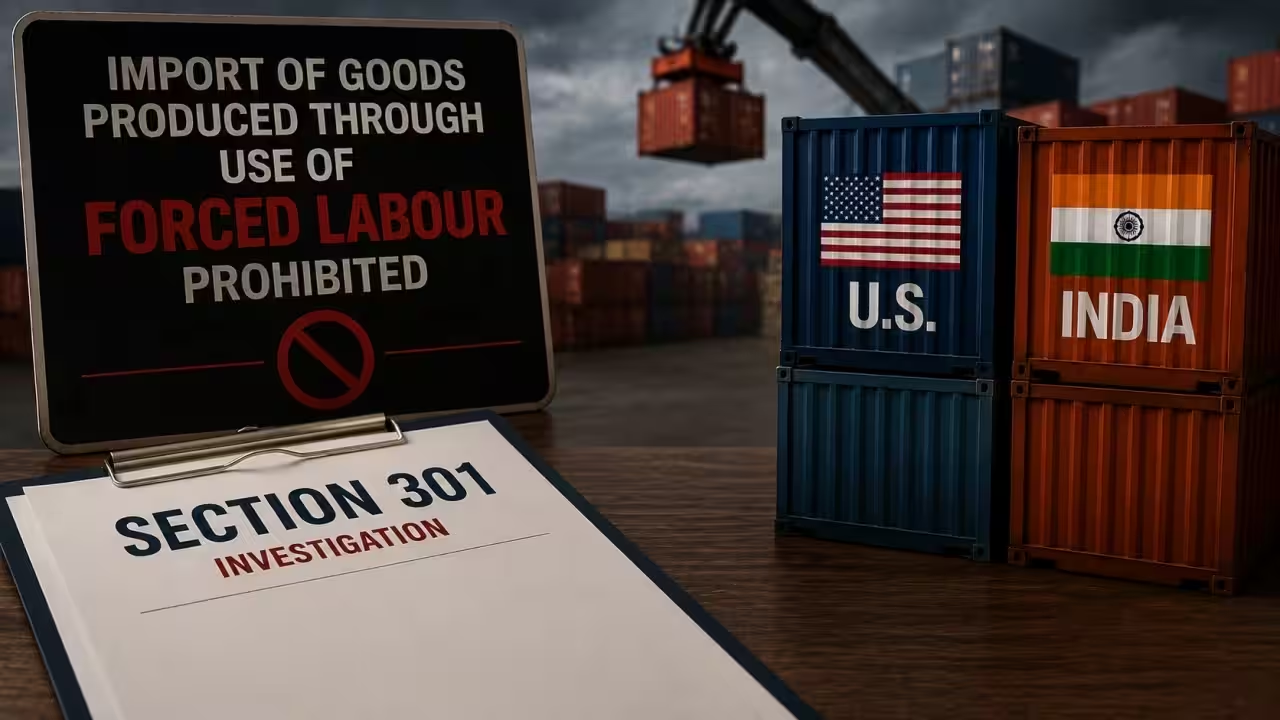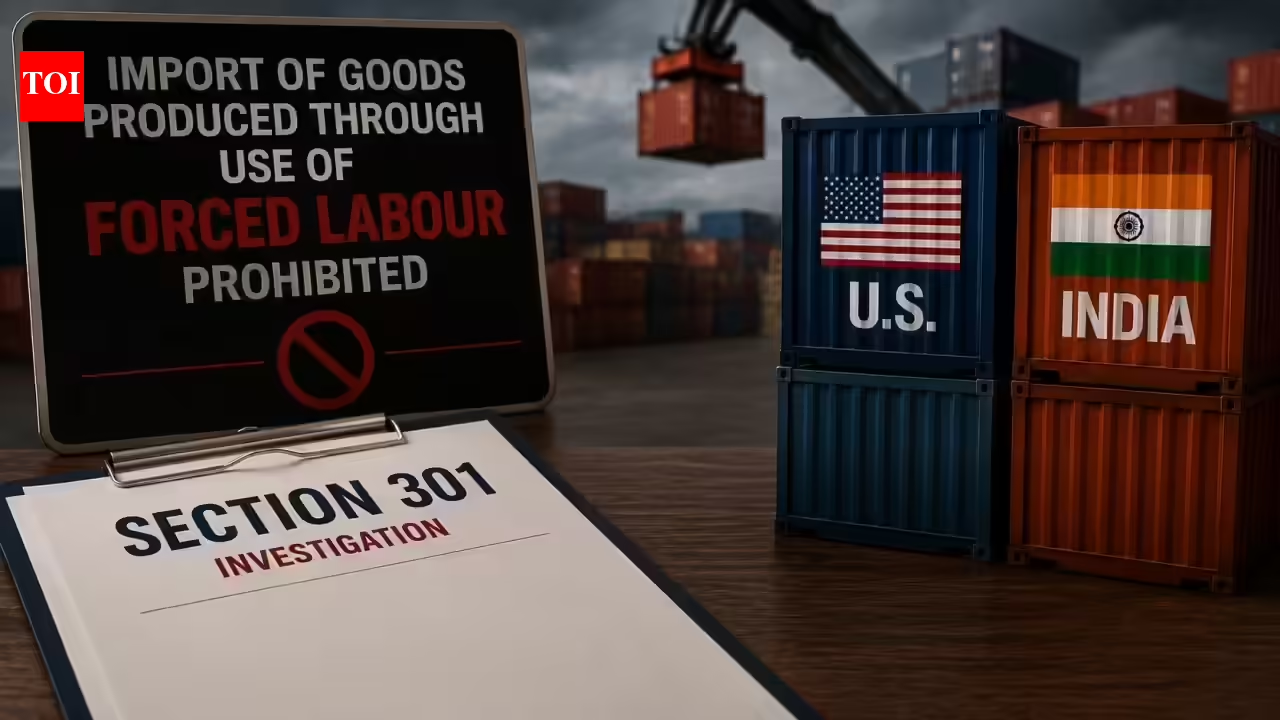
India has amended its Foreign Trade Policy (FTP) to prohibit the import of goods produced or manufactured using forced labour, giving the Central Government powers to notify and ban such products after an inquiry. The new rules, notified by the Directorate General of Foreign Trade (DGFT), will come into force 30 days after their publication in the Official Gazette.The notification inserts a new Paragraph 2.20B into the FTP, 2023, under which the import of goods produced or manufactured, wholly or partly, through the use of forced labour is prohibited. The government may, from time to time, notify the goods whose imports will be banned based on the findings of an inquiry or any other material it considers appropriate.The DGFT will conduct inquiries into the use of forced labour in the production of goods, following procedures prescribed in the Handbook of Procedures, 2023.The notification also introduces a new definition of "forced labour" under Chapter 11 of the FTP. It adopts the definition contained in the International Labour Organization's (ILO) Forced Labour Convention, 1930 (No. 29).According to the notification, forced labour means "all work or service which is exacted from any person under the menace of any penalty and for which the said person has not offered himself voluntarily."The DGFT said the amendment strengthens India's trade policy framework by enabling the government to restrict imports linked to forced labour while aligning the FTP with internationally accepted definitions under the ILO convention.The notification was issued under the Foreign Trade (Development and Regulation) Act, 1992, with the approval of the Minister of Commerce and Industry. The new provisions will become effective after the expiry of 30 days from the date of publication in the Official Gazette.
India to ban imports of goods made using forced labour; DGFT notifies new trade rules
India has amended its Foreign Trade Policy to ban goods produced using forced labour. The Directorate General of Foreign Trade will conduct inquiries into such production practices. New rules prohibit imports of goods manufactured wholly or partly through forced labour. These provisions align India's trade policy with International Labour Organization definitions.
282 words~1 min read