IN Pakistan’s economy, two forces that should, in theory, move in opposite directions are advancing paradoxically together: ubiquitous digital payments and a growing stock of cash. The State Bank of Pakistan reported in November 2025 that nearly 88 per cent of retail transactions are now conducted digitally. This includes ATM use, where an overwhelming majority of transactions are cash withdrawals.
Despite this, one continues to be puzzled by the currency in circulation, which has climbed to Rs10.9 trillion, accounting for more than a quarter of broad money. What appears as resistance to change or a failure of consumers to embrace technology is, in fact, reflective of a structural imbalance.
Pakistan, in the recent past, has expanded its digital payments ecosystem faster than it has improved the conditions that make digital money reliable everywhere; stable internet connectivity, adequate spectrum, device capability, and consumer confidence in reversals and dispute resolution. As a result, digital payments are widely used for transactions, while cash remains the preferred store of value and fallback mechanism.
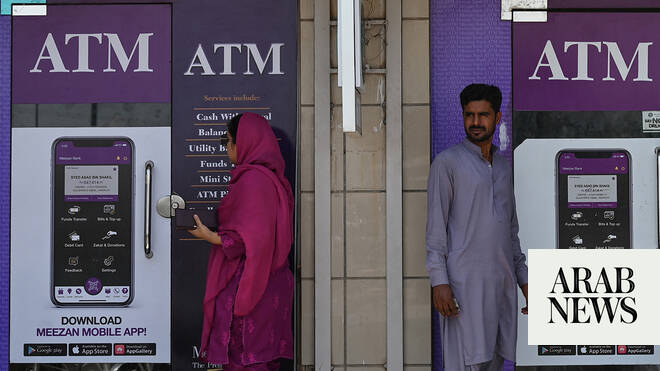
One manifestation of this imbalance is the continued expansion of the country’s ATM network. To compensate for the large volumes of cash outside the banking system, banks must physically distribute and manage enormous quantities of banknotes, particularly in higher denominations. ATMs are the most efficient mechanism for doing so at scale.