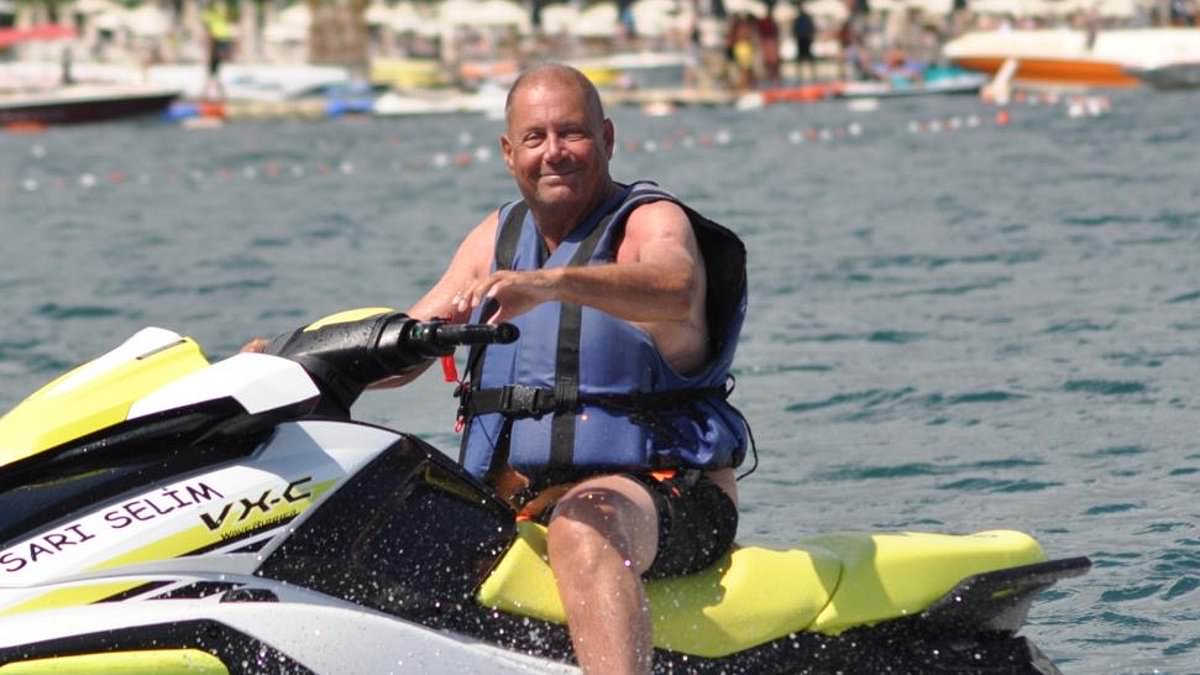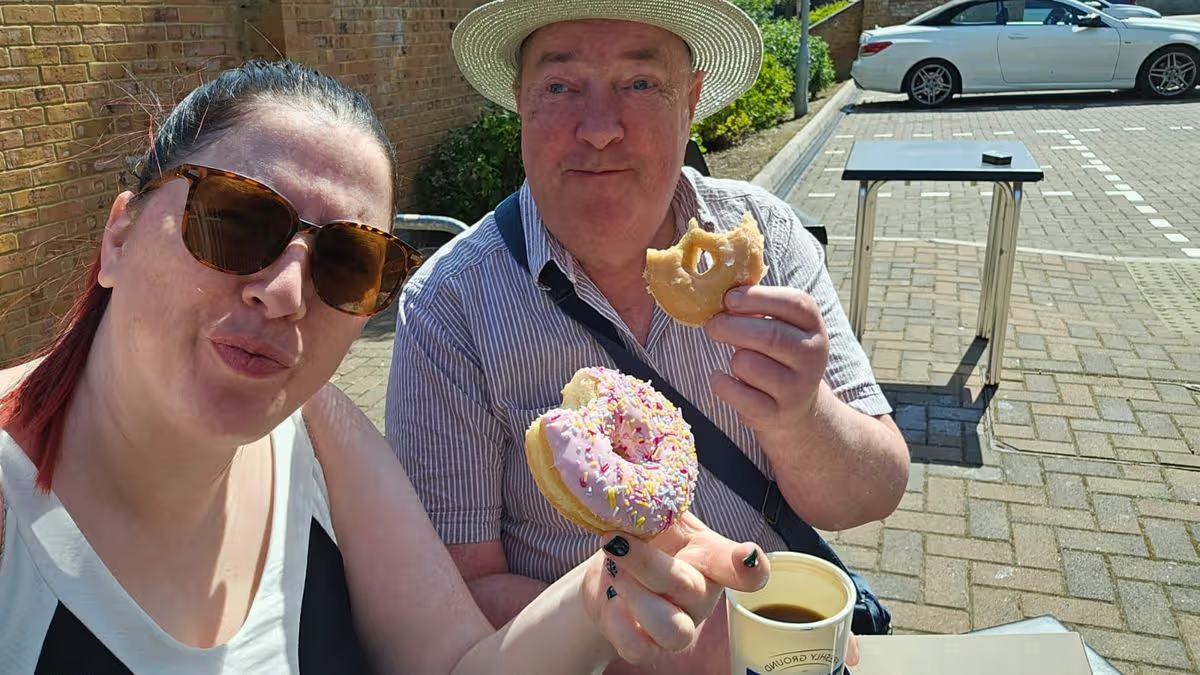
'Dad was acting out of character. He was being a bit childish and he didn’t recognise some people during meetings,' said Dixie, his daughter11:31, 14 Jul 2026A man who started getting headaches and became confused died just weeks after being diagnosed.In a unique twist of fate, a Dulux paint named in honour of Essex man Barry Taylor with "piercing blue" eyes has become a lasting legacy after he died from a brain tumour. Barry Taylor, 68, from Thurrock, died from a glioblastoma in January 2026, just five weeks after being diagnosed.Barry founded the painting and decorating company A&B Group 40 years ago and purchased Dulux paint throughout that time. Shortly before Barry’s shock brain tumour diagnosis, the company dedicated a custom paint colour to him, called Bazza Blue, inspired by the colour of his piercing blue eyes.Barry’s daughter, Dixie, 30, said: “It was such a lovely gesture. Everyone always said what an awesome man dad was; his eyes, personality and heart completely matched all that so it’s a really fitting gesture. Over the years, dad purchased a lot of paint from Dulux. He was a good customer and built really good friendships with the Dulux team.“When dad was told about ‘Bazza Blue’, he really choked up and said, "what a legacy for me”. Looking back now, at how the next few months panned out, it was a really poignant moment because we had no inkling dad had a brain tumour. Just a few weeks later, he was diagnosed.”Dixie – who became managing director of A&B Group when her dad died - is working with the charity Brain Tumour Research during Glioblastoma Awareness Week (July 13 to 19). The charity is campaigning to increase the national investment in research into brain tumours to £35 million per year, while fundraising to create a network of seven sustainable Brain Tumour Research Centres of Excellence across the UK.Every year, around 3,200 people in the UK are diagnosed with a glioblastoma. Just one third of those diagnosed with a glioblastoma will survive beyond a year. Just 4% of those diagnosed will survive five years or more. The average survival for someone diagnosed with glioblastoma is 12 to 18 months. There is no cure for this aggressive type of brain cancer and treatments have not improved in more than 20 years.In November 2025, grandfather-of-seven Barry started suffering from “excruciating” headaches and confusion.“Dad was acting out of character. He was being a bit childish and he didn’t recognise some people during meetings,” said Dixie, who is mum to Rae, seven, and Reggie, four.“His GP sent him to an ear, nose and throat specialist at Thurrock Community Hospital. Just to be cautious, they sent dad for a CT scan, which showed there was a mass on his brain.“I was petrified. I idolised dad; there was nothing I wouldn't do for him and there was nothing he wouldn't do for me. We had a connection and a loyalty to one another; as well as referring to him as dad, he was also the boss, the geezer, and he was genuinely my best friend.“I just couldn't believe he had a brain tumour. He was such a strong man, and he was my safe place. I could never imagine him to be vulnerable, so seeing him like that was really hard.”Barry was sent to A&E at Basildon University Hospital and was put on steroids to reduce the swelling on his brain before having a full body scan.Dixie said: “A few weeks later, we went to get the results. When I saw the image, my heart sank. There were two tumours which were joining one another like a web. The consultant said even without doing a biopsy, he could say it was aggressive and most likely a grade four, which the biopsy confirmed.“With the utmost courage, dad agreed to proceed with radiotherapy after being told chemotherapy would not be effective. Just over a week before treatment was due to start, we received the devastating call that treatment was being withdrawn as the latest markers showed that hospice care was now the only option. It was awful having that lifeline taken away.”Barry was cared for at home by his family, where he died on January 25, 2026.Dixie said: “With so many illnesses and diseases, there are cures, but we don’t have that for brain tumours. It's like passing a bullet over and saying you have to surrender."With other types of cancer, there are so many pieces of hope you can grab onto these days, but for dad it was like he was signed off the moment he got the diagnosis. We got bad news after bad news. It is a devastating disease."The battle was short but gruelling, but, in true Barry style, he handled it with strength, courage, charm, and determination. I sat and watched in awe as this cancer stripped my dad away, one slow day at a time.”Paul Roughan, sales director at Dulux Decorator Centre, said: "Barry was a valued partner, mentor and a well-respected member of our industry. His passion, professionalism and the relationships he built left a lasting impact on everyone who worked with him."Bazza Blue was named after his piercing blue eyes and presented to Barry to celebrate the 40th anniversary of the A&B Group. This colour is now a small tribute to an exceptional person whose legacy will continue to inspire us."On Sunday, July 5, Dixie and her friend, Ellie Conway, ran the Maidstone 10k, raising more than £2,000 for Brain Tumour Research.Dixie said: “It was an amazing day, but it was also very emotional as I thought of dad. I’m sure he would be as proud as punch.“Dad was truly one in a million, an idol, a gentleman, a legend. He will be missed more than words can explain. He will be remembered for his big heart and brilliant blue eyes. In his legacy, I will spend the rest of my life helping to find a cure for this disease that can rip patients and families apart in weeks. If I can contribute a little bit to help others avoid what I’ve gone through, then I’ll do whatever I can, because I know how hard it is to be a daddy's girl and watch your dad just drift away.”Brain Tumour Research said tumours killed more children and adults under the age of 40 than any other cancer, yet historically just 1% of the national spend on cancer research has been allocated to brain tumours since records began in 2002. Research funded by Brain Tumour Research is giving families affected by glioblastoma hope. Its scientists are working at the cutting edge of research to uncover new knowledge about glioblastoma, find new, more effective treatments, and ultimately get closer to a cure for this devastating disease.The Brain Tumour Research Centre of Excellence at Queen Mary University of London has developed a world-leading platform to compare glioblastoma stem cells and healthy brain stem cells from the same patient. This allows researchers to find out what drives an individual patient's tumour to grow and if this can be targeted with treatments – the first step in personalised treatment for glioblastoma.Dr Karen Noble, director of research and policy at Brain Tumour Research, said: “Barry’s story reflects the devastating reality faced by so many families across the UK. We are calling on the Government to increase the national investment in research into brain tumours, including glioblastoma. We need to also see an increase in the number of clinical trials, and access to them, in the UK, and we want to end inequalities in access to whole genome sequencing that could inform access to trials and emerging treatments.”Brain Tumour Research funds sustainable research at dedicated centres in the UK. It also campaigns for the Government and larger cancer charities to invest more in research into brain tumours in order to speed up new treatments for patients and, ultimately, to find a cure. The charity is the driving force behind the call for a national annual spend of £35 million in order to improve survival rates and patient outcomes in line with other cancers such as breast cancer and leukaemia.Article continues belowFor more information and to donate to the Glioblastoma Awareness Week Appeal, visit braintumourresearch.org/glioblastoma-awareness-week
Man with 'headaches and confusion' died five weeks after diagnosis
'Dad was acting out of character. He was being a bit childish and he didn’t recognise some people during meetings,' said Dixie, his daughter
1,371 words~6 min read