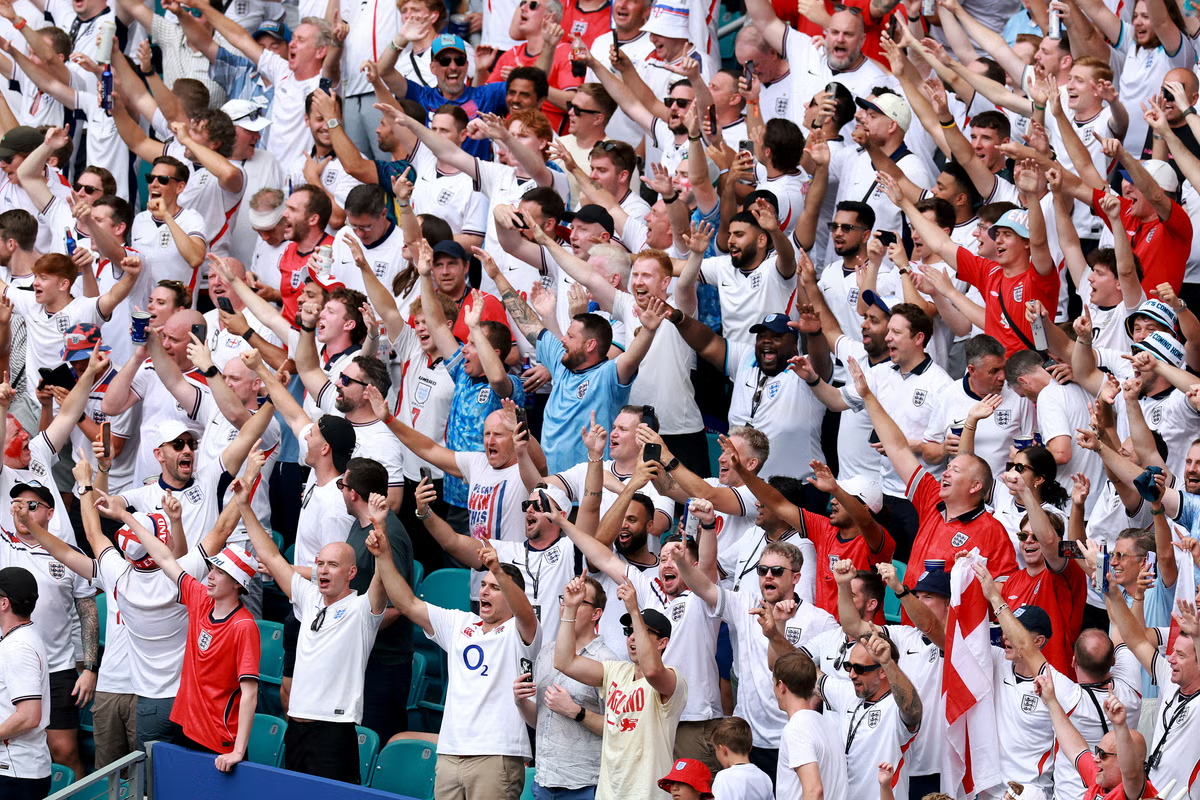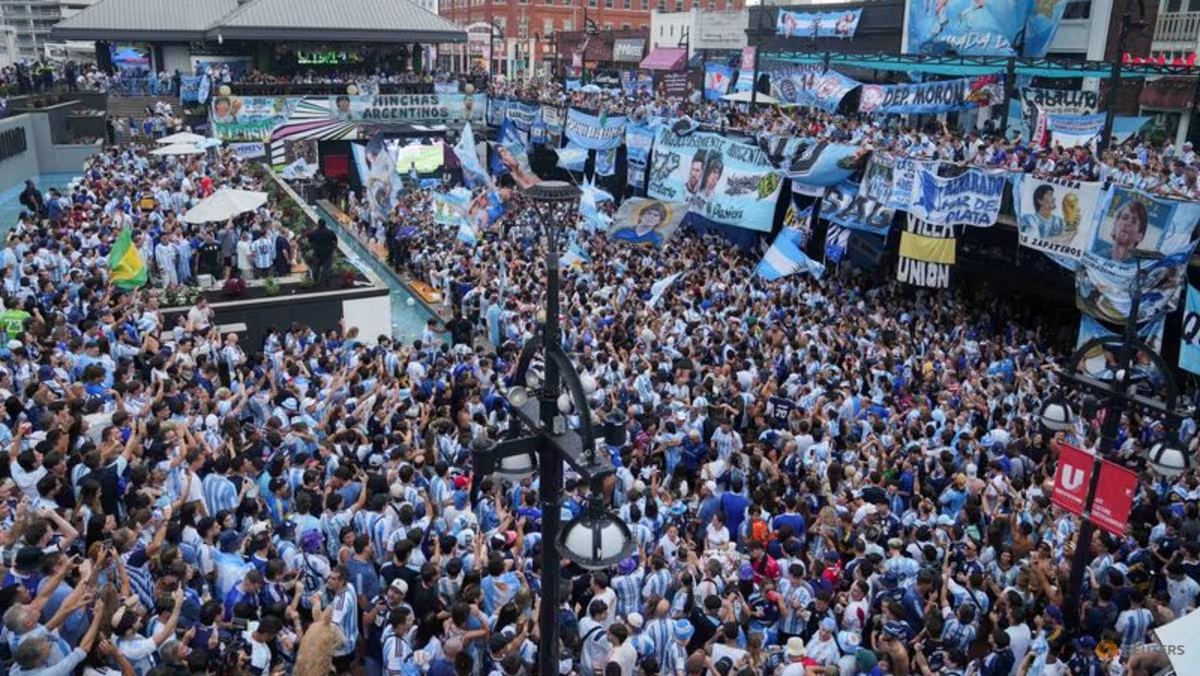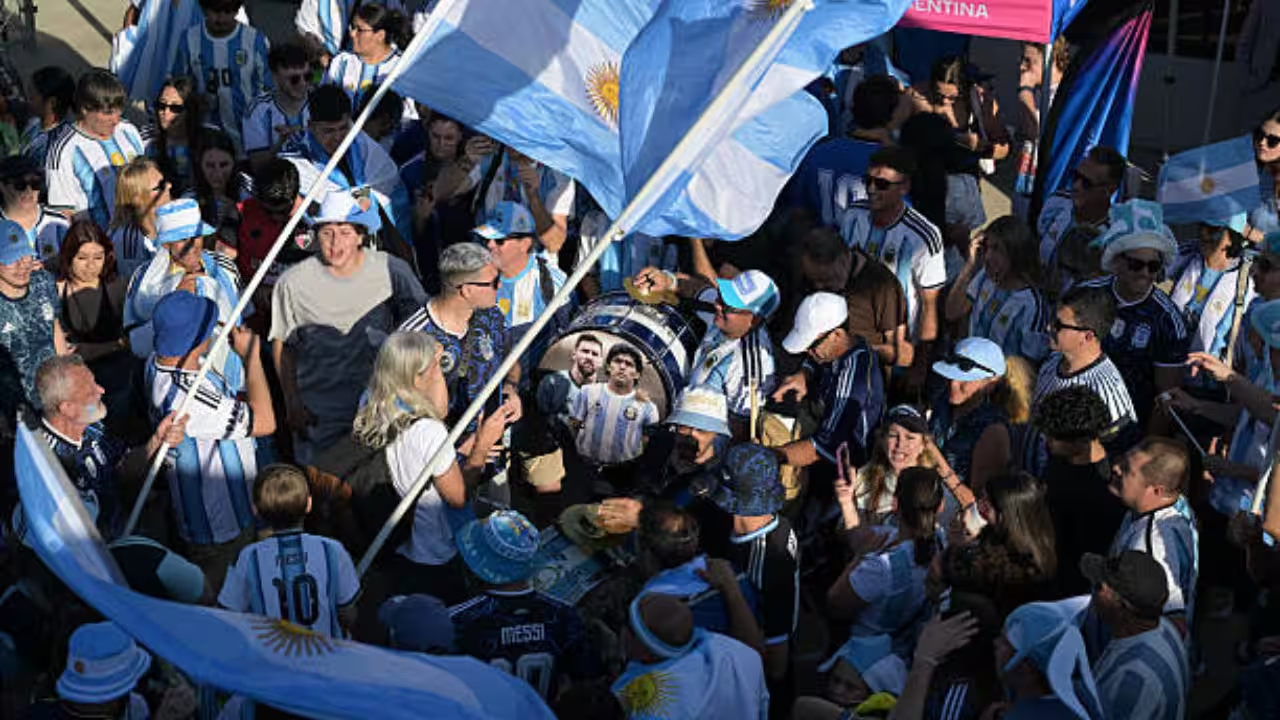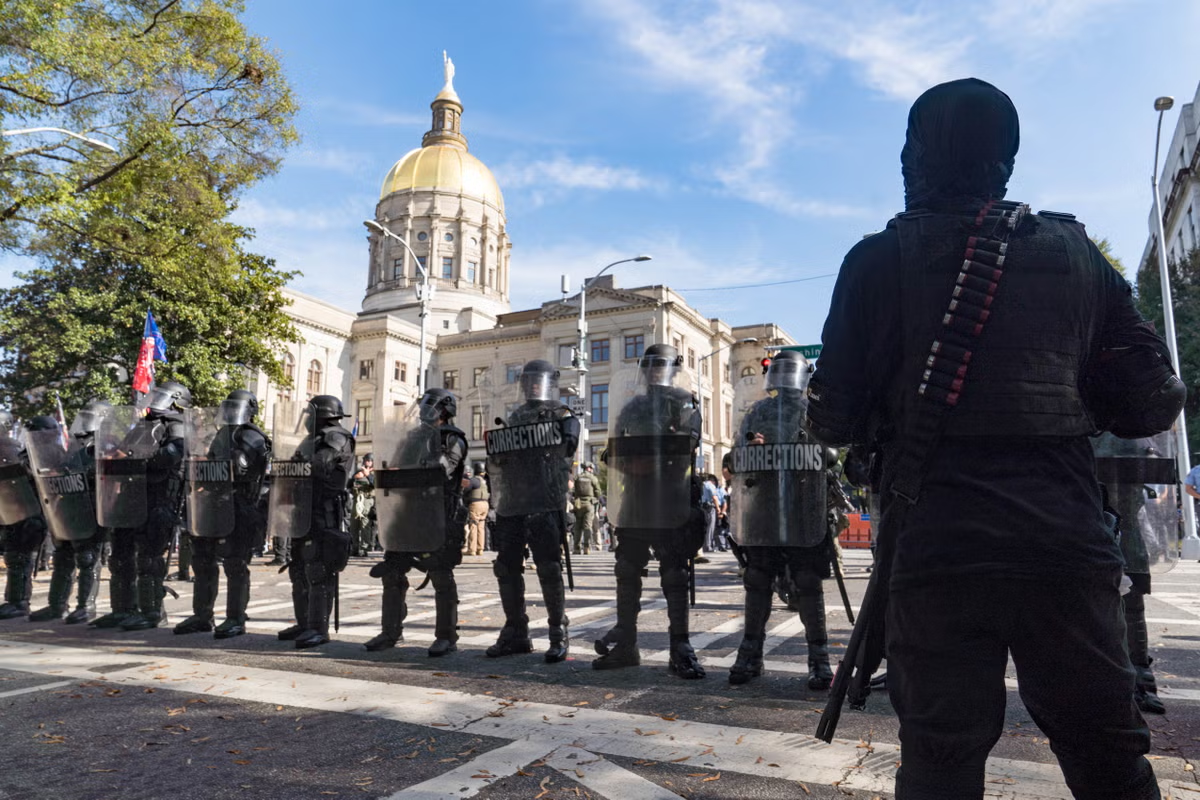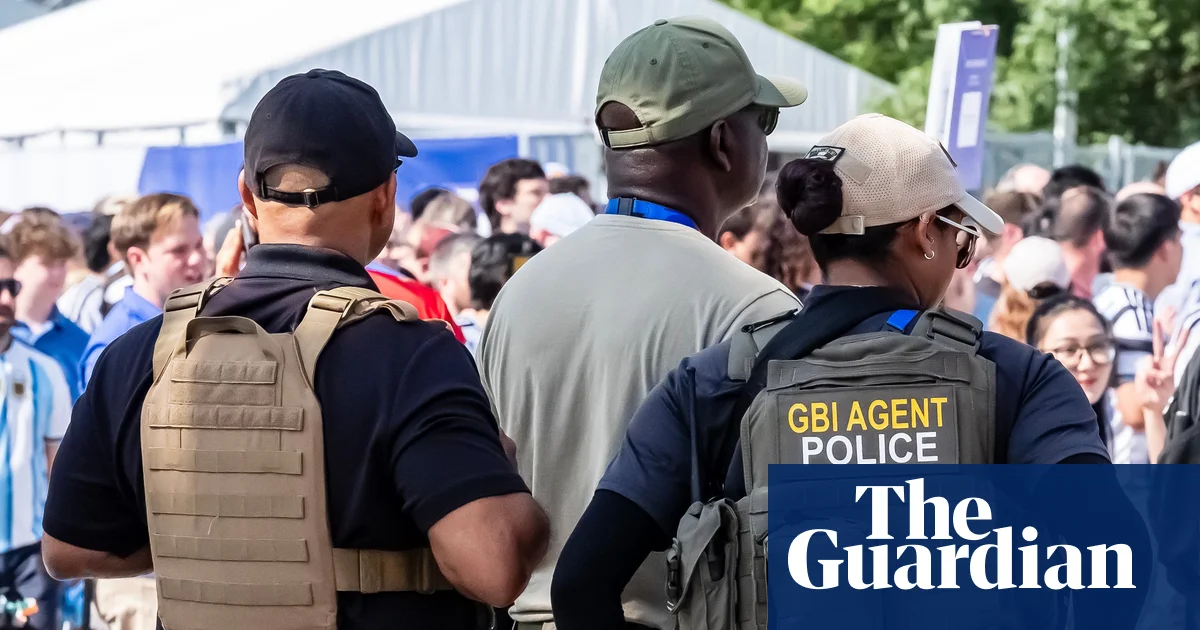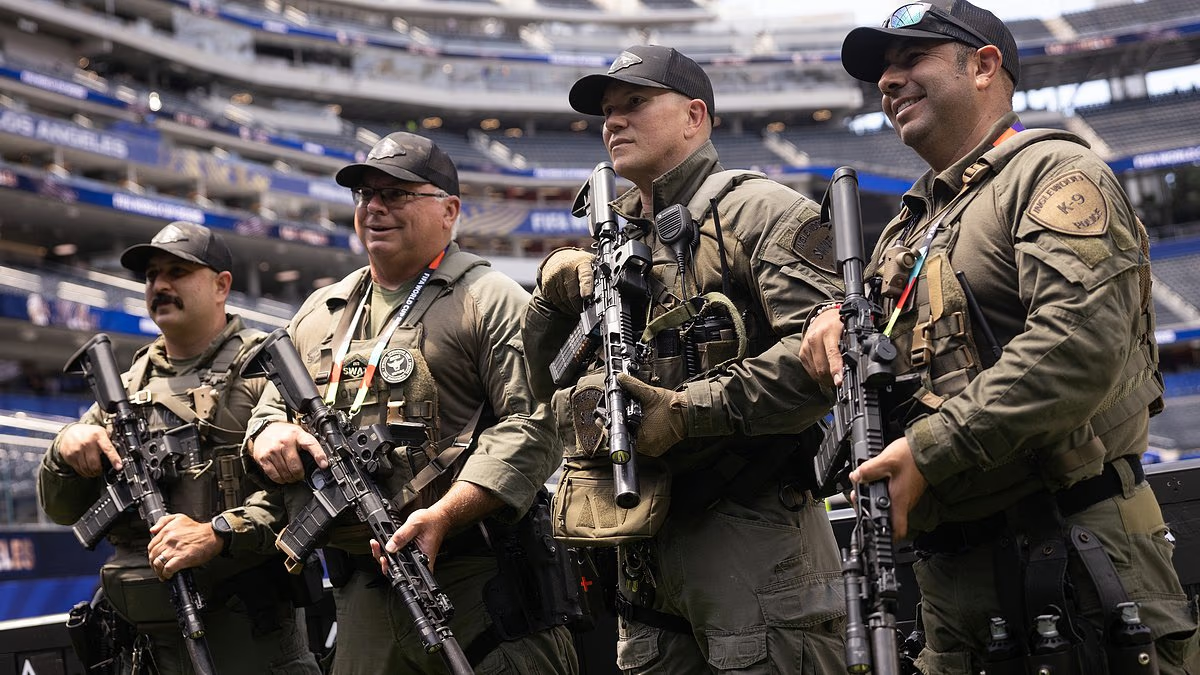
Argentinian football thugs are feared to be heading to the US for the World Cup semi-final against England. The government in Buenos Aires is liaising with its British counterparts, the FBI, and local police to prevent troublemakers from heading to Atlanta's Mercedes-Benz stadium. There is also a large Argentine expat population in the southern United States, and it is thought that half the crowd will be cheering against England.Concerns arise as there is no segregation between different fans. It also comes after a series of isolated clashes between rival fans in Miami last week when England played Norway, both in the stadium and along the South Beach strip.The game has rich political and historical undertones - dating back to 1966 - when England beat Argentina in the quarter finals. The two countries also fought an eight-week war in the spring of 1982 after Argentina invaded the Falkland Islands, leaving 255 British military dead and 649 enemy killed, with dozens wounded on both sides.Then just four years later, both countries met in the Mexico World Cup quarter finals with Argentina winning 2-1 thanks to the infamous 'Hand of God' goal from Diego Maradona. The match is seen as a potential flashpoint in the tournament, which so far has been trouble-free, and as part of the security operation, there have been meetings between the FBI, Georgia State Police, Miami police, Scotland Yard, and the chief superintendent of the City of Buenos Aires' Mass Events Division. Argentina supporters attending England's quarter-final game against Norway fight in the stands with an English fan Argentina sang a song about the Falkland Islands to taunt England after beating SwitzerlandExtra police have been drafted in around the stadium, and across the city of Atlanta, with England fans advised to drink in only specified 'safe' pubs which have been allocated to them.Officials in Buenos Aires have also provided the US immigration with a list of names of known hooligans, and passports are also being checked on flights from Argentina.Official concerns were heightened by various posts that began circulating on social media encouraging Argentine football fan groups to travel to the match against England.Under Operation Falcon, the Ministry of National Security operates in conjunction with the National Directorate of Migration and allows authorities to detect when a person subject to the right of admission leaves the country.The system's operation was modified specifically for this match. Until now, when a person subject to the right of admission left Argentina, the decision on whether to allow them entry into the United States rested exclusively with US authorities.On this occasion, every time a person included in that database leaves the country, an automatic alert will be issued and sent to Argentinian officials. Upon receiving that notification, officials will make the information available to US authorities to warn them that the individual is subject to restrictions on entering stadiums in Argentina.As part of this effort, the Argentine government has already provided US authorities with a list of approximately 35,000 individuals subject to admission restrictions. Among them are members of various hooligan groups, individuals with criminal records, and those in arrears on child support payments.This information does not automatically mean that these individuals cannot enter the United States or attend the matches. The final decision rests solely with US authorities, who use this data to evaluate each case.The strategy aims to prevent a repeat of incidents that have occurred at other World Cups. England fans travelling to Atlanta for Wednesday's World Cup semi-final with Argentina will encounter strong security measures in place - with the fixture classified as the 'highest risk'One such instance was in South Africa in 2010, when the group Hinchadas Unidas Argentinas organised trips for fan groups from various clubs to attend the football tournament. That experience ended with several of them being deported.The list provided by Argentina to the United States includes members of fan groups from numerous football clubs in the country, including Boca Juniors, River Plate and La Plata.It comes as Argentinian Falklands war veterans tried to quell emotions ahead of their country's World Cup semi-final against England, saying 'it's sport, not war.'In a statement, the Federation of Malvinas (Falklands) War Veterans said: 'Football, as the ultimate expression of our nation's popular culture, stirs passions that often intertwine with our national identity.'We understand and share the excitement of being among the top four teams on the planet.'However, as guardians of the memory of the 649 heroes who remain on the islands and in the waters of the South Atlantic, we consider it essential to draw an unwavering line between sporting fervour and the national cause.'From this Federation, we wish to state the following: Sport is not war: The semifinal match is a global sporting event, not an armed rematch or a form of historical redress.'Sovereignty is defended in international forums through diplomacy, historical truth, and the peaceful, non-renounceable claim mandated by our National Constitution.'We ask society, the media, and the fans who support the *Albiceleste* (Argentina) to uphold the utmost respect for those who gave their lives for the homeland while cheering on the team.'May football serve as a bridge to raise awareness of the Malvinas cause and to remind the world that our claim remains more relevant than ever.'The ball rolls and pride in our colours grows, yet our memory remains intact. We play for sporting glory, but we march every day for historical truth.'Speaking to Argentinian media, the association's treasurer, Miguel Angel Rodriguez, explained why they had released the statement, saying the 'atmosphere was getting heated'.Mr Rodriguez urged for 'calm, no hate and no violence' and added:' We want people to understand that the islands can only be recovered through diplomacy. Football has nothing to do with it. Football is just a football match.' Football fans watch a live broadcast of the 2026 FIFA World Cup quarter-final match between Argentina and Switzerland, won 1-0 by Argentina, during a public viewing in Ternate, North Maluku, on July 12, 2026He also criticised fans in Argentina for going on the rampage following their win over Egypt and said:' We want people to wave their flags, decorate their homes with banners, and not repeat what happened in the last match, the destruction they caused.'Why loot businesses? What was the point? That doesn't represent Argentinians. If Argentina gets to the final, we will all go out to celebrate, but doing so means celebrating without destruction, without riots, and without harming others.'The statement from Argentinian war veterans comes as the Latin American country accused Britain of breaching international law as it revived its claims on the Falkland Islands. Just weeks after the 44th anniversary of the battle to retake the British outpost after it was invaded by Argentina, the country's foreign minister Pablo Quirino said: 'Time does not transform an illegitimate occupation into sovereignty,' adding it was a 'breach of Argentina's territorial integrity following the British occupation of 1833.'He argued that the principle of self-determination does not apply in this case, because the Falkland Islands' current population was 'implanted' by the occupying power and therefore cannot decide the territory's ownership.Now MPs and the Argentine Foreign Ministry are demanding to know why a Royal Navy ship, HMS Medway, which is stationed in the South Atlantic to keep an eye on the Falklands, sailed through its waters without prior warning in a breach of guidelines set up after the 1982 war.The Foreign Office has denied the claim and insisted the British Embassy in Buenos Aires passed on the ship's itinerary, but this is being disputed by Argentina.HMS Medway was en route from the Falkland Islands to the port of Punta Arenas, earlier this month, when Argentinian authorities say she breached an agreement by not giving a warning of the transit.Argentina says she sailed into its waters off the coast of Santa Cruz and Tierra del Fuego, off the southern tip of the country, before heading to Punta Arenas for logistics purposes.The controversy quickly escalated to a provincial level with the government of Tierra del Fuego joining in the condemnation through its Secretary for the Malvinas, Andrés Dachary, who described the movement as a 'blatant provocation' in a region that holds strategic fishing, energy, and Antarctic resources. The upcoming football match between England and Argentina has revived tensions over the Falklands War in 1982. File image: Royal Marine Pete Robinson (Peter Robinson) of 40 Cdo RM anti tank troop attached to 45 Cdo RM yomping towards Port Stanley, Falkland Islands, with the Union Jack flying from his backpackArgentinian MP Guillermo Michel has demanded that Buenos Aires follow up through diplomatic channels in London on what exactly happened.He said: 'This event cannot be understood as anything other than a provocation by the United Kingdom and constitutes an extremely serious matter that cannot be normalised.'The ship's passage triggered operational and diplomatic alarms, and according to reports, the Argentine Navy detected the vessel using electronic sensors and the deployment of a Beechcraft B-200M 'Cormorant' aircraft.Officials in Argentina say HMS Medway breached regulations set up under the Madrid Agreement of 1990, which restored diplomatic relations and was designed to prevent military incidents.Launched in 2017, HMS Medway was deployed to the South Atlantic in January, and earlier this summer was used to ferry medics and supplies to the island of Tristan da Cunha following a Hantavirus outbreak.HMS Medway replaced HMS Forth this year as the Falkland Islands' permanent patrol vessel and is there to protect but also safeguard UK economic interests, which include nearby oil fields which are due to be explored in 2028.
Argentinian 'ultras' feared to be descending for World Cup semi-final
The government in Buenos Aires is liaising with its British counterparts, the FBI , and local police to prevent troublemakers from heading to Atlanta's Mercedes-Benz stadium.
1,584 words~7 min read