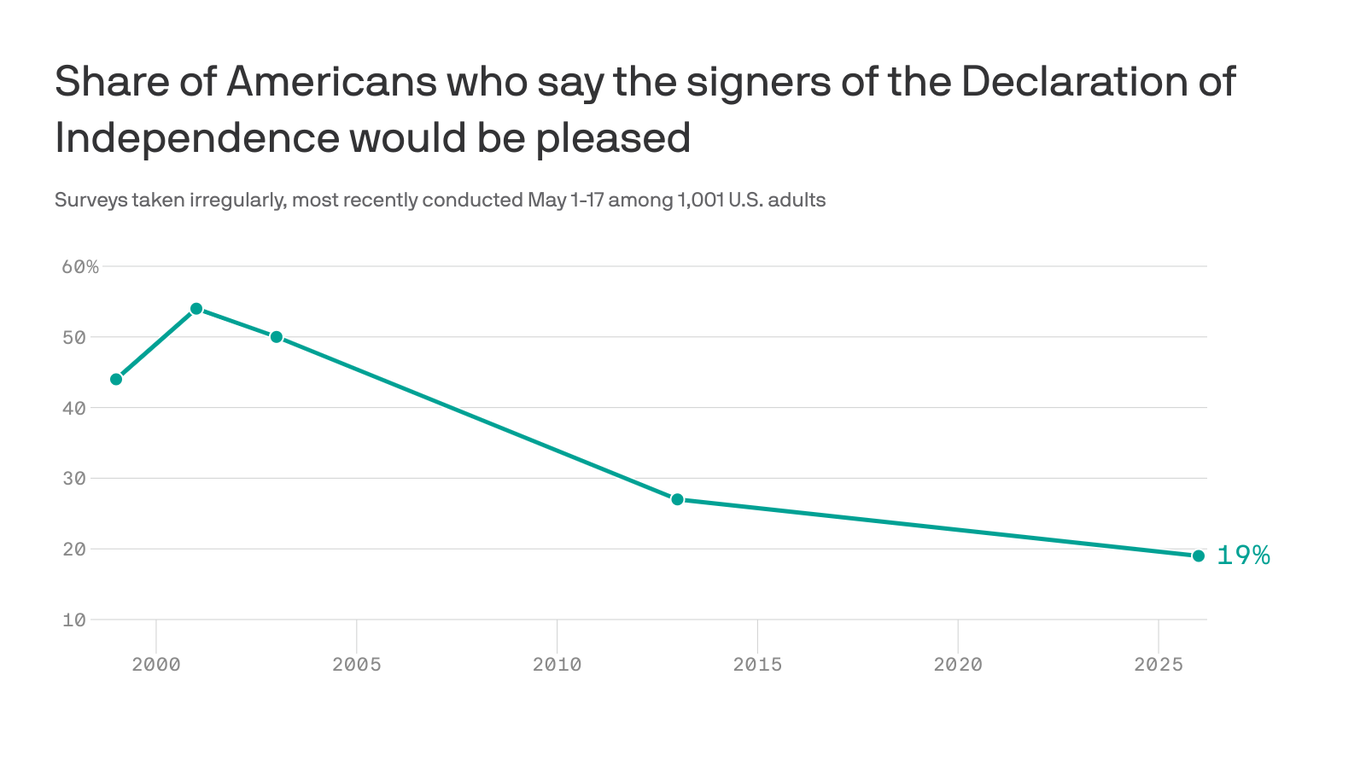
What makes a person a bad citizen in the eyes of their fellow Americans, and how has that changed over time? The American Enterprise Institute took a survey to find out. The new survey of parents was conducted by the Public Agenda Foundation in 1998. AEI repeated verbatim many of the questions from that survey and added new ones. Parents in both years embraced the ideals the nation’s founders described, yet parents today are more critical of the way they think about the nation. They are less likely to judge certain behaviors of their fellow citizens negatively — a striking change in the roughly 30-year period. And, while they think history must be actively taught, they are less insistent on rigorous methods and practice for students.On three of the five questions that asked parents about what constituted a bad citizen, more than 10 points separated parents in 1998 and parents today. Seventy-seven percent of parents in 1998 said they would consider someone to be a bad citizen if the person without children gets government assistance, such as welfare, even if they are able to work. In 2026, only 64% agreed. Slightly more than a third, 35% in 2026, would not use the bad citizen label, up from 19% in 1998.
Are you a bad citizen?
Polling indicates that our understanding of what makes for a good citizen has been loosening over the last 30 years.
785 words~4 min read