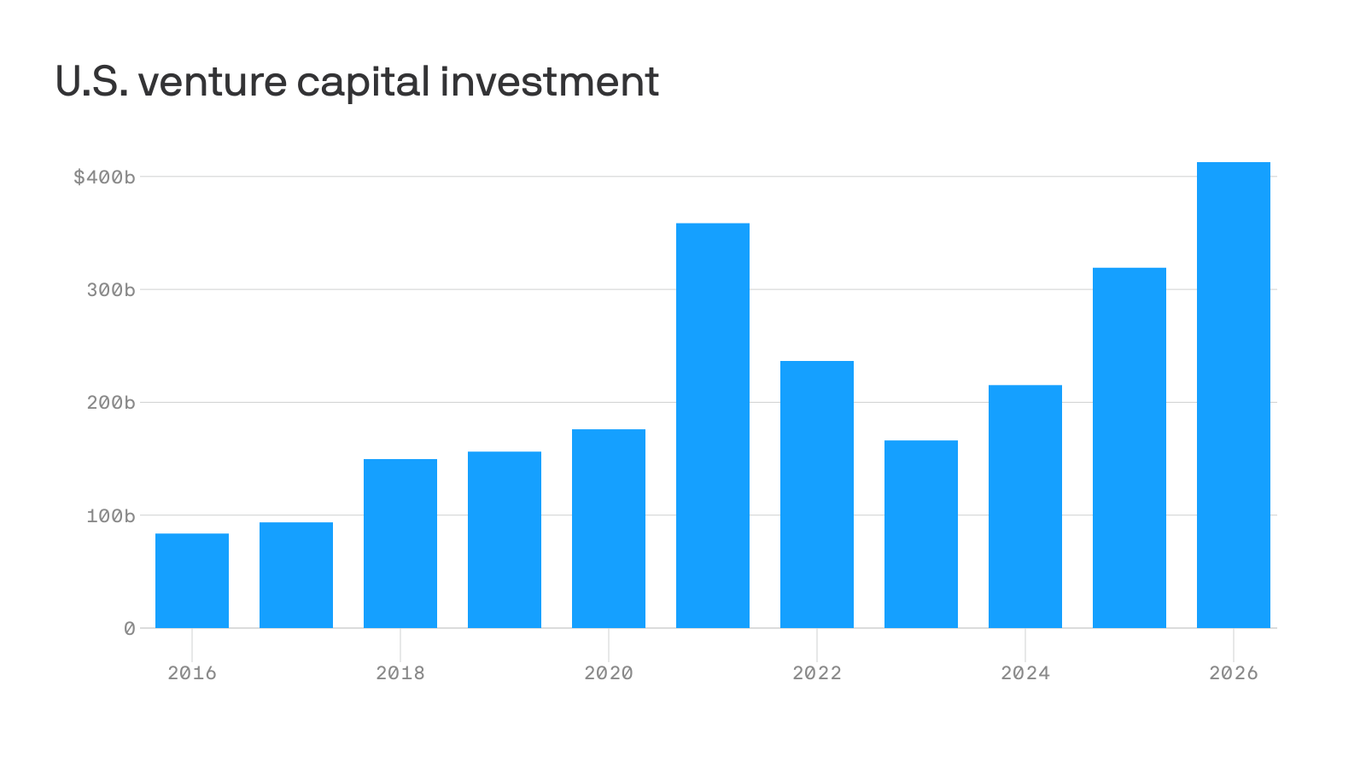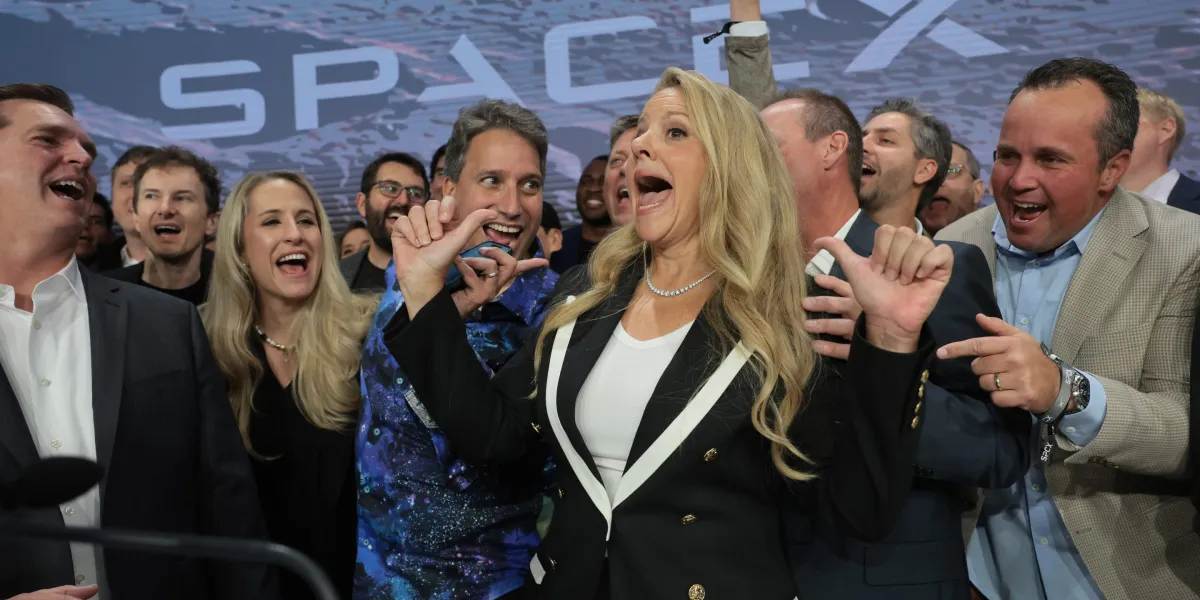
(AI image used for representation)Venture-backed companies recorded their strongest liquidity quarter ever between April and June 2026, with 32 billion-dollar listings and $113 billion in acquisitions. A Silicon Valley investor's read on the new cycle and what it signals for global capital, including India.The most consequential shift in venture capital this year is happening on the way out. According to Crunchbase data, the second quarter of 2026 produced the highest exit values on record for venture-backed companies across both public listings and acquisitions. Thirty-two companies went public at valuations above $1 billion, and another 24 were acquired at or above that mark, for a combined $113 billion in deal value, the largest quarterly total ever recorded.The scale of the turnaround is best understood against the drought that preceded it. Only 31 technology companies listed in the United States in all of 2025, down from 121 four years earlier, according to data from University of Florida IPO researcher Jay Ritter. Per the PitchBook-NVCA Venture Monitor, net cash flows to limited partners have run nearly $200 billion negative since the slowdown began in 2022, while a backlog of US unicorns worth an aggregate $4.3 trillion accumulated in private portfolios. The freeze reshaped behaviour across the ecosystem: late-stage companies leaned on structured rounds, fund lifecycles quietly stretched, and PitchBook pegged US direct secondary volume near $60 billion as investors turned to secondaries as a release valve.The window reopened in stages. In May, AI chipmaker Cerebras Systems raised $5.55 billion in the largest US technology IPO since Uber's 2019 debut, and its shares closed 68 percent above the offer price, valuing the company near $95 billion. Weeks later, quantum computing firm Quantinuum raised $1.68 billion in an upsized offering that priced above its marketed range. Then came the defining transaction of the cycle. SpaceX went public at a valuation of $1.77 trillion, raising $75 billion in the largest venture-backed listing in history, and within a week confirmed its intent to acquire Anysphere, maker of the AI coding tool Cursor, for $60 billion, the largest startup acquisition on record.The pipeline behind these deals runs deeper still. Anthropic filed its IPO prospectus confidentially in June, and OpenAI is reportedly preparing its own filing. Fresh capital continues to arrive ahead of these events. Global venture funding reached a record $510 billion in the first half of 2026, exceeding the $440 billion invested across all of 2025.Three observations from inside the market deserve attention.First, this liquidity remains dangerously narrow. OpenAI and Anthropic alone absorbed 43 percent of all venture funding in the first half, and PitchBook's first quarter data makes the concentration explicit: US exit value reached a record $347.3 billion, yet falls by 86.6 percent once the five largest exits are excluded. My read is that acquirers are aggressively applying an 'Agentic Discount,' penalizing startups that still rely on traditional human-capital scaling while paying premiums for output that scales through compute. Second, public investors are rewarding fundamentals over stories. Cerebras arrived at its listing profitable on $510 million in revenue, selling the very infrastructure enabling this shift, while Quantinuum, still early in its commercial ramp, closed flat on debut day. SpaceX's announced $60 billion acquisition of Anysphere sharpens the point: the largest startup purchase on record targets a company whose product replaces engineering headcount with software, the 'Marginal Cost of Expertise' repricing in real time. Third, the bottleneck has shifted. AI has driven the cost of building digital products toward zero, making the cost of being found the ultimate hurdle. The capital math enforces the point: US venture fundraising fell to $66.1 billion in 2025, the lowest total since 2018 per PitchBook, which means startups can no longer burn scarce venture cash on rented customer acquisition. Capital allocators must pivot toward models that underwrite demand generation directly, because funding product creation without solving distribution now means underwriting the discounted side of this market. For India, the signal is worth reading carefully. Indian founders building for global markets now have live pricing references for AI infrastructure, deep tech and space assets, categories where private valuations had drifted for years without public anchors. Indian family offices and institutions in US venture funds should finally see distributions resume, which changes the calculus on new commitments. A reopened M&A market also matters for the US-India corridor specifically: American acquirers with rising public currencies historically look outward, and Indian companies with genuine US revenue become both more visible targets and more credible buyers.What I am watching through the second half is straightforward: whether OpenAI completes what would likely be the largest listing ever attempted, whether billion-dollar acquisitions extend beyond AI into consumer and commerce, and how the market absorbs lockup expirations from the spring cohort. Exit markets reward preparation. The companies that used the quiet years to build durable revenue are the ones walking through the open window first.
Silicon valley's exit window reopens after a four-year freeze
Venture-backed companies recorded their strongest liquidity quarter ever between April and June 2026, with 32 billion-dollar listings and $113 billion in acquisitions. A Silicon Valley investor's read on the new cycle and what it signals for global capital, including India.
807 words~4 min read