It’s been several years since generative AI and large language models (LLMs) took the world by storm. LLMs surpassed earlier natural-language systems at generating text, while diffusion models enabled generating images, music, and videos.
These genAI models work well in the digital world, but on their own, they have limited capabilities to comprehend the three-dimensional physical world and other spaces. This includes the objects occupying an area, how they relate to each other, tracking movement, and answering complex questions requiring an understanding of dimensions, distances, motion, and collisions.
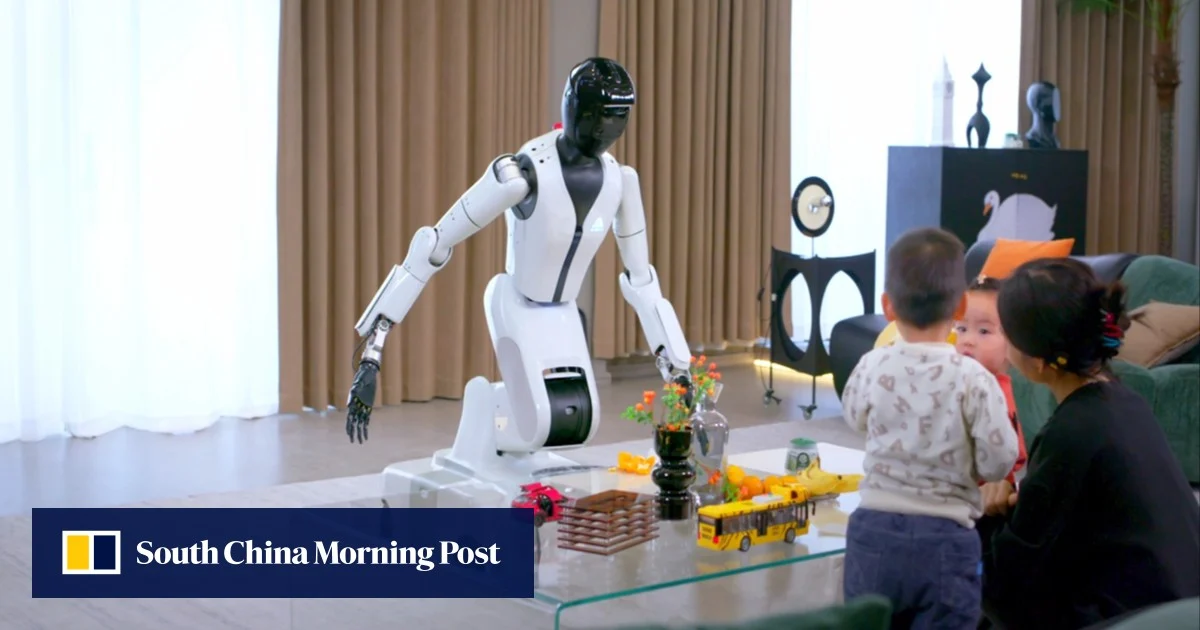
Spatial intelligence is an AI capability that allows models to reason about three-dimensional space. These models can generate 3D scenes of the world and other spaces. This content can then be displayed through traditional renderers, game engines, or AR/VR systems that use spatial computing techniques. But it’s the spatial intelligence model’s ability to connect natural language with 3D models that has the most applications in robotics, manufacturing, construction, and other physical environments.
Dr. Fei-Fei Li, often called the godmother of AI, published a manifesto on how spatial intelligence is AI’s next frontier, contrasting it with LLMs. “While current state-of-the-art AI can excel at reading, writing, research, and pattern recognition in data, these same models bear fundamental limitations when representing or interacting with the physical world,” wrote Dr. Li. “Our view of the world is holistic—not just what we’re looking at, but how everything relates spatially, what it means, and why it matters. Understanding this through imagination, reasoning, creation, and interaction—not just descriptions—is the power of spatial intelligence.”