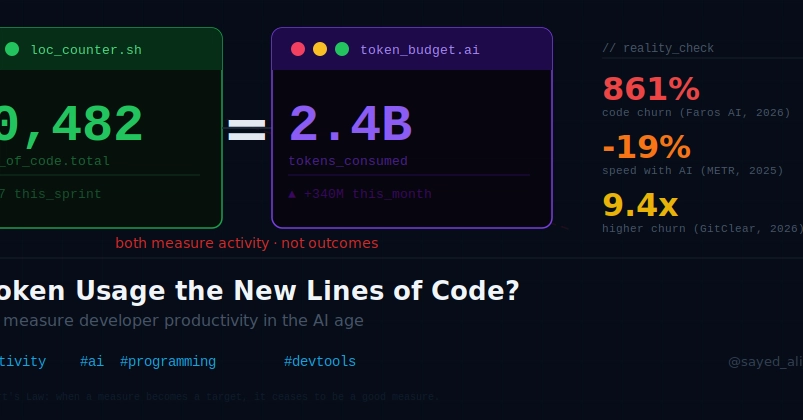
For decades, software engineering has been plagued by “productivity theater.” Every few years, the industry aligns around a new vanity metric — usually one that latches onto whatever technology happens to be in vogue at the time. For a discipline rooted in creativity and problem-solving, this is a poor way to demonstrate progress. Yet, we find ourselves in this position once again. The pattern is often the same: reach for something we can easily count, and in doing so, lose sight of what we are actually trying to achieve.
Quantity over quality: the wrong measurement, every time
I recall when I was coming up as a software engineer in the 1990s, a small number of companies took up the practice of paying their engineers by each line of code. This may have been productivity theater at its worst, leading to negative incentives, inefficient processes, and just generally bad engineering. Developers were rewarded for writing far more code than the problems they were facing required — classic “quantity over quality” — and the result was bloated, brittle codebases that were all but impossible to maintain. The goal — to create reliable software that solved real user problems — got buried under the incentive to produce.