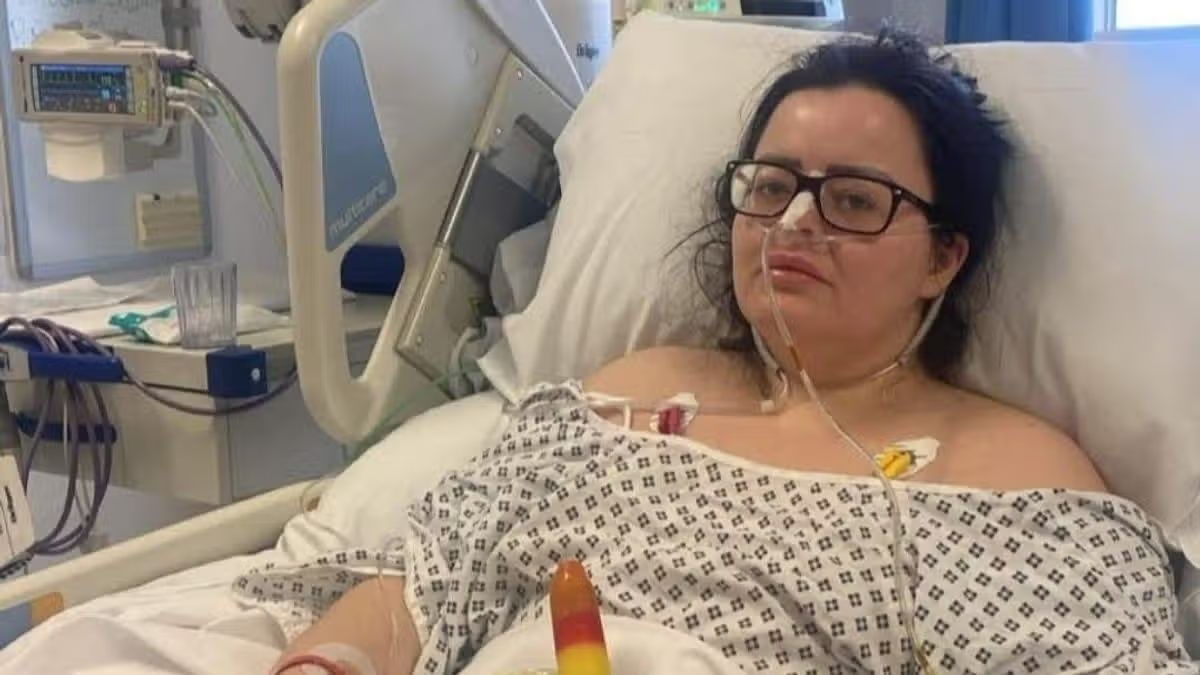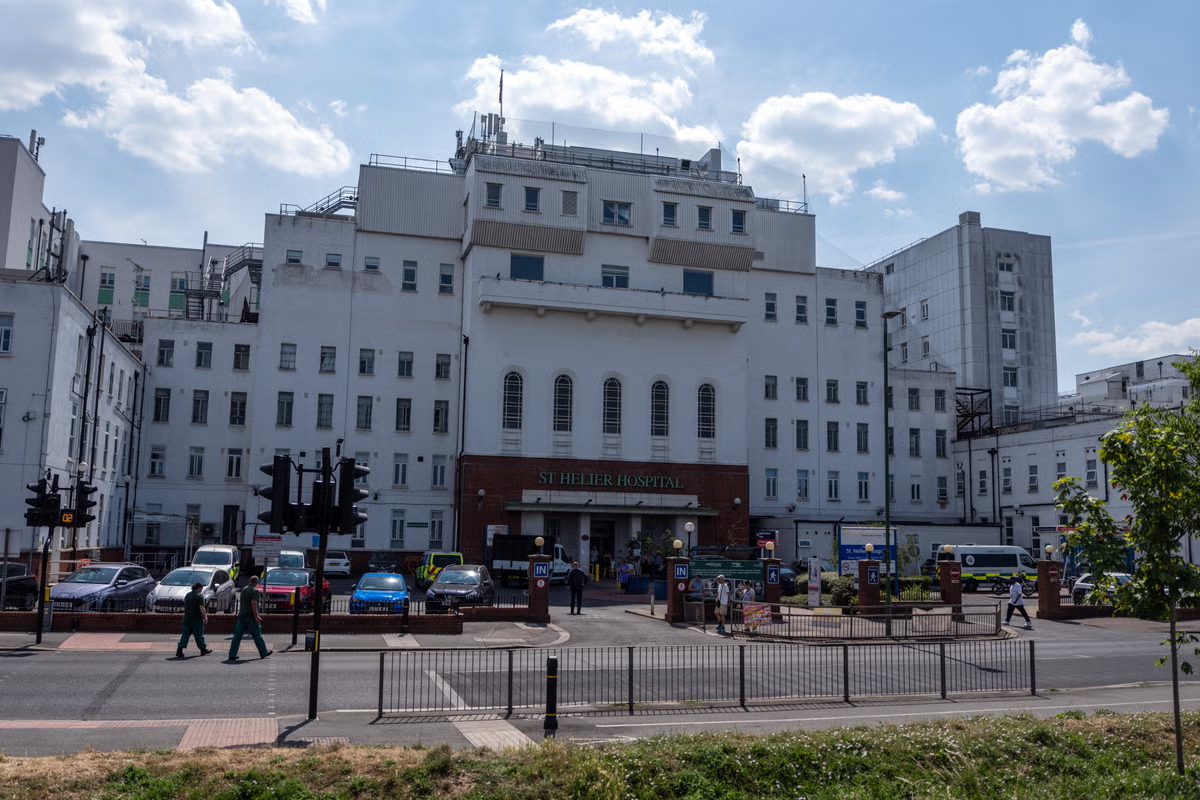
When Olamide Ogunseye began experiencing irregular periods, her GP put it down to stress - three weeks later, she was battling sepsis and fighting for her life in hospital. Unbeknown to Ms Ogunseye, an infected ovarian cyst had ruptured, releasing pus and harmful bacteria into her abdominal cavity and causing an infection. The 36-year-old entrepreneur, from Surrey, first sought help when she began having periods every 14 days, half the length of a standard 28-day menstrual cycle. She said: 'I had four periods in two months and knew something wasn't right. 'I'd gone through a relationship breakup, a friendship breakup, and about three weeks later had been made redundant.'My GP suggested the stress could be throwing my cycle off.'I understood why she said that, but something didn't sit right with me, because I genuinely wasn't stressed.'I knew intuitively that something was wrong and no amount of reassurance was going to convince me otherwise.' Olamide Ogunseye almost died from sepsis after a ruptured ovarian cyst Ms Ogunseye also experienced other symptoms, noting that her abdomen was so swollen she was unable to fit into her usual size 6 trousers. 'As the weeks went by, my stomach became really bloated and visibly bigger,' she said.'At the time, I was a comfortable UK size six, so when my trousers became tight and I had to unzip them just to sit down, I knew something had changed.'I went to the GP, explained my symptoms, and was examined.'She told me that if things persisted, she would refer me to the hospital. At the beginning, I didn't think much of it.' Ms Ogunseye's symptoms first appeared in March 2023 and continued to worsen.By June, she was struggling to stand for long periods and, during a work meeting, was struck by a sharp pain in the centre of her abdomen.Initially convinced it was severe period pain, she went home to rest.But when she woke up hours later, vomiting and in agony, she called NHS 111 and made her own way to hospital.She said: 'I was told no ambulance could be dispatched and that I would need to wait up to seven hours as I was still conscious and breathing.'Shortly after the call, I passed out from the pain briefly and came round.' At around 9:30pm she arrived at Croydon University Hospital where doctors eventually discovered that Ms Ogunseye had had a ruptured ovarian cyst that had triggered sepsis. The Sepsis Trust claims that around 245,000 people are affected by sepsis in the UK every year. She spent three weeks in hospital It's one of Britain's biggest killers, claiming approximately 48,000 lives annually, more than breast, bowel, and prostate cancers combined. Sepsis can rapidly worsen, leading to critically low blood pressure and eventual organ failure. Ms Ogunseye said: 'By then I was vomiting bile, I filled one sick bowl to the brim and was handed a second.'My blood pressure was dangerously high, my temperature was in the forties, and my blood results showed a very high white blood cell count, all while I was still vomiting.'I had undergone an MRI, a CT angiogram, a transvaginal ultrasound, and a standard ultrasound, alongside four-hourly blood pressure checks, temperature readings, and blood tests.'The results consistently showed a significant infection.'Furthermore, doctors later discovered a bowel obstruction had left part of her intestine wrapped around a fallopian tube. It was caused by an internal hernia which doctors believe was possibly linked to a previous fibroid removal operation. This weakness in her muscle wall had allowed part of her small intestine to move out of position, wrapping tightly around one of her fallopian tubes, creating a dangerous bowel obstruction. On 9 June, surgeons initially attempted keyhole surgery but her bowel was accidentally punctured, forcing doctors to convert the procedure into major open surgery.They repaired the puncture, removed between 10cm and 15cm of damaged small intestine and carried out a full abdominal washout after discovering pus from the ruptured cyst had spread throughout her abdominal cavity.When Ms Ogunseye regained consciousness, she found herself in intensive care.She said: 'I was in hospital for a total of three weeks.'Not many people around me knew what was happening; everything was so intense, and I was on strong painkillers like fentanyl and morphine for much of it, so I was quite drowsy and sleepy for the most part.'I couldn't believe how quickly things had escalated.'Ms Ogunseye says the emotional impact of the ordeal was just as significant as the physical recovery.She said: 'In those early days, just getting out of the hospital bed was an achievement.'Still attached to wires and tubes, I pushed myself to stand and move to the chair beside my bed. It took every bit of strength I had and had to be done in stages.'A couple of weeks in, my mum would encourage me to walk up and down the small bay area where my bed was, just to get some movement rather than sitting in one position all day.'It was so painful with the incisions, and it honestly took around 30 minutes just to walk the length of a six-bed bay.'After the surgery, I had to sleep on my back for at least a year and a half.'She remained off work for three months and spent the following 18 months attending regular surgical follow-up appointments.Thankfully, Ms Ogunseye has now made a full recovery.She added: 'I want women to know to push for answers and not dismiss what their body is telling them.'Every so often we hear stories of people who die from sepsis or a bowel obstruction and I had both.'I share my story because awareness is everything.'If even one person feels empowered to push back, to stand their ground, to trust what their body is telling them, then my story is worth telling.'Sepsis and bowel obstructions are serious. 'There should have been a far greater level of concern at that very first GP appointment; instead, I was told I was stressed.'I understand the pressures on the NHS, but dismissed symptoms have consequences, and sometimes those consequences are fatal.'I'm back to perfect health now and I am truly grateful for that.'WHAT IS SEPSIS?Sepsis occurs when the body reacts to an infection by attacking its own organs and tissues.Some 44,000 people die from sepsis every year in the UK. Worldwide, someone dies from the condition every 3.5 seconds. Sepsis has similar symptoms to flu, gastroenteritis and a chest infection.These include:Slurred speech or confusionExtreme shivering or muscle painPassing no urine in a daySevere breathlessnessIt feels like you are dyingSkin mottled or discolouredSymptoms in children are:Fast breathingFits or convulsionsMottled, bluish or pale skinRashes that do not fade when pressedLethargyFeeling abnormally coldUnder fives may be vomiting repeatedly, not feeding or not urinating for 12 hours. Anyone can develop sepsis but it is most common in people who have recently had surgery, have a urinary catheter or have stayed in hospital for a long time.Other at-risk people include those with weak immune systems, chemotherapy patients, pregnant women, the elderly and the very young.Treatment varies depending on the site of the infection but involves antibiotics, IV fluids and oxygen, if necessary.Source: UK Sepsis Trust and NHS Choices
Doctors thought I was burnt out - they missed signs of lethal sepsis
When Olamide Ogunseye began experiencing irregular periods, her GP put it down to stress - three weeks later, she was battling sepsis and fighting for her life in hospital.
1,187 words~5 min read