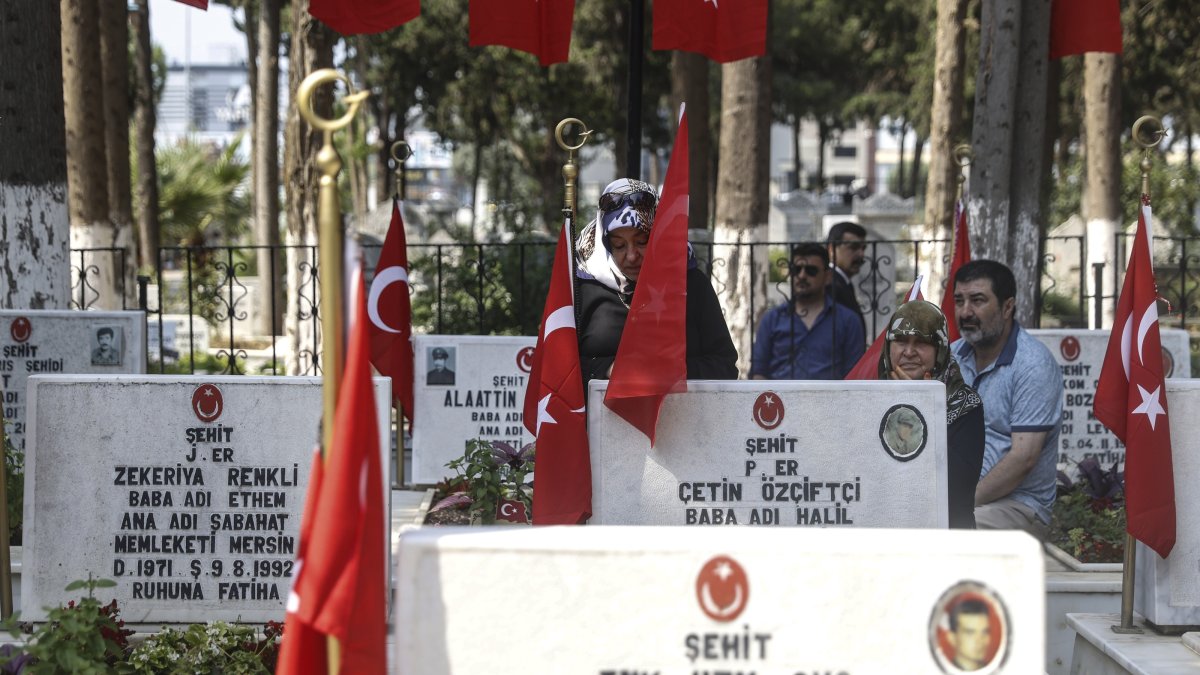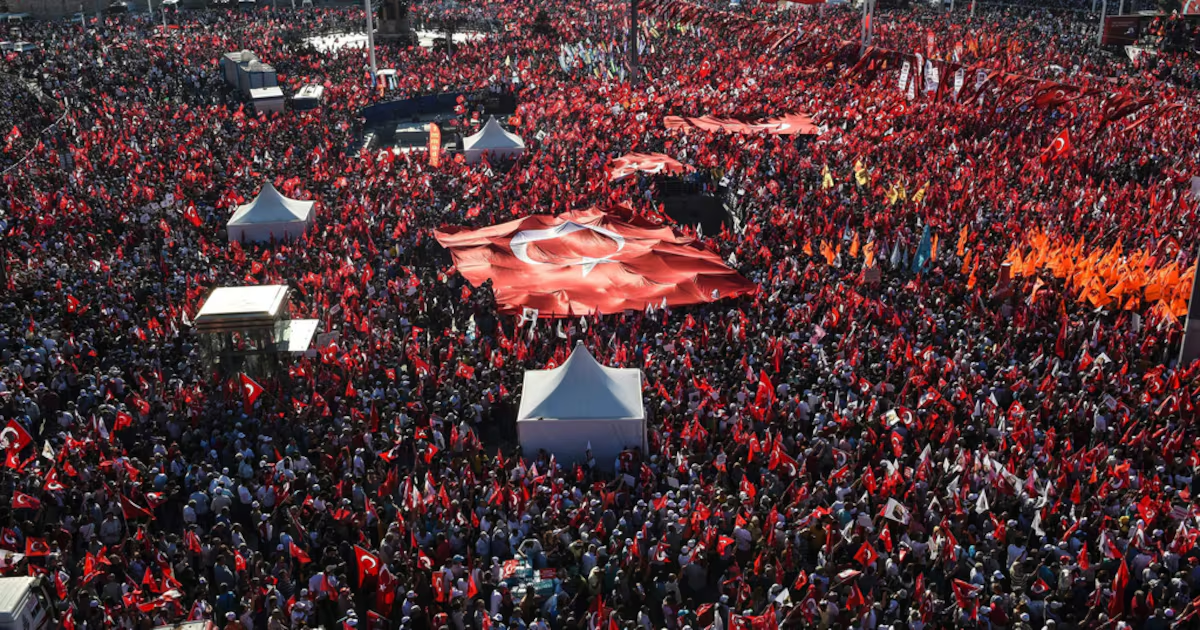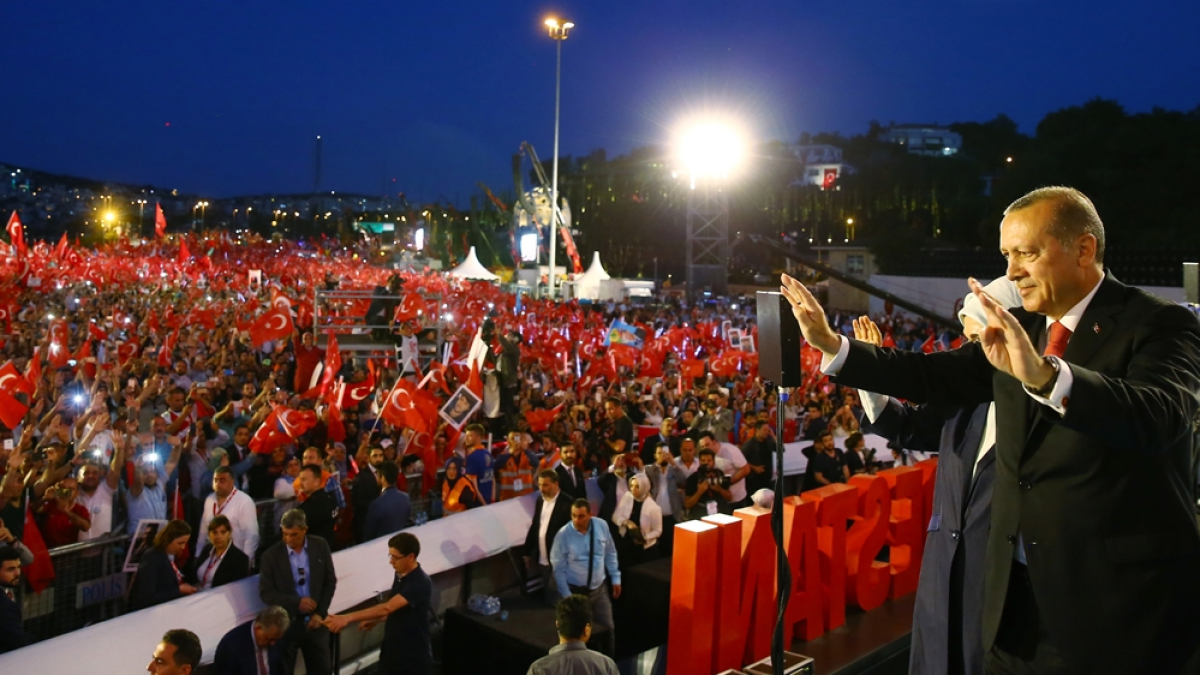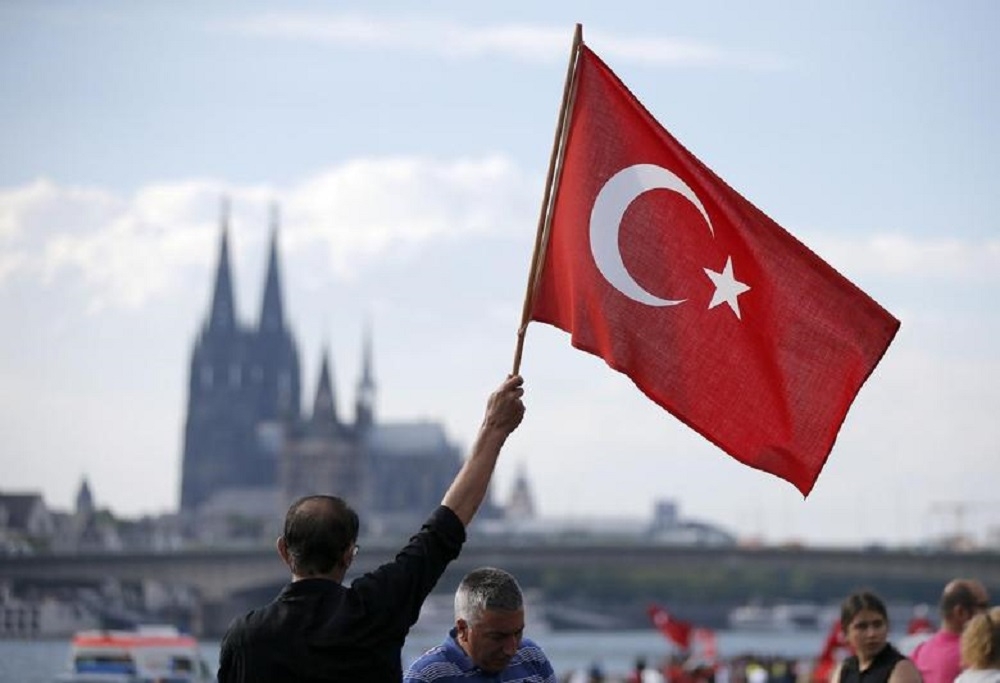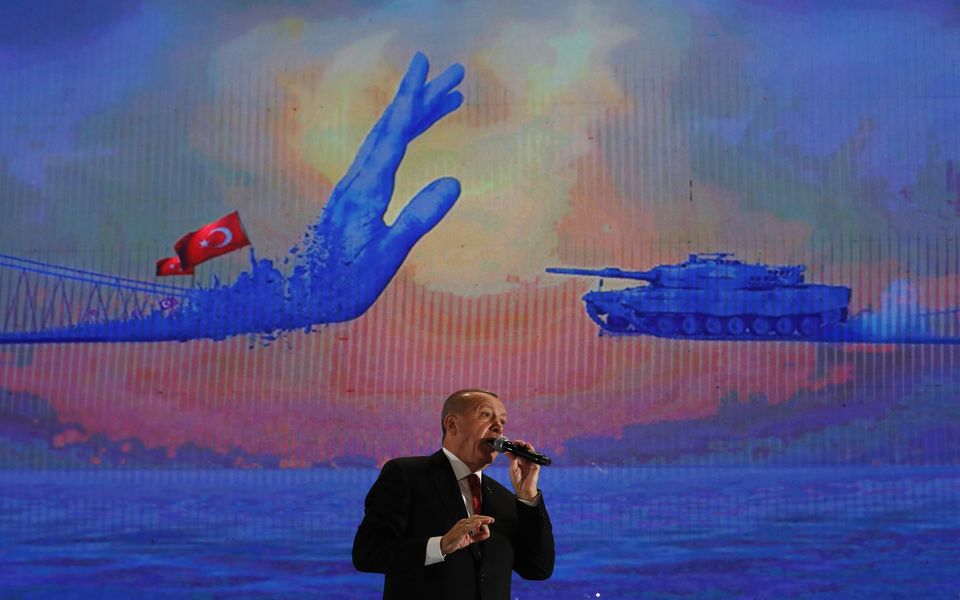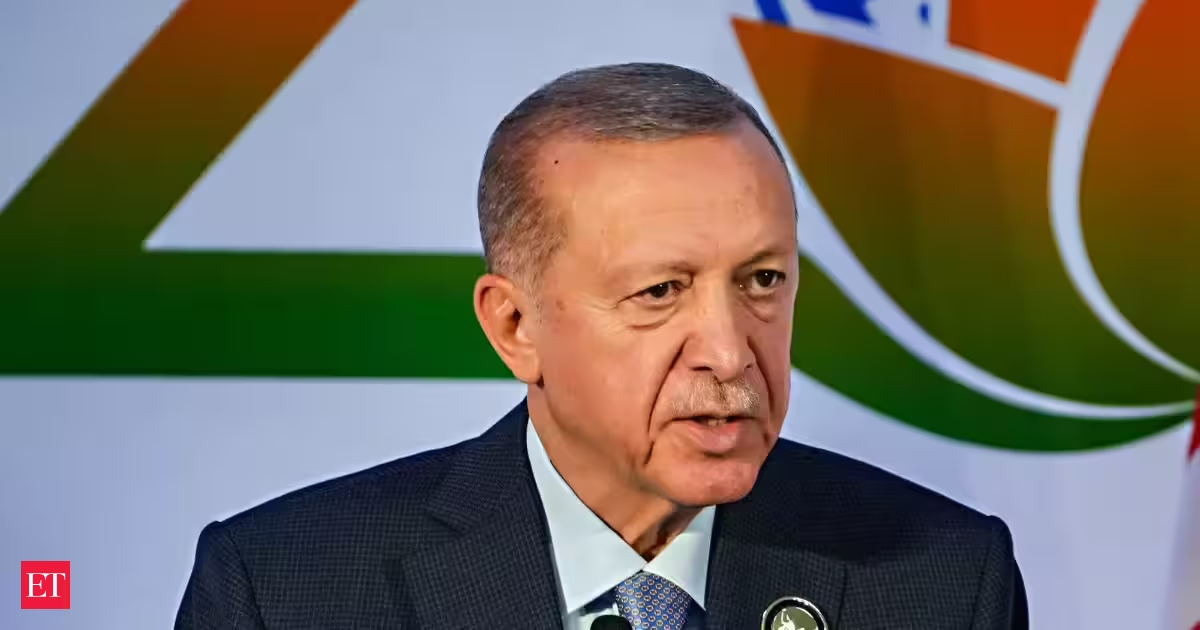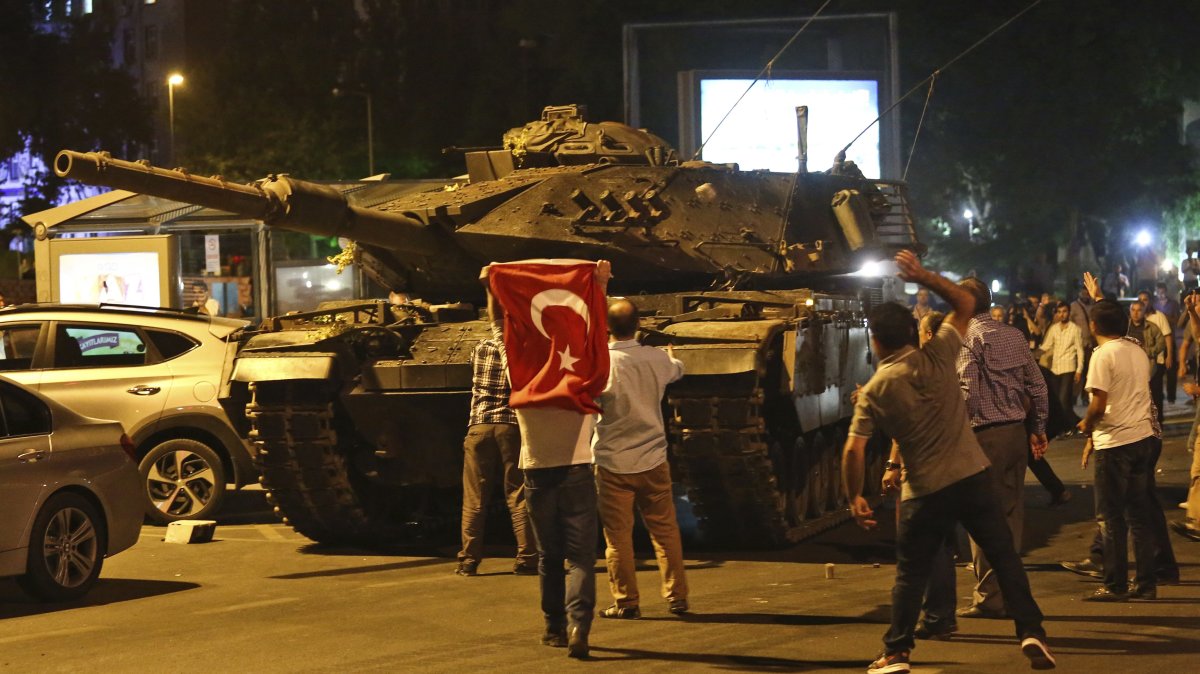
Ten years later, the memory of July 15, 2016 coup attempt by the Gülenist Terror Group (FETÖ) is vivid in collective memory. The attempt remained so thanks to an unprecedented public resistance, largely due to a call to the nation by President Recep Tayyip Erdoğan.
This year’s theme of the events marking the Day of Democracy and National Unity (declared such after the putsch bid was quashed) was “Will of The Nation, Victory of Democracy.” The motto is a reminder that the nation finally stepped up to the plate in the face of an illegal intervention in its will for democracy. For those familiar with the coup-filled history of the Republic of Türkiye, the resistance is unique, especially in its nature. Unarmed people took to the streets simply to confront soldiers loyal to FETÖ on July 15, 2016, with nothing to stop the putschists other than their bodies. It was a gambit, inspired by past victories of outnumbered armies and masses last seen during World War I's legendary Gallipoli campaign and the ensuing War of Independence. Ultimately, it paid off as the putschists, fearing that the attempt would fail without widespread public support, had to surrender.
Ali Fuat Gökçe, professor in the Department of Political Science and Public Administration at Gaziantep University, said Türkiye, in the past, faced coup attempts and coups as a country “unfortunately in the category of countries lacking a proper culture of democracy back then.” “Coups have been theft of the national will. The May 27, 1960 coup, military memorandum of March 12, 1971, postmodern coup of February 28, 1997, and the e-memorandum on April 27, 2007, stained the history of democracy in Türkiye,” Gökçe told Daily Sabah.