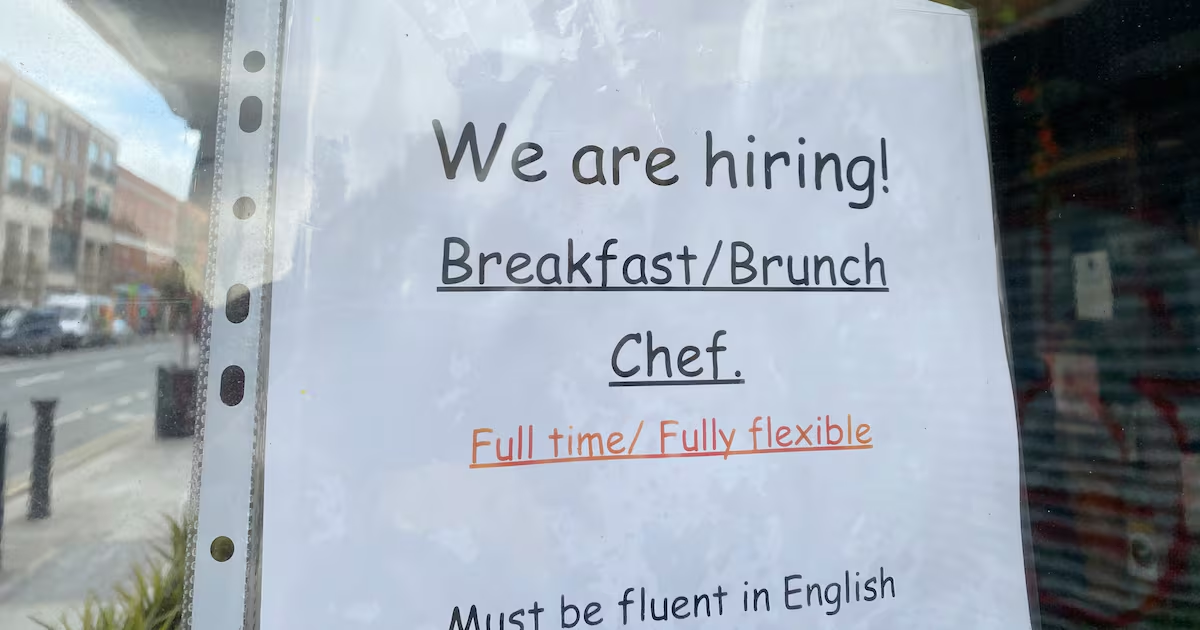
The number of professional job vacancies declined by 7.2 per cent in the second quarter of the year and was down almost 10 per cent on the same period in 2025, according to the latest Morgan McKinley quarterly employment monitor. The international recruitment specialist suggests employers have become more cautious in their approach to hiring in recent months, with a growing emphasis across a wide number of roles on temporary or contract recruitment so as not to increase permanent headcount.The authors say the shifting patterns do not indicate a downturn but rather “a reset in hiring discipline”.It says that while there was continued demand in specialist areas like regulation, risk, infrastructure, transformation, artificial intelligence (AI), data, and specialist project delivery, there was a greater reluctance to hire in what were seen as less essential roles.Salary growth has flattened, the company found, as the balance between the number of vacant roles and professional job seekers (up 18.4 per cent on the same period in 2025) shifted significantly over the past 12 months. The changing balance of power has also been felt in areas like hybrid working, with the average number of onsite days required by employers continuing to edge slightly upwards.The attitude of employers to AI is starting to mature, the report suggests, with companies making more informed decisions on the costs and benefits of investing in and deploying new technology.How can tech offer solutions for obesity and weight management? Listen | 35:38“The professional employment market is entering a more disciplined phase. Employers remain active but are placing greater emphasis on hiring with precision,” said Trayc Keevans, global FDI director at Morgan McKinley Ireland. “Companies still have work to deliver, but they are being far more cautious about adding permanent headcount. That is why hiring processes are slower and vacancies are lower, as organisations balance growth ambitions with cost management, while contract talent continues to provide the flexibility many businesses need.“The result is a clear shift in bargaining power. Employers have more choice, wage pressure has eased and candidates are having to work harder to show why they should be hired. A strong CV is no longer enough on its own. Employers want evidence of impact, whether that is improving performance, adding value, reducing risk, managing change, or helping a business become more productive.“AI is sharpening that shift. It is not simply creating new roles; it is giving employers a reason to look again at the structure of existing roles.”
Sharp reduction in professional vacancies hits pay and conditions, report finds
The average number of onsite days required by employers continues to edge upwards
409 words~2 min read