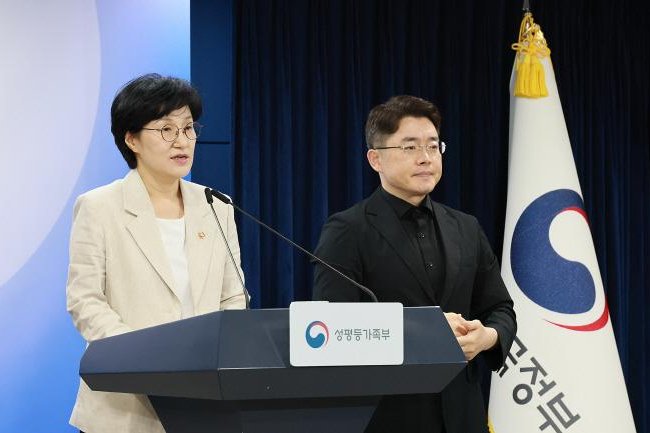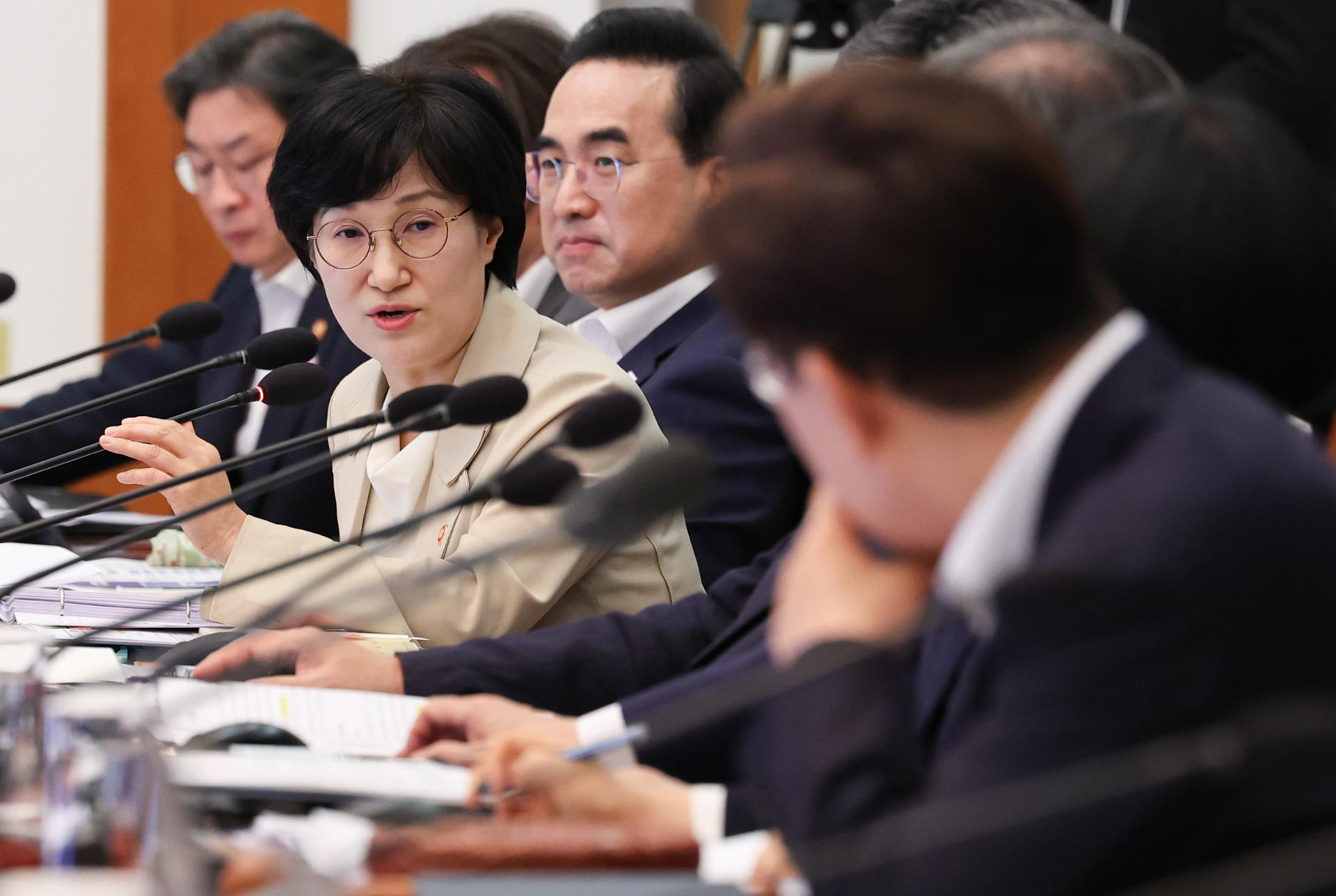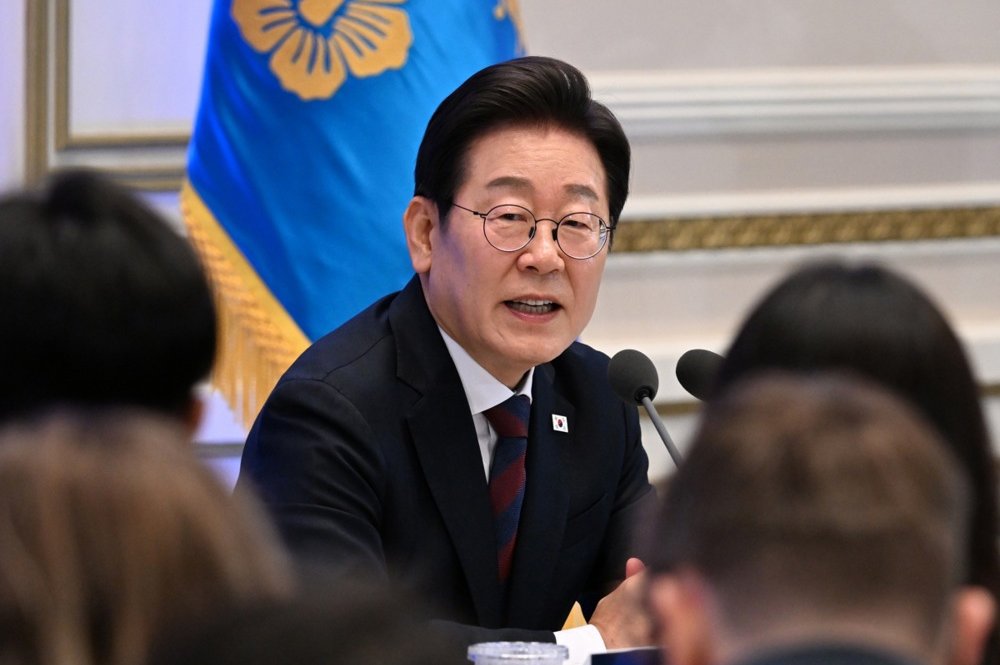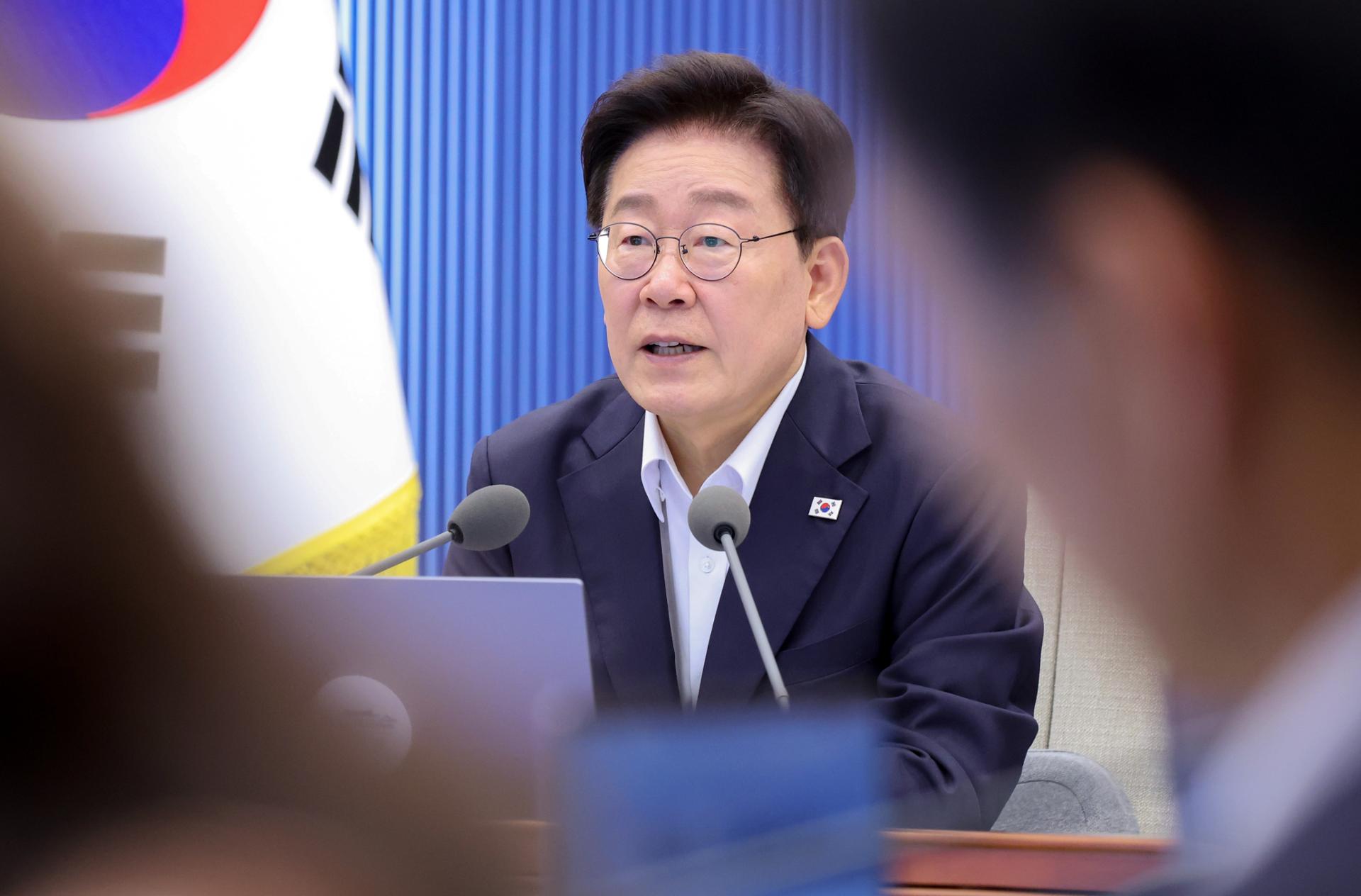
President Lee Jae Myung speaks during a Cabinet meeting at Cheong Wa Dae on Tuesday. (Pool Photo via Yonhap) President Lee Jae Myung said Tuesday that South Korea should move to lower the age threshold for juvenile offenders exempt from criminal punishment.Lee, however, stopped short of making a final decision during a weekly Cabinet meeting, calling for additional public consultations to help decide the extent of the change.Gender Equality and Family Minister Won Min-kyong reported the results of a public consultation on the age threshold for juvenile offenders exempt from criminal prosecution. The process involved an interagency and expert consultative body, as well as citizen deliberation forums.Won said participants in the citizen deliberation process most strongly favored lowering the threshold only for serious, major and repeat offenses, followed by a blanket reduction and maintaining the current system. Among those supporting a change, the most favored option was to lower the threshold by one year — from 14 to 13 — Won added.The consultation was launched this February amid growing calls to adjust the age of criminal responsibility in response to rising juvenile crime and competing arguments over whether the current threshold should be maintained.After the report, Lee said “there appeared to be no disagreement over the need to lower” the age threshold for juvenile offenders, adding, “We should first settle on lowering it.”However, Lee suggested the proposal might not go far enough."The Gender Equality and Family Ministry's position is not to lower it across the board, but to lower it by just one year for specific crimes,” Lee said. "But I wonder whether that is too limited. Quite a few countries set the threshold at age 12, don't they?"Lee said the remaining issues included whether the threshold should be lowered universally or only for serious offenses, and whether any reduction should be by one year or two years."Lowering it by two years across the board seems excessive. If we were to lower it (across the board), I think a one-year reduction would be the appropriate starting point."Lee also noted that under the current system, juvenile offenders below the age threshold can still face punishment, including up to two years in a juvenile detention facility, but lowering the threshold would expose them to much harsher penalties."If we changed the system, sentences of up to 15 years would become possible," Lee said.A lower age threshold would mean that offenders who previously faced only juvenile protection measures could instead receive formal prison terms, including up to 15 years in prison for serious crimes and up to 20 years for certain violent offenses.Lee stopped short of making a final decision during the Cabinet meeting, calling the issue "highly sensitive" and seeking the views of Education Minister Choi Kyo-jin and Justice Minister Jung Sung-ho before ordering further consultations."Let's not make a final decision today," Lee said, instructing officials to continue reviewing the issue and gather more input from the field and public. Lee nevertheless indicated that some form of reduction was warranted, saying, "I do think the age should be lowered."Choi said the Education Ministry “agrees with and supports the recommendation to lower the threshold conditionally ultimately reached” by the Ministry of Gender Equality and Family."Regardless of whether the age threshold for juvenile offenders is lowered, we intend to maintain our policy direction centered on education and rehabilitation," Choi said."We will strengthen efforts to identify at-risk students at an early stage and expand cooperation with specialized institutions such as the police and hospitals to build a more effective support system that can enhance students' resilience and prevent them from falling into crime."However, Jung said the Justice Ministry favors lowering the threshold across the board rather than applying different standards depending on the type of offense.According to Jung, the increase in crimes committed by juvenile offenders and their exclusion from criminal punishment contribute to "a sense of public anxiety." Jung also cited "public sentiment" against cases in which minors exploit their legal status by believing they will not be punished.Jung further explained that a crime-specific approach would leave unresolved questions over "how to classify and distinguish serious crimes." He stressed that courts would continue to assess cases individually even if the threshold were uniformly lowered from under 14 to under 13. "Therefore, I don't expect such a change to result in more students facing excessive punishment."
Lee backs lowering age minors can be tried, defers final decision
President Lee Jae Myung said Tuesday that South Korea should move to lower the age threshold for juvenile offenders exempt from criminal punishment. Lee, howeve
721 words~3 min read