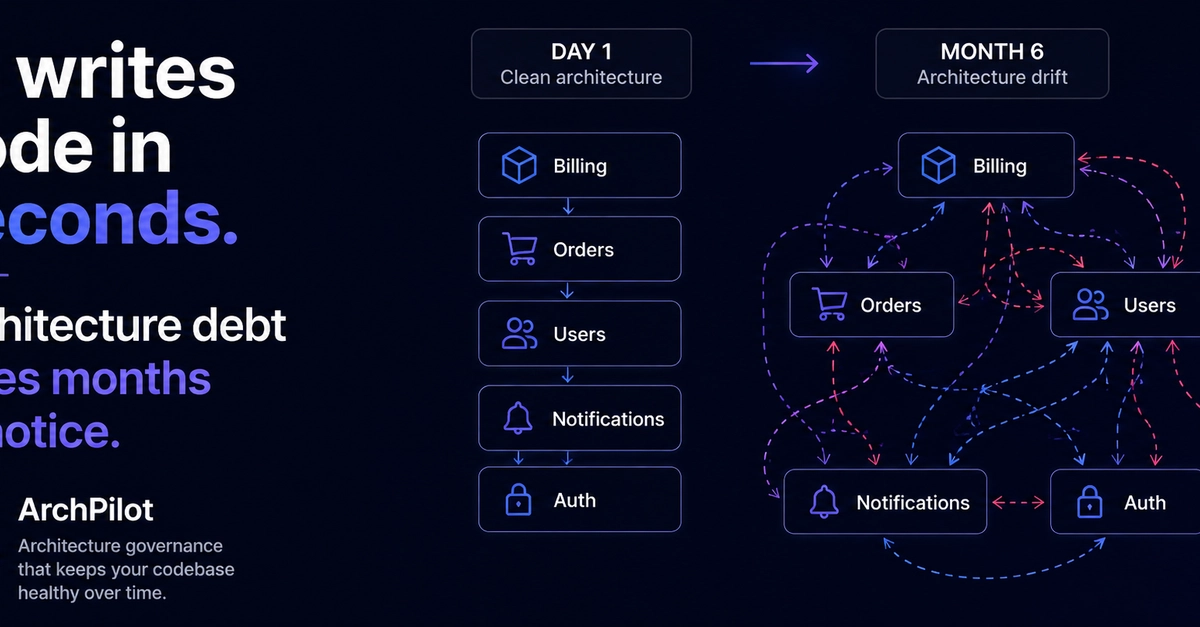
Teams make dozens of architectural decisions every month but document almost none of them. The rest dissolve into Slack threads, hallway conversations, and the minds of people who will leave the company within a year.
Six months later, a new developer stares at the code and asks: "Why Redis here instead of PostgreSQL for queues?" Nobody remembers. An archaeological dig through Git history, Slack, and Notion begins. Two hours spent investigating a decision that originally took 15 minutes.
Architecture Decision Records (ADRs) solve this problem. But they don't get written. The reason is simple: drafting an ADR takes 30-40 minutes, and the developer has already moved on to the next task. AI compresses that to 3-5 minutes. This article covers ADR structure, prompts for LLM-based generation, real-world examples, and CI pipeline automation.
What ADRs are and why capturing architectural decisions matters
An ADR (Architecture Decision Record) is a document that captures one specific architectural decision. Not a spec, not an RFC, not a design document. One decision, one file.