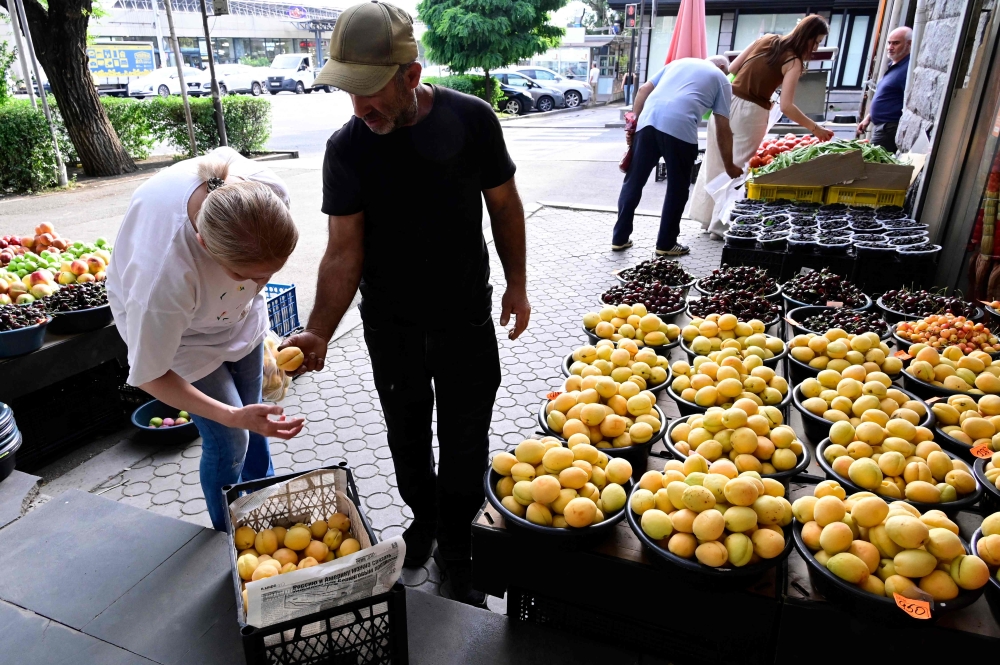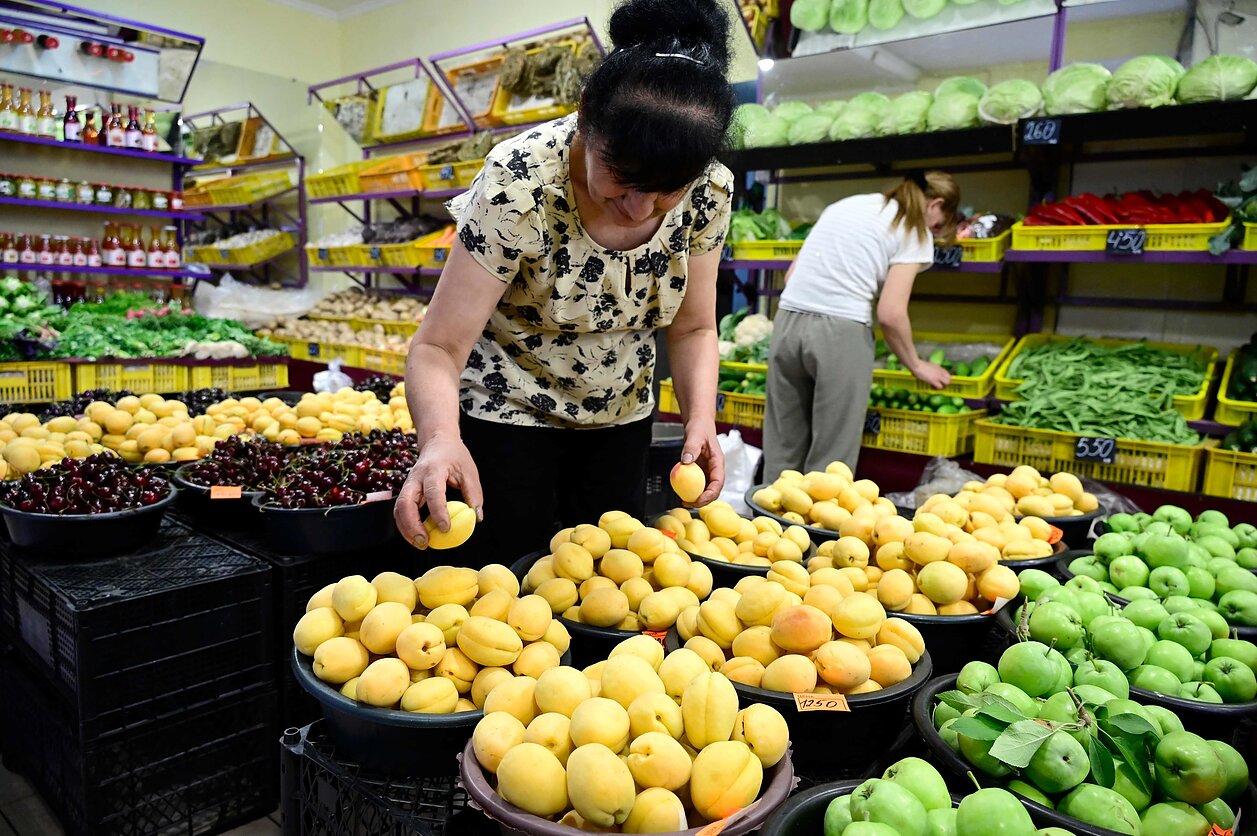
Vosketap (Armenia) (AFP) – In Armenia's Ararat valley, where apricots ripen beneath the biblical mountain of the same name, farmer Aramais Kazaryan's harvest has been swept into the centre of a geopolitical battle between Russia and the West.
Angered at Yerevan's pivot away from Moscow, the Kremlin imposed bans and restrictions on the imports of a wide range of Armenian goods, including fruits, vegetables and flowers, ahead of parliamentary elections earlier this month.Russia said it was for unspecified sanitary concerns, but it is widely seen as an attempt to heap economic pressure on Prime Minister Nikol Pashinyan to reverse course and turn back toward Moscow.The 75-year-old farmer's eyes filled with tears as he walked through his orchard in the village of Vosketap, where a breeze from snowcapped Mount Ararat, across the border in Turkey, dispelled the summer heat.
Ex-Soviet Armenia has strong formal ties to Moscow © KAREN MINASYAN / AFP
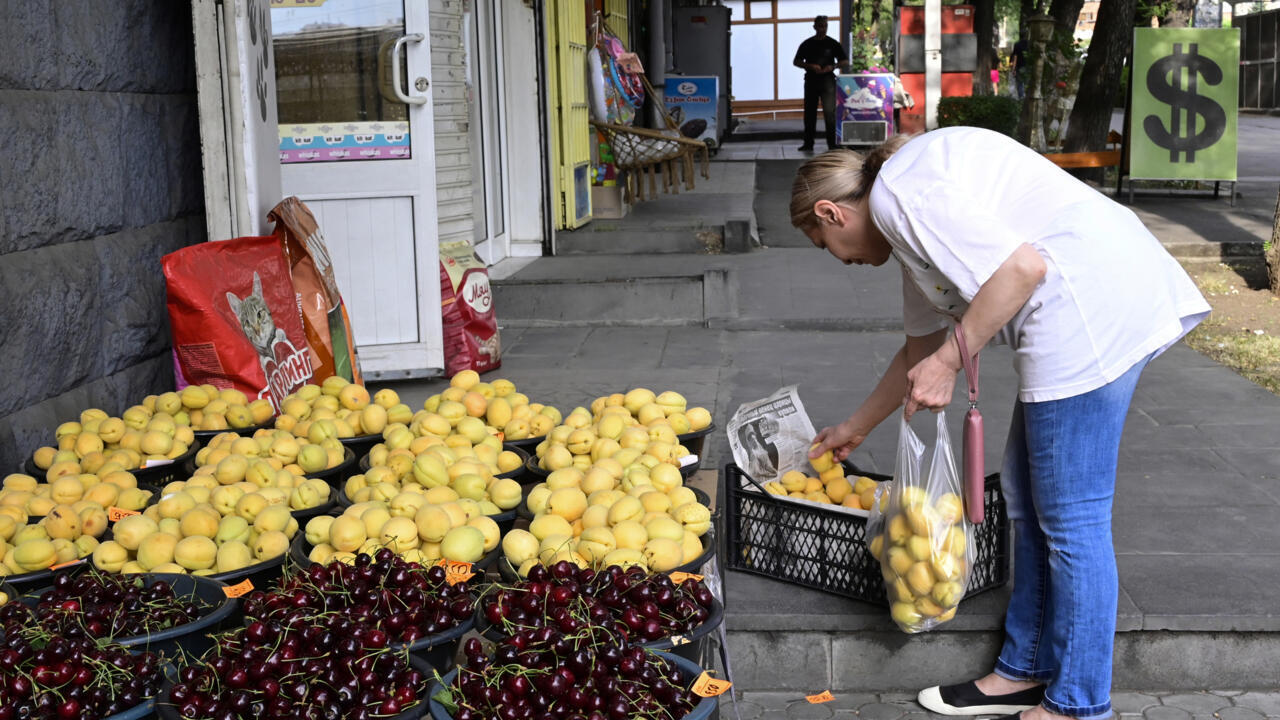
"The apricot is a symbol of Armenia," he told AFP. "Its taste and aroma are royal. The apricot is a wonder of wonders."Cultivated for millennia, Armenia's famed apricots were known to ancient Romans as the "Armenian apple."Before the ban, the vast majority of exports went to Russia.'Cannot be forgiven'Kazaryan planted his orchard in 1991, after the collapse of the Soviet Union when farmland was distributed to private owners.Within five years, the trees were bearing fruit, and Russia became the natural destination for much of the harvest, trucked north across the border.