Park Jun-hee
I ask the hard questions, so you don't have to 🗞️📝
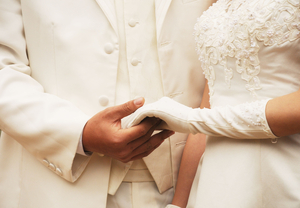
Korean weddings have long been about families as much as the bride and groom, but that is beginning to change A close up on bride and groom's hands (123rf) A Korean wedding often begins long before anyone walks down the aisle.Weeks before the big day, the bride and groom may find themselves attending gatherings with friends, colleagues and relatives. Their parents pore over prospective guest lists, busily thinking about seating arrangements, and decide who should make the final invitation list and how the invites should be sent. At the other end, wedding attendees quietly calculate how much cash to place in the white envelope they will hand over at the reception desk.By the time the ceremony begins, hundreds of guests — depending on how big it is — may have gathered. Some are close friends of the couple. Others are coworkers, neighbors or longtime acquaintances of their parents. Not everyone knows the bride and groom well. In some cases, they may hardly know them at all. But they still line up to congratulate the newlyweds.For many Koreans, this is simply what a wedding looks like.Kim Ha-ram, 26, who is set to tie the knot with her partner in late August, is going through much the same experience.Every weekend, she and her fiance attend “cheongmo,” a series of pre-wedding meals with friends held in the weeks leading up to the ceremony. At each gathering, the couple picks up the bill as a way of thanking guests in advance for celebrating their marriage and inviting them to the wedding.The gatherings, however, are only one part of the preparations.The couple is also busy finalizing invitations, coordinating guest lists with both sets of parents, and getting ready for a wedding that will bring together not only their closest friends but also relatives, colleagues and family acquaintances.“It really feels like an event for the whole family," Kim told The Korea Herald. "The two of us don't have many friends in Korea because we both studied abroad. At our 300-guest wedding, nearly 90 percent of the attendees will be our parents’ friends and acquaintances.”Going through the process has made Kim realize that, despite the white dress and seemingly Western-style ceremony, Korean weddings differ fundamentally from their Western counterparts.“Two years ago, my older sister married an American. Her wedding preparations were much more concise than mine. She married at their house. Also, there were no cash gifts, wedding wreaths or people the couple did not know,” Kim said.Inside the Korean wedding customTraditionally, marriage in Korea has been understood as more than just two individuals coming together. It also marks the joining of two families and, by extension, the communities, social ties surrounding them and even religion. That broader understanding is reflected in many customs that still define Korean weddings today.Among them is the tradition of giving cash gifts, known in Korean as “chuguigeum,” or congratulatory money.Unlike in countries where guests typically buy items from a wedding registry, Korean wedding guests almost always give cash in white envelopes before entering the wedding hall. They sign the guestbook and hand the envelopes to attendants at the reception desk, where relatives or close friends of the bride and groom greet arriving guests.Many Koreans keep track of who attended their wedding and how much each guest gave. When those friends, relatives or colleagues eventually marry, they are generally expected to receive a similar gift in return, suggesting that a wedding is not simply a celebration, but also a reaffirmation of long-standing social ties.The same logic also helps explain why parents often play a big role in drawing up the guest list.Although couples today generally have more say in planning their weddings, it is still common for parents to invite their friends, many of whom the bride and groom barely know.For older generations, weddings have traditionally been as much family occasions as personal celebrations. Inviting longtime friends is a way to share the milestone with people who have long been part of the family’s life and to return the hospitality shown at earlier weddings.The same sense of community extends beyond the ceremony through cheongmo, a tradition that has become a rite of passage for engaged couples, giving them an opportunity to personally invite guests and spend time with them before the big day.For many young Koreans, however, these traditions can also be a source of stress.As wedding costs continue to rise, guests often find themselves attending multiple ceremonies, giving cash gifts. Brides and grooms pay for congratulatory dinners, with many couples also shouldering the expense of hosting their parents’ guests.Yet Korean weddings are evolving in line with social changes.Smaller weddings have become increasingly popular among younger couples, many of whom prefer intimate ceremonies attended only by close family members and a handful of close friends. More couples are also paying for their own weddings, giving them greater say over everything from the venue to the guest list.Some 56.3 percent of Koreans said they prefer a small wedding, according to a nationwide survey conducted by market research firm Embrain Trendmonitor. The survey was conducted in November 2025 among 1,200 single women and men aged 19 to 49.The respondents described small weddings as practical, while about half said that their parents might struggle to understand or accept the decision, suggesting that younger Koreans are increasingly challenging long-standing wedding traditions.Experts pointed out that many of the traditions surrounding Korean weddings are rooted in a longstanding Confucian belief that views marriage as a family affair.Huh Chang-deog, a sociology professor at Yeungnam University, noted that marriage was historically regarded as one of life’s “most important rites of passage,” marking a person’s transition into adulthood and membership in society.At a time when few families could afford to pay for a wedding on their own, communities developed customs that allowed them to support one another, according to the professor.“Wedding cash gifts originated as a form of mutual aid. Because weddings were expensive, relatives, neighbors and friends each contributed what they could. It was a way of sharing the financial burden,” Huh explained.The same communal spirit also shaped the way guest lists were drawn up. Parents invited relatives, colleagues and longtime acquaintances not only to celebrate the occasion, but also to share an important family milestone and strengthen long-standing social ties.As Korea grew wealthier, however, weddings gradually took on a different shape.Huh said that fancy weddings, lengthy guest lists and authority figures came to symbolize a family’s social standing. Having a minister, university president or other high-profile figure at the wedding was considered a mark of prestige.“In the past, weddings often served as occasions to showcase a family’s social power and standing. Today, more couples are turning their backs on the scale of the wedding,” he said.