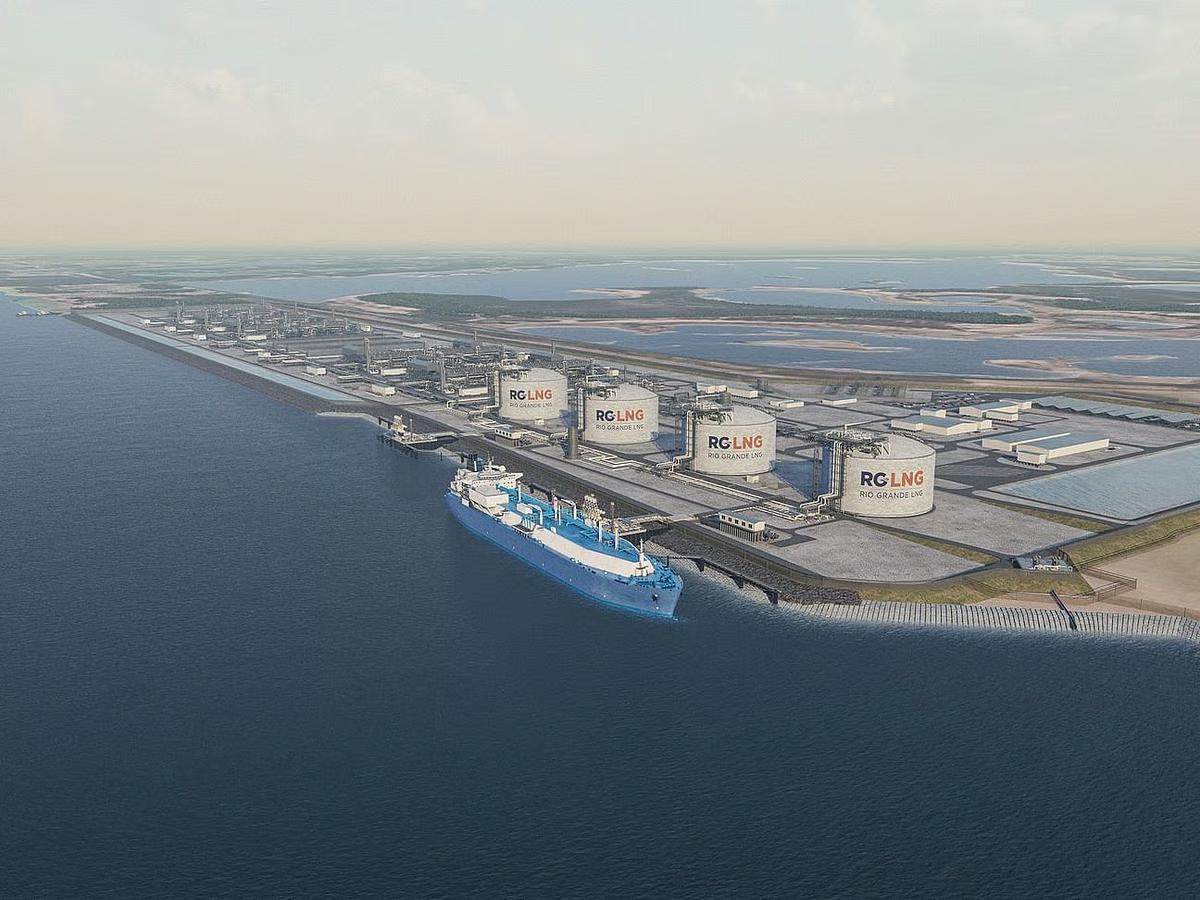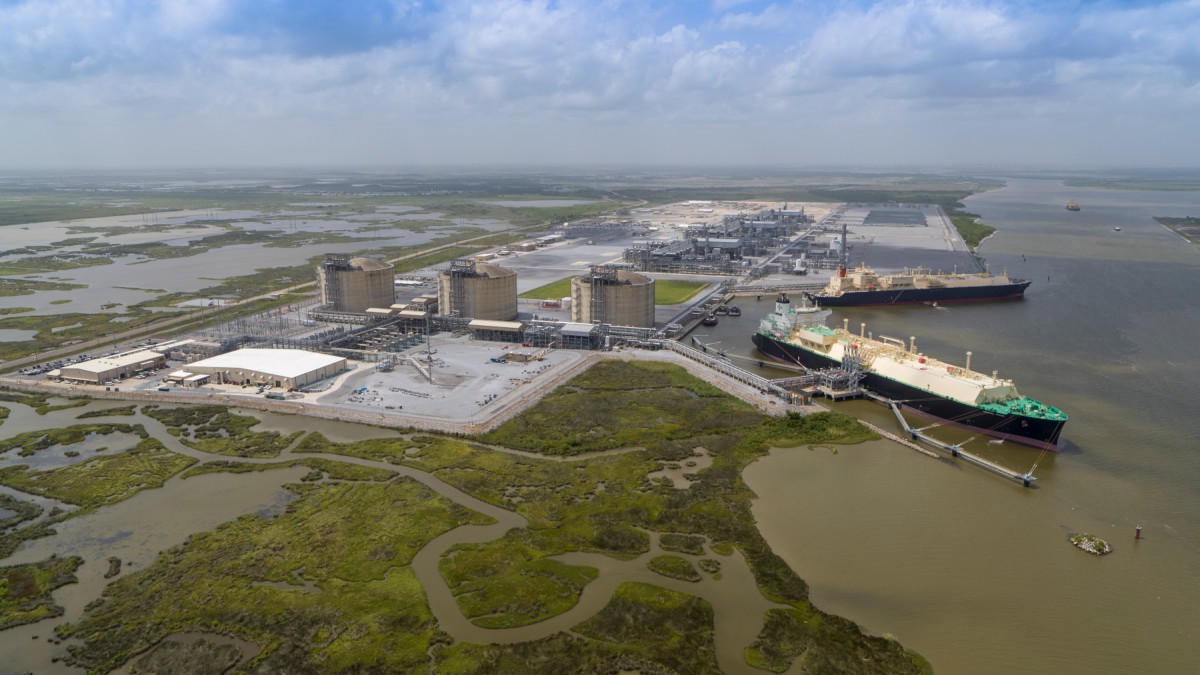
As might be expected in the zero-sum game of global energy, there is much more than meets the eye to the acquisition by Abu Dhabi-headquartered international investment company XRG of an additional equity interest in Trains (self-contained production facilities) 4 and 5 of the U.S.’s flagship Rio Grande liquefied natural gas (LNG) project at the Port of Brownsville, Texas. In practical terms, this gives the firm that is wholly owned by the UAE’s oil and gas giant Abu Dhabi National Oil Company (ADNOC) much deeper exposure to one of the world’s largest LNG export facilities through equity interests across all five trains currently under construction. Geopolitically, it means that Washington has allowed the UAE to strengthen its strategic presence in one of the U.S.’s most important energy sectors. Since Russia invaded Ukraine in 2022, LNG has become the world’s emergency energy source, as, unlike pipelined gas or oil, it can be secured and shipped very quickly to wherever it is needed. And the U.S. is determined to leverage its relatively recently established dominance in the field as a core plank of its foreign policy. So, what is really happening here?In broad terms, after the invasion, the U.S. not only coordinated major deals between major LNG producers — notably Qatar — and European countries to offset the loss of Russian energy supplies, but also sharply increased its own LNG exports to the continent. From virtually a standing start in 2016, U.S. export capacity had reached roughly 11.4 billion cubic feet per day (Bcf/d), making it the world’s leading LNG exporter in the first half of that year – a position it maintains to this day. Meanwhile, several major European oil and gas companies also moved aggressively in support of Washington to diversify the region’s energy sources through new ventures in Egypt, Libya, Iraq, and elsewhere — developments covered in detail in my new book on the new global oil market order. Moreover, the U.S. Energy Information Administration (EIA) projects that the U.S.’s LNG export capacity will double by 2031 compared with 2024 levels, as new projects such as Venture Global’s Plaquemines facility and Cheniere’s Corpus Christi expansion come fully online. “There’s an old phrase: ‘If you’ve got them by the balls, their hearts and minds will follow,’ and [U.S. President, Donald] Trump knows that controlling energy — including the world’s primary emergency energy source, LNG — is the way to do this,” a senior source closely connected to the European Commission’s (E.C.) security complex exclusively told OilPrice.com. “You saw it when he told the Europeans — as the Strait of Hormuz was closed — that they should just get their energy from the U.S. That’s what this strategy is all about,” he underlined. For the U.S.’s Middle East policy under Trump’s Presidency 2.0, this dovetails into a broad policy shift away from Washington loudly taking front and centre on the ground in several countries — exemplified in its Iraq strategy from the 2003 invasion to the end of the combat mission in 2021 — and instead seeking to work toward a more collegiate approach with key regional allies. As far as Trump is concerned, the UAE was always earmarked as being the regional foundation stone for his new Middle Eastern foreign policy, centred on the rollout of Washington-brokered relationship deals between Arab states and Israel (the ‘Abraham Accords’), as also analysed in my latest book on the new global oil market order. The UAE, in September 2020, was the first major Gulf state to sign such a deal and, contrary to widely-dispersed rumours, never cut off diplomatic relations with Israel following the events in the aftermath of the 7 October 2023 slaughter of Israeli citizens by the Iranian-backed terrorist organisation Hamas. An additional positive that came with the UAE in Washington’s eyes was that it enjoyed an unusually close relationship with India in the oil and gas sector. This was seen as giving the U.S. additional leverage in using India — perennially short of oil and gas supplies sufficient to power its economic boom — as a political, economic, and military counterbalance to China in the Asia-Pacific region. The UAE’s recent exit from OPEC was seen as a triumph by U.S. President Donald Trump: “I think it’s great, and ultimately a good thing for getting the price of gas down, getting oil down, getting everything down…they’re having some problems in OPEC.”In this context, there have been several major initiatives across the region by the U.S. focused on expanding cooperation in the LNG sector with other countries broadly seen as allies to Washington or as states who require further leverage to shift them back into the U.S.’s sphere of influence, away from China and Russia. Iraq, for example, does not have an LNG sector to speak of, but is now planning to build its first LNG import terminal at Khor Al-Zubair port, with a second offshore LNG terminal also now planned for Faw port. In recent months, several major Western oil and gas firms with top-flight LNG capabilities – including the U.S.’s ExxonMobil and Chevron, Great Britain’s Shell and BP, and France’s TotalEnergies, among others – have either re-established or expanded their presence in Iraq. And in recent weeks, Iraq invited U.S. firm Excelerate, the global leader in LNG floating storage and regasification units and downstream LNG infrastructure, to take a key role in developing these LNG import terminals. In the same vein, two highly notable LNG deals have been signed with Saudi Arabia. The first was a 20-year sale and purchase agreement between U.S. firm NextDecade to supply Saudi Arabia’s Aramco with 1.2 million metric tonnes per annum (mtpa) of LNG tied to the construction of Train 4 of the Rio Grande project, which speaks to a deeper geopolitical recalibration underway in Riyadh. The second was another 20-year deal for Caturus’s Commonwealth LNG division to supply one million tonnes per annum of LNG to Aramco Trading Americas from the Commonwealth LNG facility in Louisiana. Caturus Energy is a midstream platform formed by the U.S.’s Kimmeridge and the state-owned UAE Mubadala Investment Company.This latest transaction, acquiring an additional 7.6% equity interest in Trains 4 and 5 of the Rio Grande project — from an acquisition vehicle of Global Infrastructure Partners (GIP), part of BlackRock — augments XRG’s initial investment through which it acquired an indirect 11.7% stake in Phase 1 of the project, including Trains 1, 2, and 3, also through GIP. Trains 4 and 5 combined are expected to have total LNG production capacity of approximately 12 mtpa, while the wider Rio Grande LNG project has around 30 mtpa of liquefaction capacity currently under construction across the 5 trains, with production expected in the first half of 2027. As part of XRG’s initial investment in the project, ADNOC Trading also entered into a 20-year LNG offtake agreement for 1.9 mtpa from Train 4, according to the companies involved. “All this should strengthen the increasingly intertwined energy, economic, and security partnership between the U.S. and UAE, and further facilitate the rollout of Trump’s future foreign policy strategy across the Middle East, based around more Abraham Accords,” concluded the E.C. source last week.By Simon Watkins for Oilprice.comMore Top Reads From Oilprice.comU.S. LNG Exporter Reaps Windfall as Middle East Turmoil Drives Fees HigherOil Prices Jump After Iran Attacks Commercial VesselsUS Crude Oil, Product Inventories Fall Even As Hormuz Traffic Begins to Flow
Why the UAE Is Taking a Bigger Piece of America’s LNG Crown Jewel | OilPrice.com
XRG has expanded its stake in the Rio Grande LNG project, giving the UAE a larger role in one of America's most important LNG export facilities with Washington's apparent backing.
1,228 words~6 min read