Audio By Vocalize
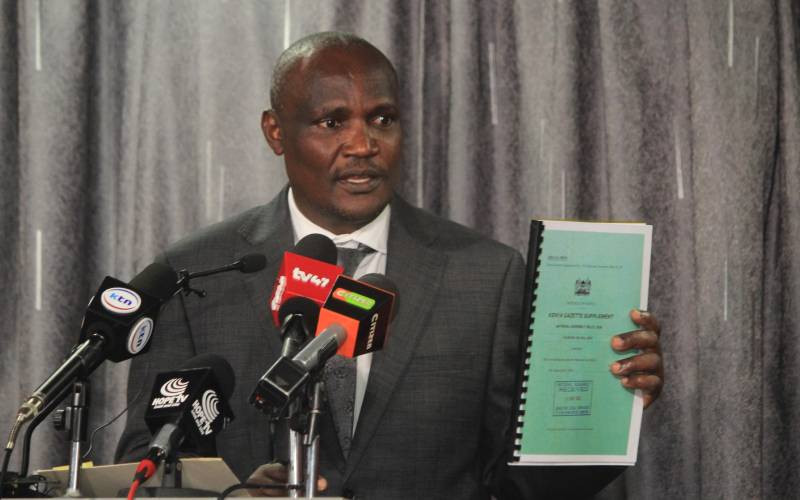
Treasury CS John Mbadi, before reading the 2026/27 Budget at Parliament buildings, Nairobi, June 11, 2026. [Elvis Ogina, Standard]
Recently, the President signed the Finance Bill 2026 into law. This came after weeks of debate, press conferences, shouting matches, and threats of protests, similar to what happened in June 2024. Around this time every year, Kenyans and investors, both local and foreign, hold their breath in anticipation of what will be in the Finance Bill. This anxiety is not good for business and makes Kenya an unattractive destination for investment.
Businesses are forced into an annual round of amended VAT schedules, new levies, and revised thresholds, which result in new forecasts, new projections, and at times changed plans. Operationally, this manifests as payments to accountants, tax experts, and lawyers, as well as compliance officers, to interpret what the government wants from them this time.
It gets worse for businesses. We all saw what happens when this unnecessary ritual goes too far. In June 2024, Kenyans took to the streets in protests that shook the region, leaving over 60 people dead, and a withdrawal of a Finance Bill that had already passed through the National Assembly. Businesses suffered losses, and to this day, June 25 remains a day on which hardly any business is conducted in Nairobi.