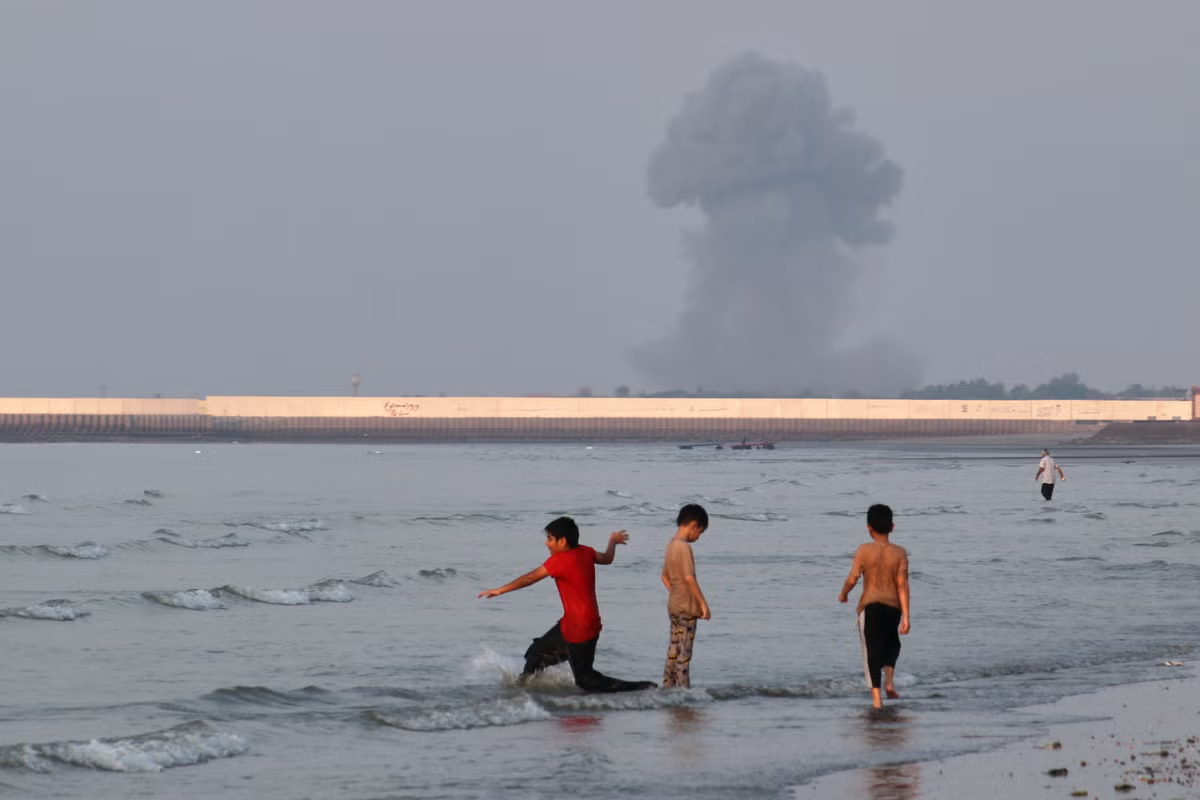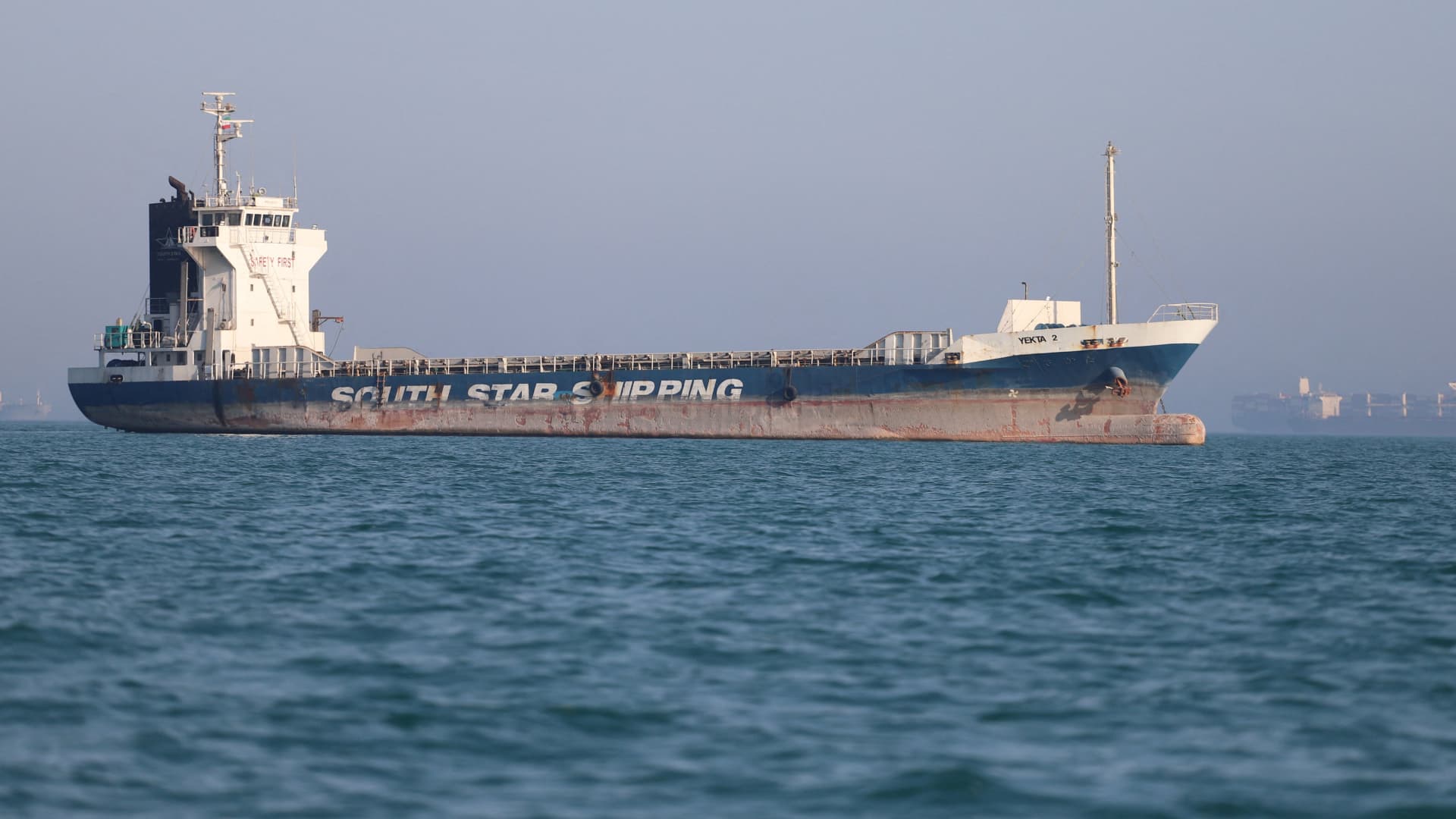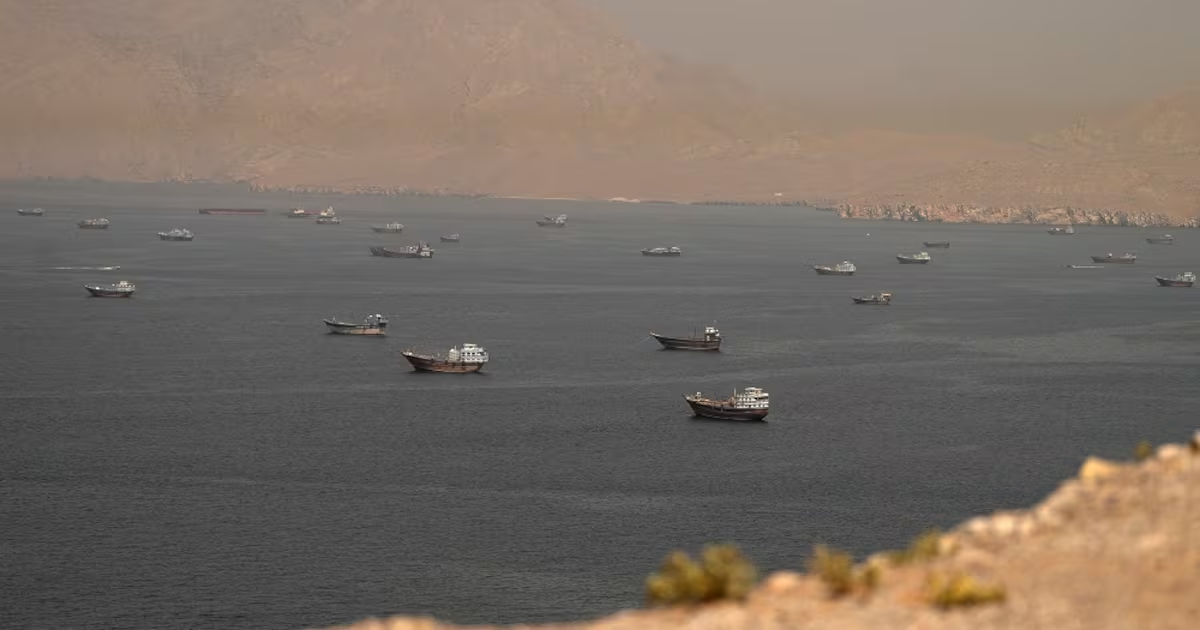
By Georgina McCartneyOil prices rose more than 4% on Monday after US President Donald Trump said the US is reinstating a naval blockade on Iran, reigniting concerns over energy shipments through the Strait of Hormuz.Brent crude futures were up $3.21, or 4.22%, to $79.22 at 3.34pm GMT (5.34pm), while West Texas Intermediate crude was up $3.04, or 4.26%, to $74.45 a barrel.Both contracts jumped more than 4% after Trump said the US is reinstating the blockade after renewed military exchanges between the US and Iran.Iran’s top joint military command had earlier said it would not allow Washington to intervene in the management of the strait and any attempt by the US to transit without its authorisation would be confronted.Read: Economic activity falls to seven-month low on Iran war uncertaintyThe latest hostilities follow an announcement by Iran at the weekend that it was closing the strait, and cast further doubt on the viability of an interim deal to halt the war in the Middle East and drove oil prices higher.“The Hormuz Strait is OPEN, and will remain OPEN, with or without Iran. We are reinstating THE IRANIAN BLOCKADE,” Trump said on Truth Social.“The U.S.A. will be, from this point forward, known as ‘THE GUARDIAN OF THE HORMUZ STRAIT’, but as such, and as a matter of FAIRNESS, will be reimbursed, at the rate of 20% on all cargo shipped.”Before the conflict began in late February, the Strait of Hormuz handled about a fifth of global daily oil and liquefied natural gas supplies.Traffic had begun to increase during a fragile ceasefire agreed to in June, but had slowed as tensions rose.“The focus will remain on the number of inbound tankers as a lower number could impact production, so currently we see a risk premium and a disruption risk supporting prices,” said UBS analyst Giovanni Staunovo.As the prospect of long-term disruption looms, analysts expect countries to work on ways to permanently bypass the Strait of Hormuz.Goldman Sachs estimated that expanding pipeline capacity in the Middle East could shield more than 60% of pre-war Gulf oil exports from any future Hormuz disruptions by end-2028.The bank’s base-case forecast assumes pipeline capacity bypassing Hormuz will rise by 3.8-million bpd by end-2027 and 7.3-million bpd cumulatively by end-2028, taking total effective bypass capacity to more than 14-million bpd by end-2028.The Revolutionary Guards said on Monday they have targeted US military facilities in Bahrain and Kuwait, destroyed radar systems in Oman and hit fuel tanks and ammunition depots at Prince Hassan Air Base in Jordan in response to US strikes.The US military said it had struck Iranian air defence systems, coastal radar sites, missile and drone capabilities and small boats on Sunday, using aircraft, naval vessels and drones.On Monday, the US attacked military sites in southern parts of Iran, including Qeshm, Bandar Abbas and Abadan, Iran’s official news agency IRNA said, citing a local official.Bahrain said its air defence systems intercepted several Iranian missile and drone attacks early on Monday.
Oil leaps more than 4% as Trump says US reinstating Iran naval blockade
Iran says it will not allow Washington to intervene in the Strait of Hormuz
492 words~2 min read