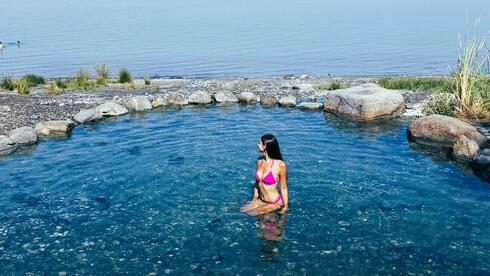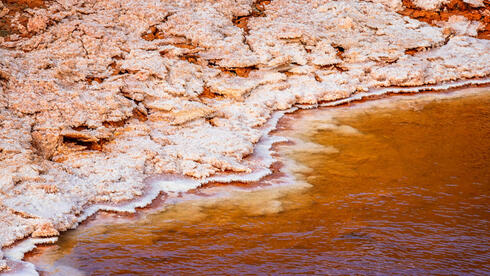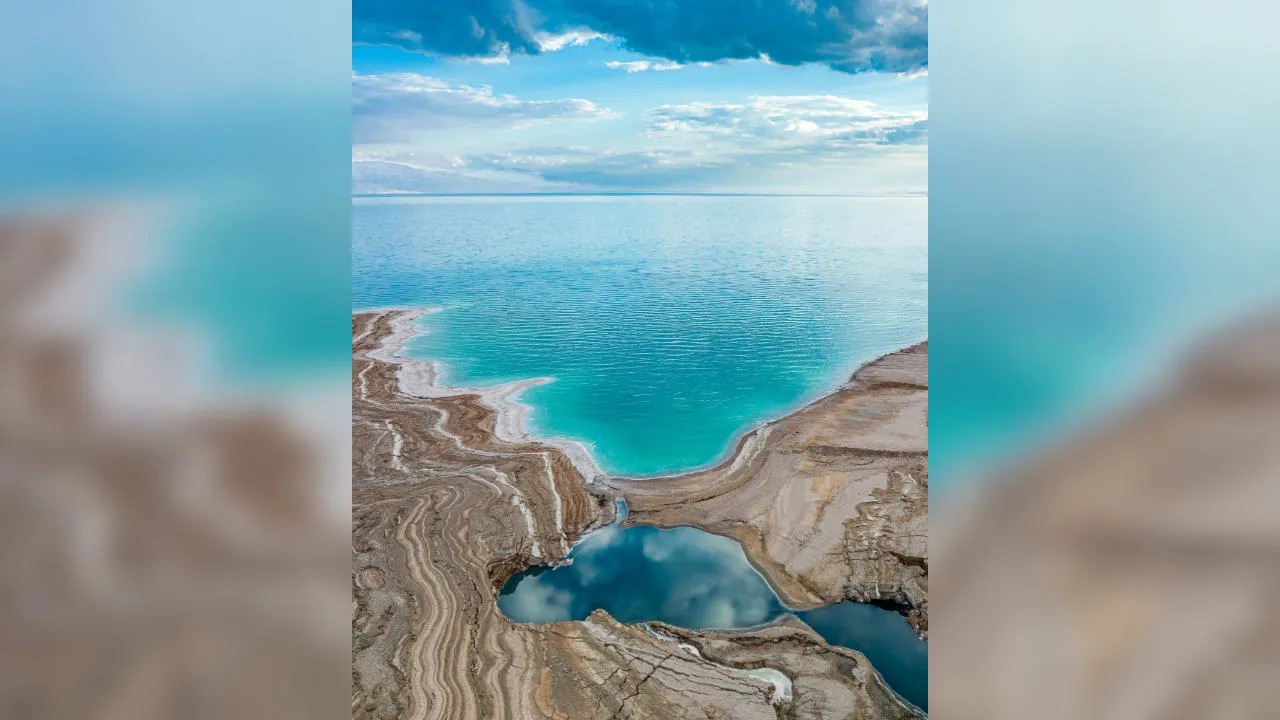
Jerusalem Post/Jerusalem ReportFrom Jerusalem’s ancient streets to the shifting shores of the Dead Sea, one Israeli photographer documents a land that refuses to stand stillFollow us on GoogleThe colors of each sinkhole come from minerals, salt, clay, and water.(photo credit: Shimon Perlstein)BySHIMON PERLSTEINJULY 13, 2026 19:28I am an Israeli photographer, based in the Jerusalem area, and for more than a decade, photography has been a central part of my life. I began by taking photographs of landscapes during long travels overseas, but over time, I understood that some of the most powerful stories are much closer to my home.Much of my work is focused on the Dead Sea, the Judean Desert, and Jerusalem. These places continue to draw me back because they are always changing. The Dead Sea, in particular, feels like a living landscape. Its shoreline changes, new sinkholes appear, and salt formations grow and disappear. I am attracted to this constant change, and to the feeling that every visit reveals something that may not exist in the same way again.Read MoreA unique paletteThe colors of each sinkhole come from minerals, salt, clay, and water. Clear water can turn turquoise or green, minerals add blue, orange, or yellow, and sunlight changes the colors we see. Together, they form a unique palette, and no sinkhole looks like another.At sunrise, the Dead Sea becomes a quiet field of color, with soft orange light spreading across the water. (credit: Shimon Perlstein)Dead Sea sunriseAt sunrise, the Dead Sea becomes a quiet field of color, with soft orange light spreading across the water and the mountains beyond. A small salt formation rises from the shallow water like a natural sculpture, shaped slowly by minerals, salt, and time. It is a landscape that appears still, yet is constantly changing.At sunset near Ein Gedi, the Dead Sea was covered in rare shades of pink and purple. (credit: Shimon Perlstein)Dead Sea sunsetAt sunset near Ein Gedi, the Dead Sea was covered in rare shades of pink and purple. Along this shoreline, the salt, mud, and shallow water create natural textures that look almost like a painting. In other parts of the Dead Sea, the landscape is shaped by sinkholes, freshwater springs, rich mud, salt formations, and salt pearls. Together, these places reveal how diverse the Dead Sea really is.way. Its mineral- rich waters, mud, and salt have shaped this place into a natural wonder, where even the air feels different. (credit: Shimon Perlstein)Natural wonderDespite its name, the Dead Sea is full of life in a different way. Its mineral-rich waters, mud, and salt have shaped this place into a natural wonder, where even the air feels different. It is a rare experience that can only be found at the lowest place on Earth.Nature and heritageAt Dor Beach, nature and heritage meet along one of the most unique stretches of the Mediterranean coast. The shoreline of Tel Dor preserves the remains of an ancient and important harbor and the biblical city of Dor, where more than 20 sunken ships were found offshore. It is a place where sea and land, past and present, come together beside the rich marine reserve that surrounds the coast today.The shoreline of Tel Dor preserves the remains of an ancient and important harbor and the biblical city of Dor. (credit: Shimon Perlstein)A quiet oasisHidden among the cliffs of the Judean Desert, Gev Halon offers a rare meeting point between desert rock, water, and an open view toward the Dead Sea. After rainfall and flash floods, water collects inside the natural pool, creating a quiet oasis in one of the driest landscapes in the region. From inside the canyon, the view opens suddenly through the rocks, giving the place its name and its unique sense of discovery.Desert of lifeAfter rare rains and desert floods, Zfira Pool becomes one of the hidden wonders of the Judean Desert. Water gathers between the white rock walls, creating a quiet natural pool above the dry canyon below. For a short time, the desert reveals another side of itself, unexpected, fragile, and full of life.Jerusalem is another place I return to again and again. The Old City especially fascinates me because each quarter feels different. Every gate feels like an entrance to a different world, and within the walls, you move between history, faith, and many different cultures in just a few steps.My method is based on patience, research, and repeated visits. I usually study a location before I go, thinking about the time of day, the weather, the access, and the equipment I need. I often return to the same places many times, especially at sunrise or sunset.Once I am there, I try to stay open to what the landscape gives me, because nature often offers something better than what I planned. I look for forms, textures, and small changes in the place, and I try to understand what makes each scene feel different from the last time I was there.As evening falls over Jerusalem, the Tower of David is lit against the deep blue sky. (credit: Shimon Perlstein)Past vs presentAs evening falls over Jerusalem, the Tower of David is lit against the deep blue sky. Inside the ancient walls, layers of history, stone, and architecture come together in one of the city’s most recognizable landmarks. It is a place where Jerusalem’s past remains present, not as a memory, but as part of the city’s daily life.From between the ancient stones, the golden Dome of the Rock appears beyond the rooftops and hills of the Old City. (credit: Shimon Perlstein)Golden stonesThe walls of Jerusalem frame one of the most recognizable views in the city. From between the ancient stones, the golden Dome of the Rock appears beyond the rooftops and hills of the Old City. At sunset, the light gives the walls a quiet presence, connecting the city’s history with the life that continues around them.Celebration of lifeOn Jerusalem Day, crowds gather at Damascus Gate, filling one of the most recognizable entrances to the Old City. The ancient stone gate becomes a meeting point of history, identity, and public celebration. As evening light falls over the walls, the scene reflects the strong connection between Jerusalem’s past and the life that continues around it.On Jerusalem Day, crowds gather at Damascus Gate, filling one of the most recognizable entrances to the Old City. (credit: Shimon Perlstein)Human enduranceRunners push forward as the first light of dawn breaks over the Dead Sea during the Dead Sea Marathon. Surrounded by turquoise water, white salt, and the desert mountains beyond, the route becomes part of the landscape itself. It reflects both human endurance and the surreal beauty of the lowest place on Earth.Runners push forward as the first light of dawn breaks over the Dead Sea during the Dead Sea Marathon. (credit: Shimon Perlstein)As part of my process, I also use a drone, which allows me to show patterns, textures, and shapes that cannot be seen from the ground. In places like the Dead Sea, where many areas are unsafe or impossible to reach on foot, the aerial view is not only beautiful, it is also necessary.Through my photos, I hope to share not only what a place looks like, but also what it feels like to be there, even for a moment. With the Dead Sea, I want to show that despite its name, it is a living place, full of movement, change, and unexpected beauty. With Jerusalem, I want to show what makes it such a unique city, beyond the headlines about politics.■Readers can see more of Shimon Perlstein's work here: https://www.instagram.com/shimonperlstein/Follow us on Google
Exploring Israel through landscape photography | The Jerusalem Post
From Jerusalem’s ancient streets to the shifting shores of the Dead Sea, one Israeli photographer documents a land that refuses to stand still
1,263 words~6 min read