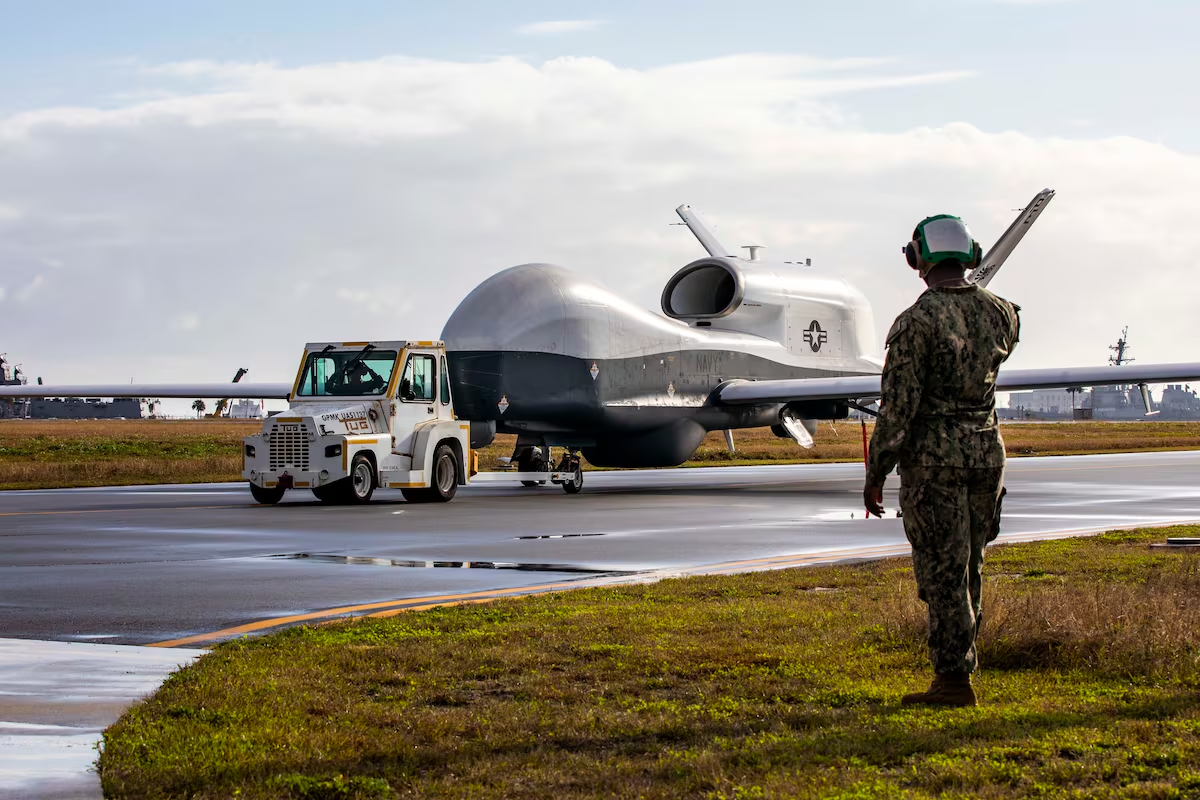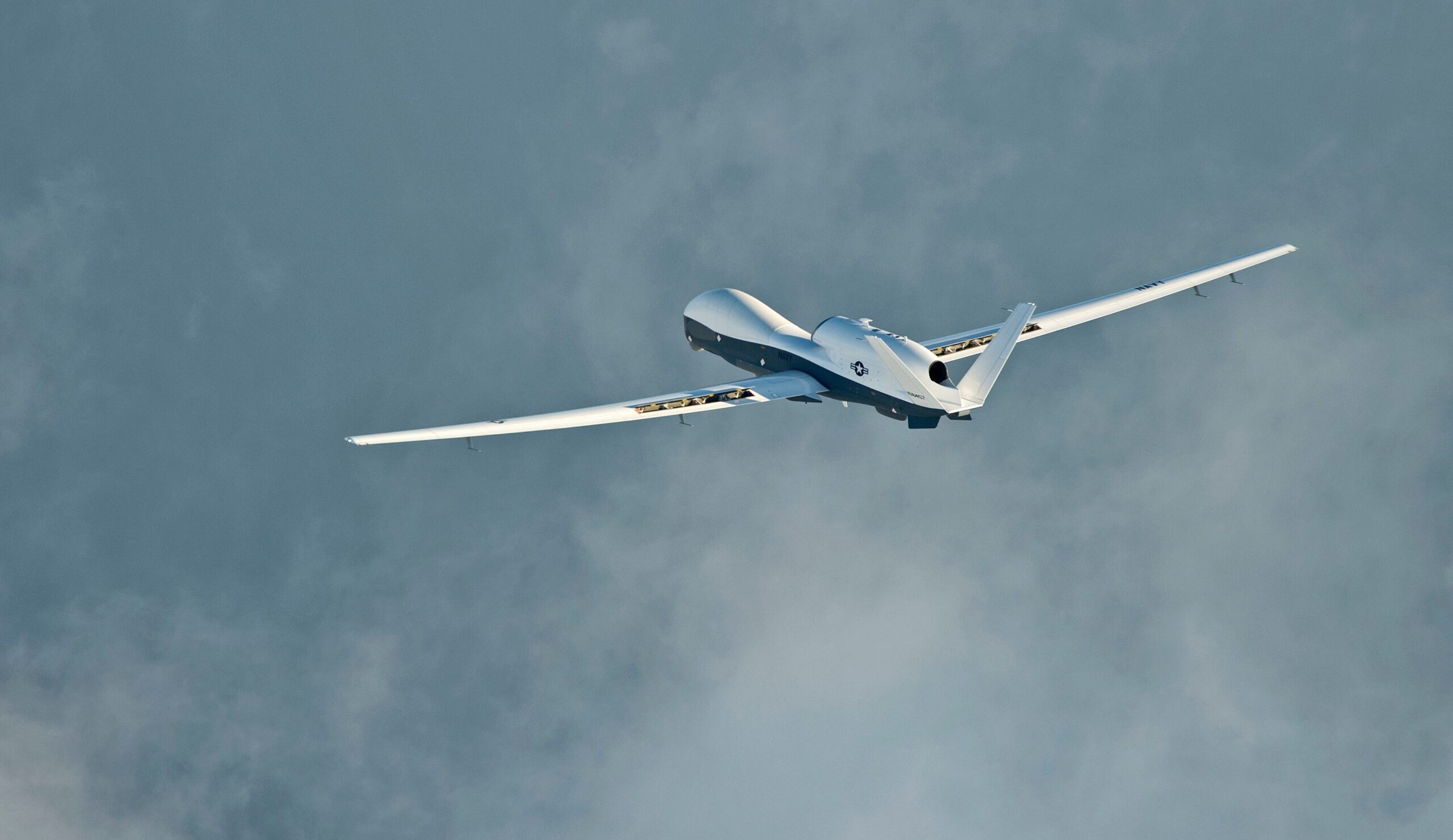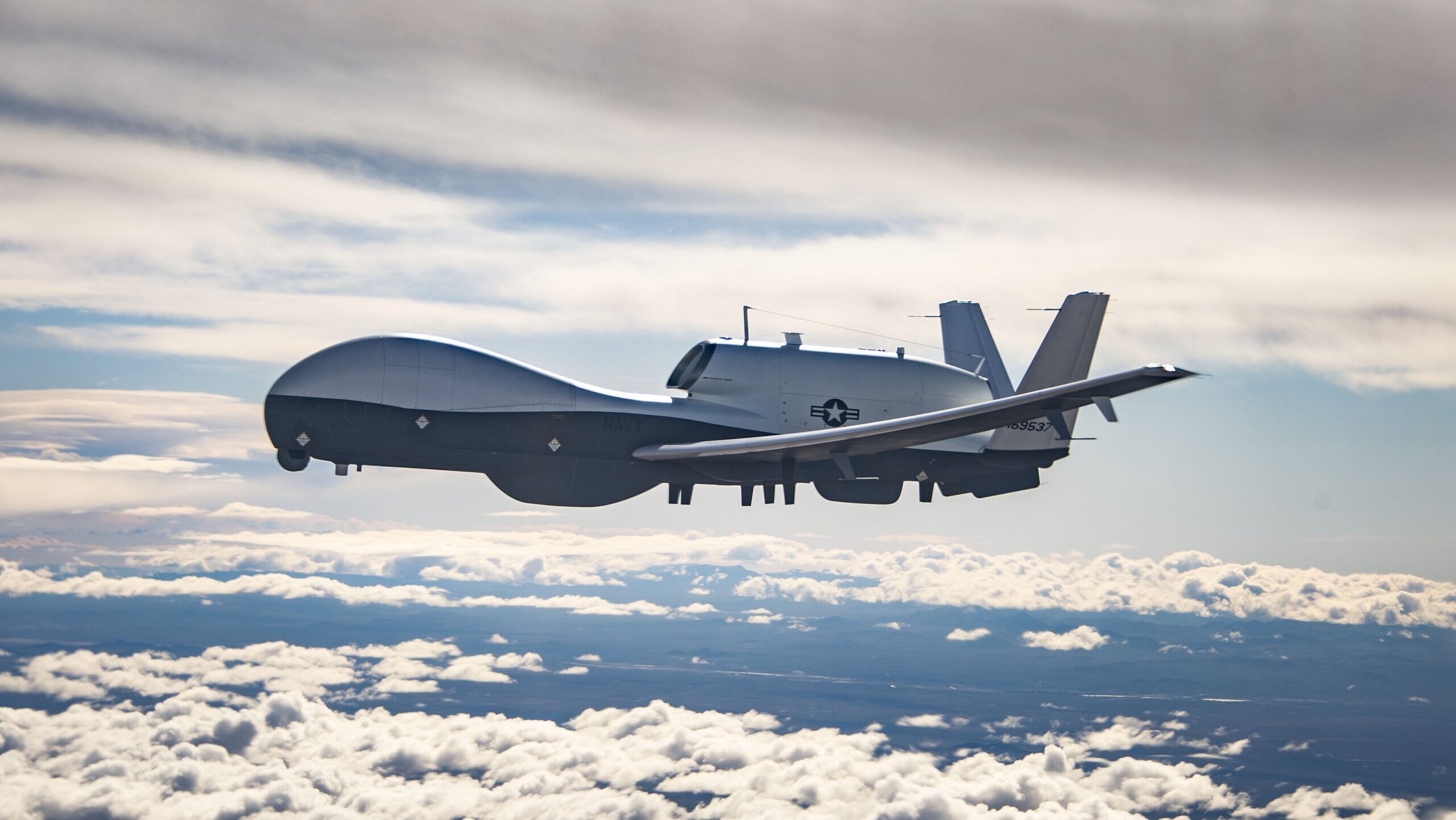
Last week at its summit in Turkey, NATO nations announced the planned purchase of several new aircraft, including up to five MQ-4C Triton unmanned aerial vehicles. Denmark, Finland, Germany, and Norway will lead the alliance’s procurement of Triton, a high-altitude, long-endurance maritime surveillance aircraft originally developed for the U.S. Navy. Triton is intended to expand NATO’s ISR Force, the alliance-owned fleet of five RQ-4D drones based in Sigonella, Italy which started flying in 2021 and has proven operationally valuable and cost effective since then.
The Triton announcement is welcome news, fulfilling a recommendation we made in a study earlier this year. We think the plan deserves three cheers: one tactical, one operational, and one strategic. Being think tankers, though, and Naval intelligence officers to boot, our cheeriness has limits. Two aspects of the plan give us pause.
First, cheer the tactical benefit. Acquiring Triton will allow NATO to surveil targets more thoroughly because the aircraft carries sensors that NATO’s existing RQ-4Ds do not. The RQ-4D has both the synthetic aperture radar and moving target indicator, two powerful systems it has used to good effect. However, it cannot collect electro-optical and infrared imagery or signals intelligence. Triton offers those capabilities, along with radar, on an airframe reinforced for maritime conditions.