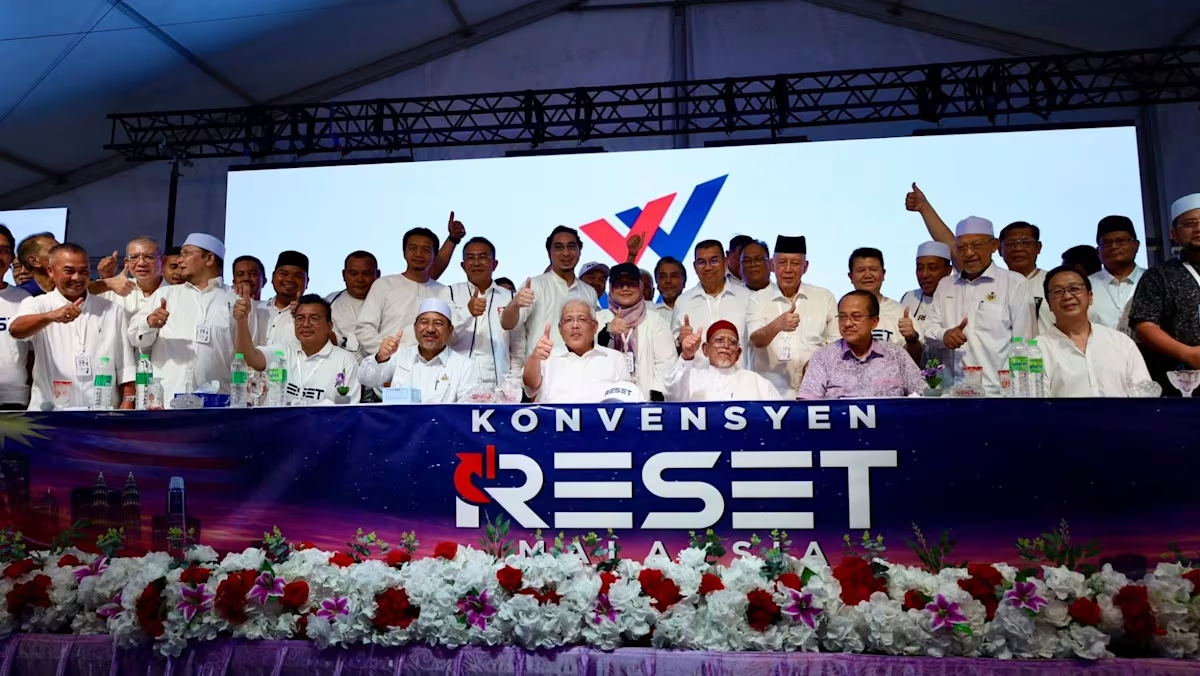
When Malaysian Deputy Prime Minister and Barisan Nasional (BN) Chairman Ahmad Zahid Hamidi signalled in May 2026 that the BN coalition is likely to contest Malaysia’s 16th general election independently, the message appeared straightforward. But in reality, it was less a firm electoral strategy than an exercise in strategic ambiguity.
The ‘solo’ narrative is designed to rejuvenate BN’s grassroots base — particularly segments of the conservative Malay Muslim majority uneasy with the party’s cooperation with the Pakatan Harapan (PH) coalition. This is because PH includes the largely Chinese-based, multiracial and secular Democratic Action Party (DAP), which many Malays see as a threat to Malay–Muslim privileges and the Islamic identity of the country.
The comment also allows BN to avoid being seen as permanently tied to either PH or the right-wing Perikatan Nasional (PN) coalition, keeping open the possibility of post-election cooperation with whichever bloc is best positioned to form government.
Barisan Nasional, including its largest party the United Malays National Organisation (UMNO), allied with PH, including its component parties Parti Keadilan Rakyat and Parti Amanah Negara, to form Prime Minister Anwar Ibrahim’s federal ‘Madani’ unity government. While formally united at the federal level, the alliance faces mounting friction over seat allocations in upcoming state elections and ideological differences regarding UMNO’s nationalist agenda.