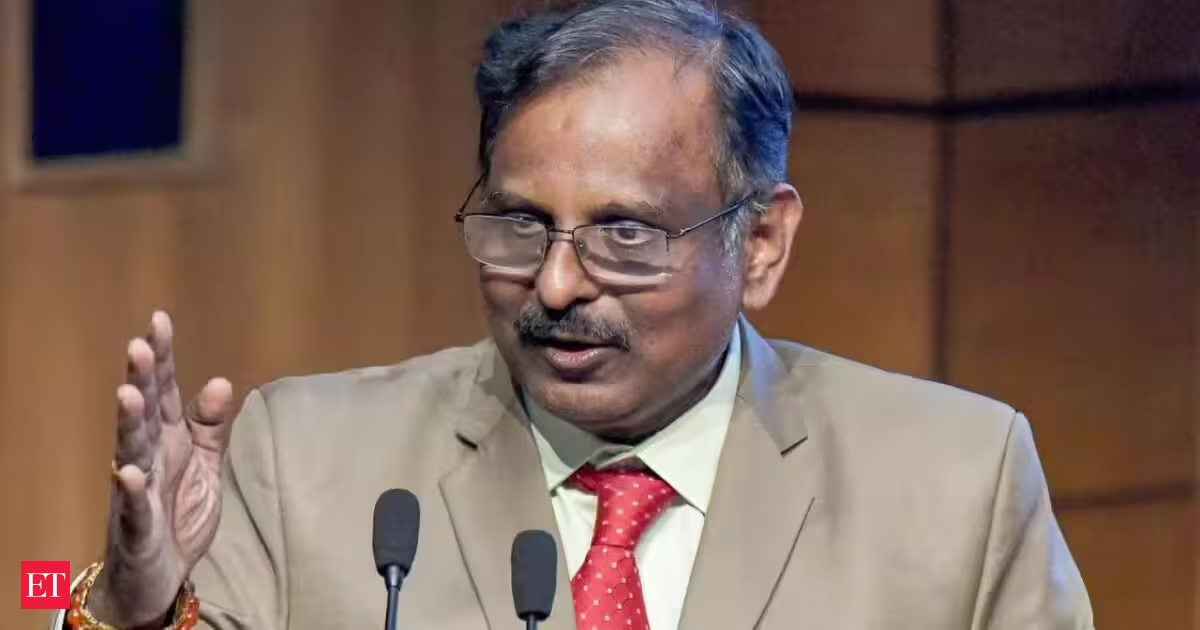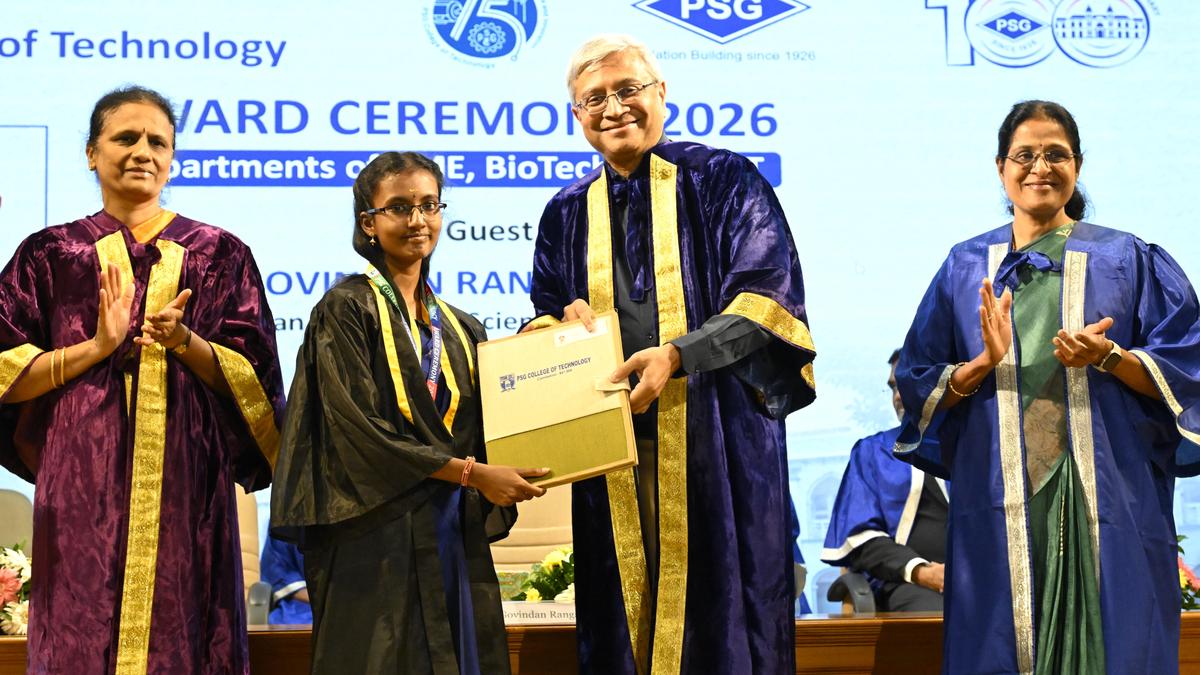
Govindan Rangarajan, Director, Indian Institute of Science (IISc), Bengaluru, presenting a medal and degree certificate to a student during the Award Ceremony of PSG College of Technology in Coimbatore on Monday.
| Photo Credit: PERIASAMY M.
India has to pace up self-sufficiency in cyber security as rapid advancement of quantum computers that could breach algorithms deployed for digital transformation through UPI, Aaadhar, as also for power and water distribution systems, is a cause for major concern, Govindan Rangarajan, director, Indian Institute of Science (IISc), Bengaluru, said in Coimbatore on Monday.Countries developing the technology will rather break into strategic systems and gain advantage than publicising their findings. Graduating students ought to assume responsibility for developing highly advanced algorithms resistant to attack by quantum technology before 2029 to keep pace with global migration to post-quantum cryptography, he said, at the Award Ceremony of PSG College of Technology.Citing instances, he highlighted the vulnerability of security establishments and emphasised the need for India to be self-sufficient in cyber technology.Referring to the 2024 Nobel Prize for computational protein design AlphaFold, Mr. Rangarajan said AI, which facilitated rapid drug discovery, was a double-edged sword as it was also used to develop bioweapons. He cited the instance of AI-generated viruses that destroyed bacteria.He cautioned the student community against getting lulled into complacency by AI. Replacing critical thinking with AI would be disastrous in the long-run.Employers would never recruit candidates who were entirely dependent on AI tools. Critical thinking and communication skills are what would set one apart. Empathy and relationships kept humans grounded, he explained. Published - July 13, 2026 09:16 pm IST