Comments
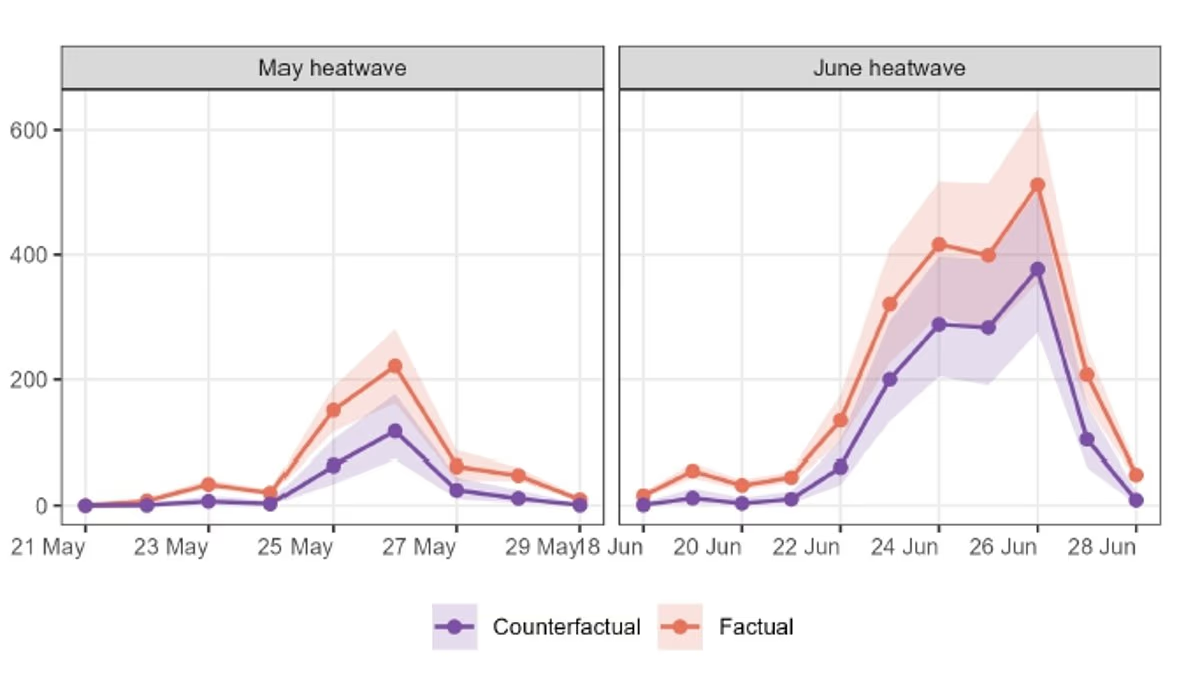
‘June heatwave killed 440 a day at its peak, say climate scientists’ was the Guardian’s splash this morning, while the BBC reported that ‘more than 2,700 people may have died in exceptional May and June heatwaves’. The stories are based on a paper from Imperial College London, the London School of Hygiene and Tropical Medicine and the Met Office, which estimates 2,736 ‘excess heat-related deaths’ across the May and June heatwaves in England and Wales, with 553 heat deaths from 21 to 29 May and 2,183 from 18 to 28 June. Dr Clair Barnes, the report’s lead author, said: ‘These are big numbers and we don’t want to see this many people dying.’ Of course we don’t. But there’s a problem with the reporting: the estimates aren’t based on actual counts of deaths this year.
As the paper’s authors admit: ‘The rapid nature of this analysis precluded access to observed death counts for England and Wales.’ Usually, attributing deaths to heat means looking at how many people die in hot periods compared to a baseline. Instead, the paper’s authors looked at the temperatures the country experienced during the heatwaves and estimated the expected number of deaths caused by heat based on the relationship between the two from 2000-2019. They admit limitations of their approach: they assume a constant mortality rate throughout the year. They don’t account for adaptation to heat over time, nor the effect of heat on deaths changing throughout the year, as the first heatwaves of the year tend to have bigger health effects than later ones as people acclimatise.