When Cornell students enroll in Biomedical Engineering for Women’s Health this fall, they will explore a question that has too often been overlooked in medicine and engineering: What happens when technologies are designed without fully accounting for female biology?
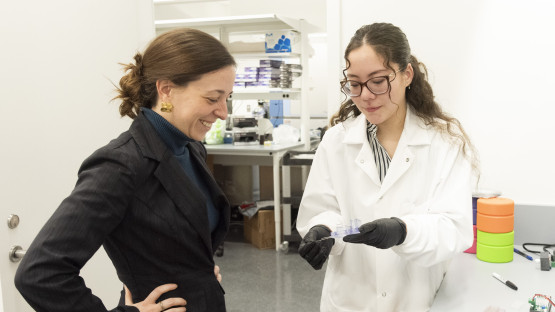
Kayla Wolf, assistant professor of biomedical engineering, is introducing the new course Biomedical Engineering for Women’s Health.
Developed by Kayla Wolf, assistant professor in the Meinig School of Biomedical Engineering, BME 4420/6420 introduces students to the unique physiological and mechanical considerations that shape women's health and the clinical problems that arise when those factors are ignored in engineering design. The course will examine both successful and flawed technologies, giving students the tools to evaluate how engineering decisions affect clinical outcomes and to identify opportunities for innovation.To support the development of a hands-on, active learning component within the course, Wolf and Alexandra Werth, assistant professor in the Meinig School, recently received an Innovative Teaching and Learning Grant through Cornell’s Center for Teaching Innovation (CTI).The grant will enable the creation of six studio-based learning modules that place students in the role of engineering investigators. Through guided analyses of real-world clinical failures, students will examine how neglecting sex-specific biology can lead to unintended consequences for patients.Examples will include transvaginal mesh devices, intrauterine devices and hip implants. Students will evaluate clinical evidence, engineering design decisions, physiological factors, and regulatory considerations that contributed to device performance and patient outcomes. In some cases, they will work with physical models and other hands-on materials to better understand anatomical differences and their implications for design.“The goal is not simply to identify what failed,” Wolf said. “Students will learn to understand what mechanical and biological factors were overlooked, and how engineering approaches can be improved.”The course reflects a growing recognition that women’s health has historically been underrepresented in biomedical research, medical device development and engineering education. As a result, many engineers graduate without formal training in how sex-specific biology influences device design, diagnostics and treatment strategies.