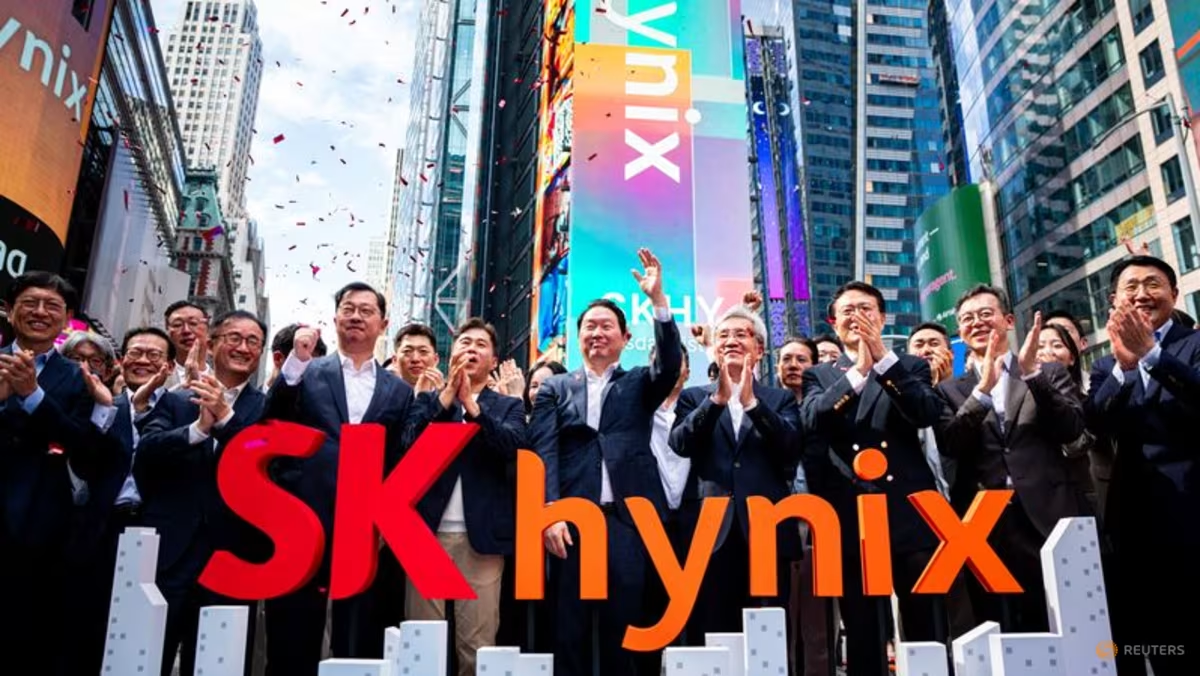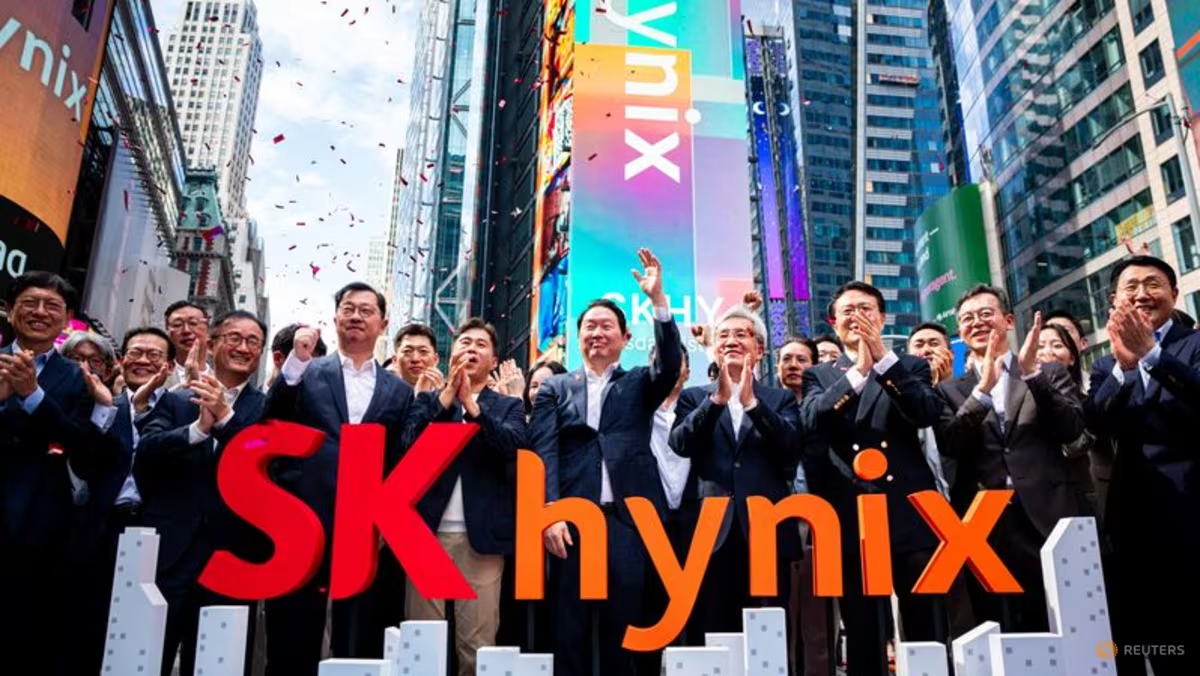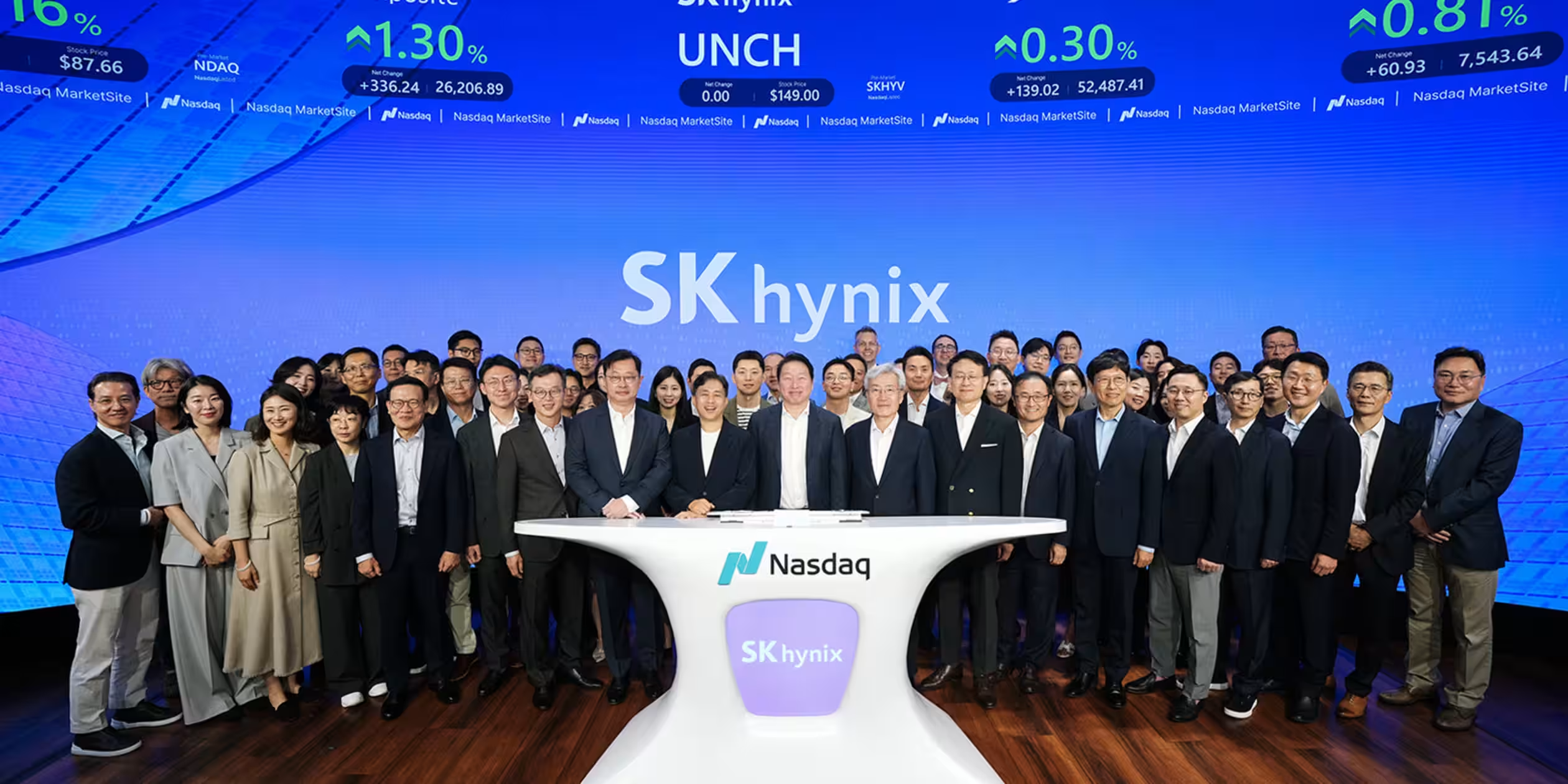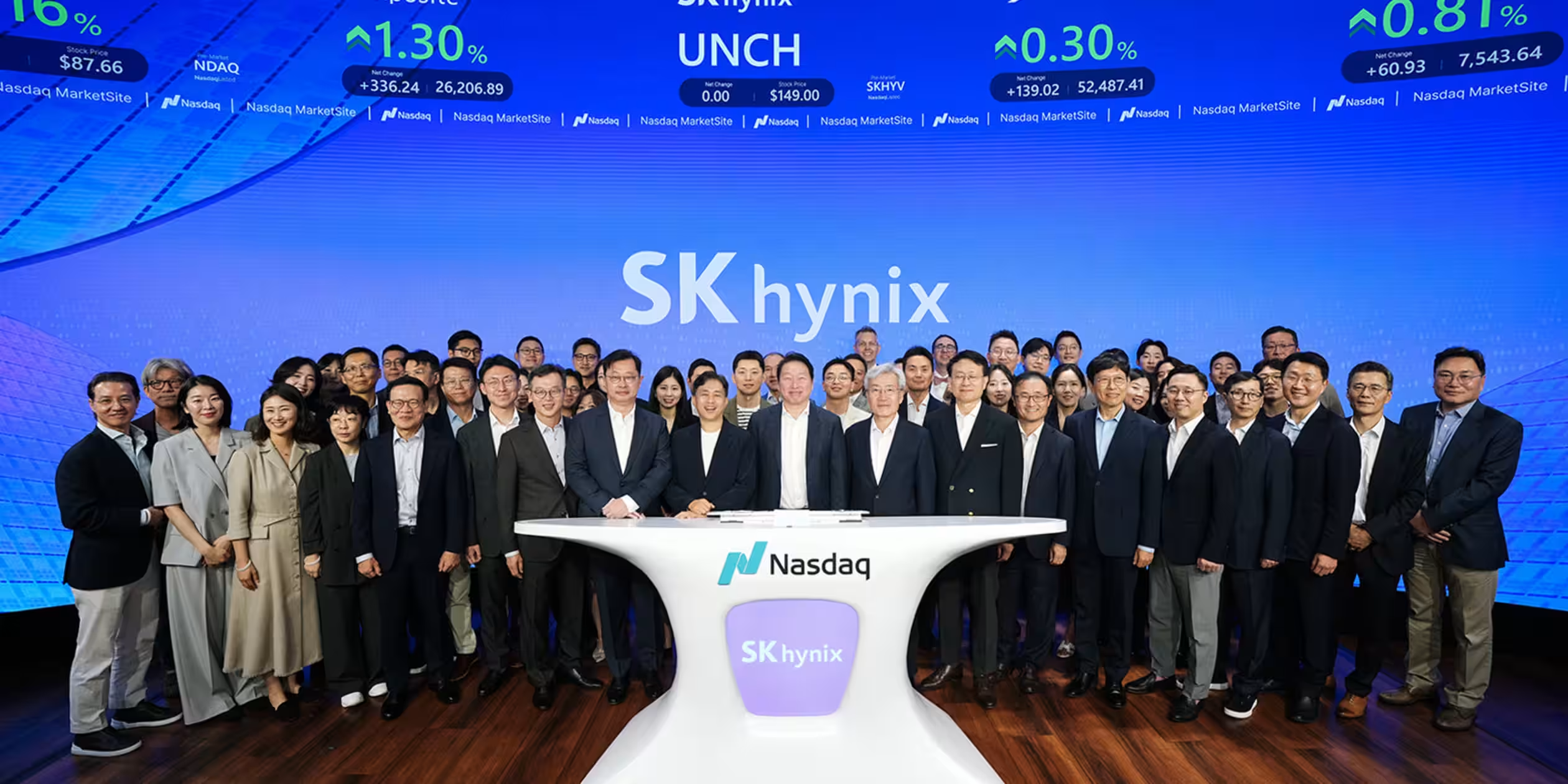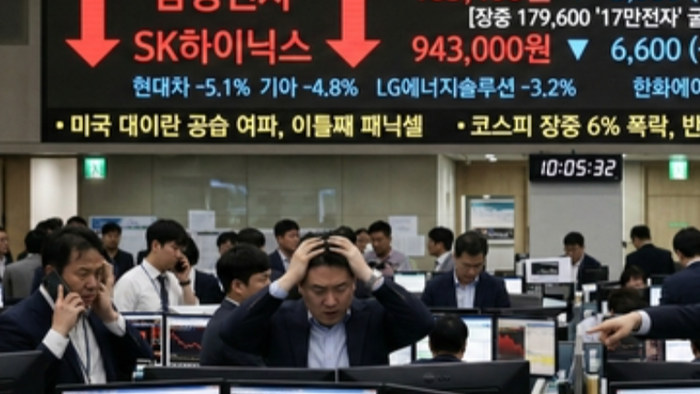
By Heekyong Yang, Gregor Stuart Hunter and Shashwat ChauhanSeoul ― SK Hynix’s Seoul shares posted their biggest one-day fall in nearly two decades on Monday, as investors unwound gains from a scorching rally after the company’s Nasdaq debut last week. The company’s US-listed shares dropped 7.9% to $154.7 in early trading after jumping more than 12% in their Nasdaq debut on Friday.The declines in SK Hynix’s shares, alongside those of rival chipmaker Samsung Electronics, contributed to a 9% plunge in South Korea’s Kospi, triggering a 20-minute trading halt.Shares of US rivals also dropped before the bell. Micron Technology fell 4.5%, SanDisk dropped 5.1% and Western Digital shed 5.2%.Korean stocks extended losses after trading resumed after President Lee Jae Myung on Monday reiterated that the government would help speed up projects to build chip fabs in investments worth hundreds of billions of dollars, as outlined by Samsung and SK Hynix.Listen: PODCAST | Securing data centres through surveillance and AIThe world’s leading AI memory chipmaker, SK Hynix, raised more than $26bn last week selling American depositary receipts (ADRs) priced at $149 each, after its Korean shares more than tripled this year. The ADRs opened 14% above the offer price at $170 before ending their first trading day with a 12.8% gain.“The current memory upcycle is tracking substantially stronger than expected, but our base case continues to assume normalisation in cycle dynamics, limiting upside at current levels,” said Lorraine Tan, a director at Morningstar, who values the company at $160 per ADR.“Despite accelerating AI adoption, monetisation remains uncertain and profitability for key players, such as OpenAI, appears to be under pressure,” she said. “Funding is also shifting toward debt or equity, raising concerns about the maintainability of current spending levels.” Analysts have said the large-scale investments in Korea had heightened uncertainty over the supply outlook and fuelled concerns that the current period of tight supply could eventually give way to an oversupply cycle.“Our base case here is the fresh capacity in 2027 and 2028 coming up in earnest will improve supply dynamics, thereby leading to price erosion,” said Jing Jie Yu, an equity analyst at Morningstar. SK Hynix CEO Kwak Noh-jung dismissed concerns about aggressive capacity expansion and said the memory industry is heading for its most severe supply shortage in 2027, forecasting that demand will continue to exceed the company’s ability to produce memory chips well into the next decade.Volatility in SK Hynix shares has surged this year as it has become a target of global investors betting on a sustained boost to profits from a shortage of high-bandwidth memory chips used in AI data centres, with many investors using leveraged exchange-traded funds that have amplified returns and losses.In Hong Kong, a single-stock ETF tracking SK Hynix offered by fund manager CSOP, which uses leverage to target twice the daily returns of its shares, lost more than a third of its value on Monday, its biggest one-day decline since listing in October.After the rout in the Seoul market on Monday, SK Hynix’s US ADRs, which represent one-tenth of a share and closed at $168 on Friday, were left trading at about a 37% premium to its South Korean share price.“Companies with both US and home-market listings often trade at a premium in the US, benefiting from broader investor access, deeper liquidity and stronger valuation support,” said James Ooi, a market strategist at Tiger Brokers in Singapore.Read: Naspers jumps almost 10% as Tencent doubles down on AIArbitrage is limited by hurdles in converting Korean shares to ADRs, he said.Ryu Young-ho, a senior analyst at NH Investment & Securities, said investors were profit-taking after the conclusion of the US listing, while sentiment also suffered from caution with regard to SK Hynix’s second-quarter earnings.He said investors had expected shipments of SK Hynix’s HBM4 chips to increase from the second quarter, but that the increase does not appear to have materialised at scale.Ryu also said investors had moderated earnings expectations because SK Hynix, with its greater exposure to the HBM market than crosstown rival Samsung, was set to benefit less from a recent rise in prices for conventional DRAM chips.Reuters
SK Hynix plunges after Nasdaq listing on weak earnings outlook
SK Hynix and Samsung Electronics' share fall led to a 9% plunge in South Korea’s Kospi
684 words~3 min read