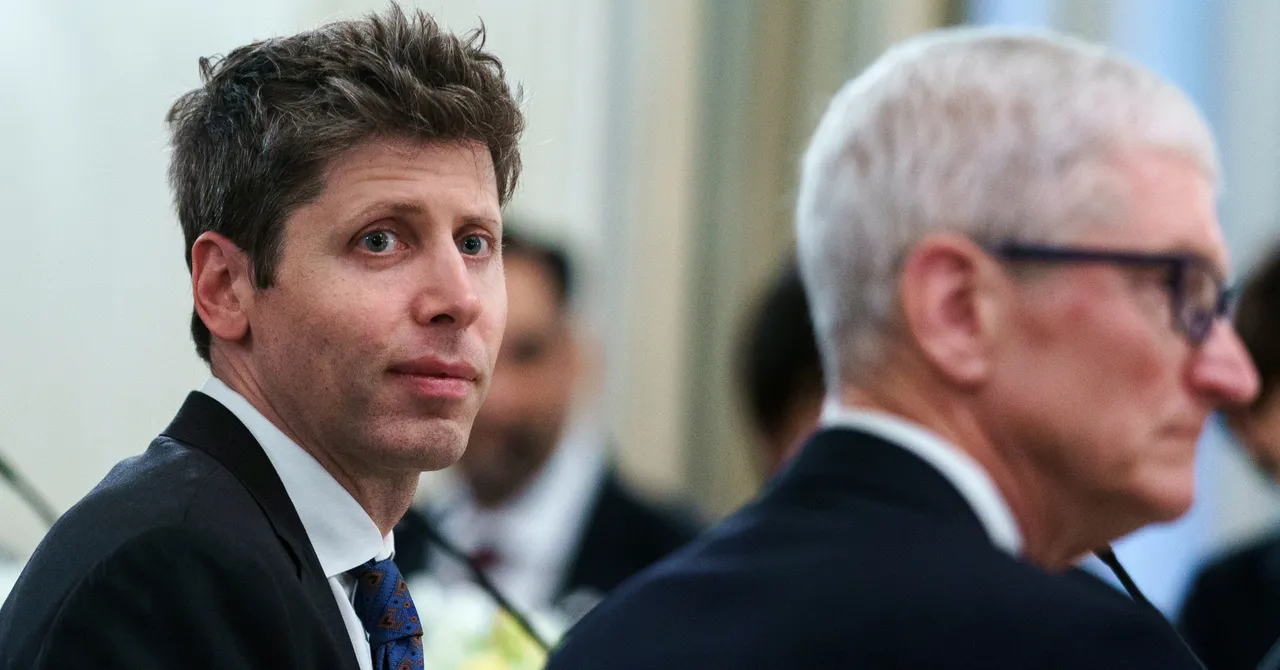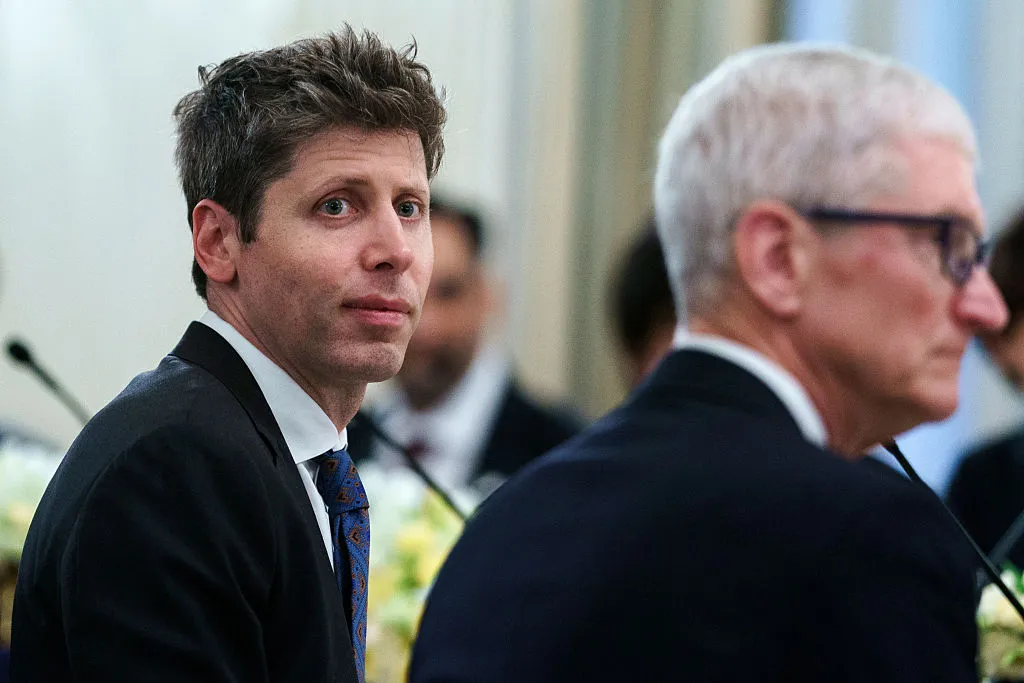
Skip to Content News Archives Economy Energy Oil & Gas Renewables Electric Vehicles Mining Commodities Agriculture Real Estate Mortgages Mortgage Rates Finance Banking Insurance Fintech Cryptocurrency Work Wealth Smart Money Wealth Management Investor Personal Finance Family Finance Retirement Taxes High Net Worth FP Comment Executive Women Puzzmo Newsletters Financial Times Business Essentials More Innovation Information Technology FP500 Podcasts Small Business Lives Told Tails Told Shopping Financial Post Store Obituaries Place a Notice Advertising Advertising With Us Advertising Solutions Postmedia Ad Manager Sponsorship Requests Classifieds Place a Classifieds ad Working Profile Settings My Subscriptions Saved Articles My Offers Newsletters Customer Service FAQ News Economy Energy Mining Real Estate Finance Work Wealth Investor FP Comment Executive Women Puzzmo Newsletters Financial Times Business Essentials HomeInnovationApple is suing OpenAI for stealing trade secrets. Here's whyHow an OpenAI engineer’s ‘LOL’ moment set stage for legal fightAuthor of the article:Last updated 1 hour ago You can save this article by registering for free here. Or sign-in if you have an account.At least one Apple worker who applied to OpenAI was concerned about the hiring practice, saying he was “surprised people have brought” unreleased hardware to job interviews. Photo by Dilara Irem Sancar/Anadolu via Getty ImagesWhen iPhone engineer Chang Liu quit for a job at OpenAI’s nascent hardware division, Apple Inc. says he left with more than just years of experience.Subscribe now to read the latest news in your city and across Canada.Exclusive articles from Barbara Shecter, Joe O'Connor, Gabriel Friedman, and others.Daily content from Financial Times, the world's leading global business publication.Unlimited online access to read articles from Financial Post, National Post and 15 news sites across Canada with one account.National Post ePaper, an electronic replica of the print edition to view on any device, share and comment on.Daily puzzles, including the New York Times Crossword.Subscribe now to read the latest news in your city and across Canada.Exclusive articles from Barbara Shecter, Joe O'Connor, Gabriel Friedman and others.Daily content from Financial Times, the world's leading global business publication.Unlimited online access to read articles from Financial Post, National Post and 15 news sites across Canada with one account.National Post ePaper, an electronic replica of the print edition to view on any device, share and comment on.Daily puzzles, including the New York Times Crossword.Create an account or sign in to continue with your reading experience.Access articles from across Canada with one account.Share your thoughts and join the conversation in the comments.Enjoy additional articles per month.Get email updates from your favourite authors.Create an account or sign in to continue with your reading experience.Access articles from across Canada with one accountShare your thoughts and join the conversation in the commentsEnjoy additional articles per monthGet email updates from your favourite authorsSign In or Create an AccountorAccording to a lawsuit filed Friday, Liu departed with three things: a company-issued MacBook he never returned, a close relationship with an Apple employee who continued sharing internal information, and, most significantly, knowledge of a software bug that gave him ongoing access to internal file servers.“LOL, I found out I can access the [network storage], so funny,” Liu wrote to his former Apple colleague, Alyssa Peng. He then, Apple alleges, used that access to download presentations, hardware designs, manufacturing details and testing procedures — all while already working at OpenAI.Get the latest headlines, breaking news and columns.By signing up you consent to receive the above newsletter from Postmedia Network Inc.A welcome email is on its way. If you don't see it, please check your junk folder.The next issue of Top Stories will soon be in your inbox.We encountered an issue signing you up. Please try againWhen Liu discovered the bug, Peng stepped in to help, according to the suit. She replied, “I’m ready,” and eventually helped obtain more information through her own laptop. A few months later, in April, Peng herself left for OpenAI’s growing hardware division.She joined more than 400 other former Apple employees drawn by the opportunity to work on next-generation devices designed to replace the two-decade-old iPhone — with salaries and stock options that trumped Apple’s less dazzling pay packages.The episode is one of many that Apple says illustrate a “systematic effort to acquire, retain and use” its confidential information to help OpenAI replicate its decades of work building the world’s most successful consumer electronics business.The 40-page lawsuit alleges that OpenAI encouraged prospective employees still at Apple to study confidential materials before interviews and brazenly bring hardware components and prototypes to so-called show-and-tell sessions at OpenAI’s offices. Jony Ive and Tim Cook.In response to the lawsuit, OpenAI said it has “no interest in other companies’ trade secrets.”“We remain focused on building innovative technology that empowers people everywhere,” a spokesperson for the San Francisco-based company said.The lawsuit was filed after months of simmering tension between Apple and OpenAI — partners that have increasingly become rivals. Both companies are gunning for the nascent AI device market, a category that’s poised to reinvent the way consumers use technology.At the centre of the rift is Tang Tan, a former Apple executive who had overseen the design of the iPhone, smartwatch and several other products. He told his bosses in late 2023 that he was leaving for a new gig — an opportunity that eventually became the chief hardware officer job at OpenAI.At the time, there were few signs that his departure would end in a courtroom battle. In a rare move, Apple allowed him to stay on through February 2024, letting him manage a transition that required a revamp of the hardware division.Behind the scenes, however, Tan had already begun working with former Apple design head Jony Ive and OpenAI chief executive Sam Altman on an ambitious new hardware venture. Their aim was to create a new category of AI devices that could one day challenge the iPhone itself.Tan and Ive helped found io Products, a startup that OpenAI acquired last year for US$6.5 billion. They teamed up on the venture with Evans Hankey, Ive’s successor as Apple’s industrial design chief, and Scott Cannon, a former manufacturing manager who left the tech giant in 2010. Ternus and other Apple executives.Apple was quickly alarmed by OpenAI’s recruiting drive, which included poaching senior hardware and design leaders and ravaging several teams across its engineering organizations.The practice continued as recently as June, when OpenAI lured away Apple’s smart glasses chief. That executive, Paul Meade, was quickly shown the door at Apple and not given the opportunity to stay on for a transition period, according to people with knowledge of the matter.To Apple, the talent search looked like an attempt to recreate the iPhone maker’s product-development machine inside OpenAI. “OpenAI’s nascent hardware business now rests on the shakiest of foundations, rotten to its core by its illegal reliance on misappropriated trade secrets,” Apple said Friday.Tan was famous for taking risks at Apple and “flying very close to the sun” during his 25-year career, according to someone who worked with him. “Tang is well known for moving fast, playing fast and loose and breaking things,” said the person, who asked not to be identified while discussing former colleagues.He made his name leading the design of early Mac laptops and iPods before taking charge of the product design function for the original iPhone. Tan oversaw the entire iPhone design team by 2011 and then led the Apple Watch design work. By the time he left, he was one of Apple’s top executives.OpenAI, meanwhile, had committed billions of dollars to its hardware effort and was racing toward an initial public offering. Nevertheless, the startup had little to show beyond concepts and early prototypes when io was acquired, according to people with knowledge of the matter. At the time, the company was still scrambling to settle on a compelling product strategy, they said.These days, OpenAI is working on an AI-powered smartphone replacement, though its first product may be something simpler, the people said. The company has explored concepts ranging from earbuds and smart glasses to AI-enhanced speakers. Apple, for its part, is developing a new lineup of home devices, camera-equipped AirPods, glasses and other wearables. The Apple Fifth Avenue store Photographer: Michael Nagle/BloombergApple said that it tried to resolve the dispute before filing the suit, including by contacting the AI company in February. It said it told OpenAI of its concern that confidential Apple information had made its way there and asked the company to both investigate the issue and stop it from happening. The startup never responded, Apple alleges.The key OpenAI employees named in the lawsuit, including Tan, didn’t respond to requests for comment.The lawsuit also underscores Tan’s strained relationship with John Ternus, his former boss and Apple’s incoming chief executive officer. Most of OpenAI’s Apple recruits came from Ternus’ hardware engineering division, and some designers had backed Tan over Ternus for the top hardware job in 2021.Tan, who Apple portrays as orchestrating the effort to obtain confidential information, is alleged to have used interviews with prospective employees as information-gathering sessions about upcoming Apple products.In one instance, Apple says an employee acquired information about a project just hours before meeting with Tan for a job interview. “Then, in the interview, Mr. Tan solicited more information about that same Apple project. This has become an established pattern,” according to the lawsuit.Once employees sign on to work at OpenAI, they are encouraged to send information before resigning from their Apple devices to their personal email accounts to use later at the AI startup, the iPhone maker alleges. OpenAI, the complaint says, distributes “a checklist that Tang put together” that helps new employees evade detection from Apple’s security teams.Apple also alleges that Tan went as far as asking prospective hires to bring prototypes to job interviews. This included batteries, logic boards and other components, the complaint says.At least one Apple worker who applied to OpenAI was concerned about the practice, saying he was “surprised people have brought” unreleased hardware to job interviews. He said he “didn’t know we could take those from the office.” In many cases, they couldn’t. Join the Conversation This website uses cookies to personalize your content (including ads), and allows us to analyze our traffic. Read more about cookies here. By continuing to use our site, you agree to our Terms of Use and Privacy Policy.
Apple is suing OpenAI for stealing trade secrets. Here's why
When iPhone engineer Chang Liu quit for a job at OpenAI, Apple Inc. says he left with more than just years of experience. Find out more here
1,703 words~8 min read