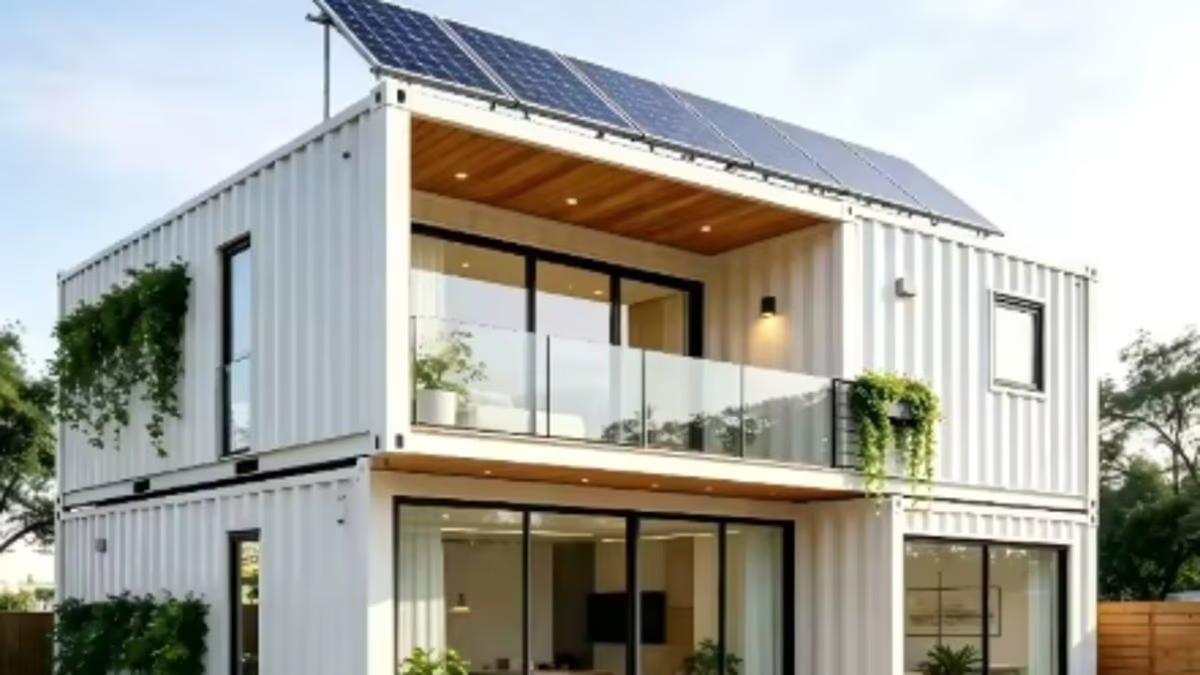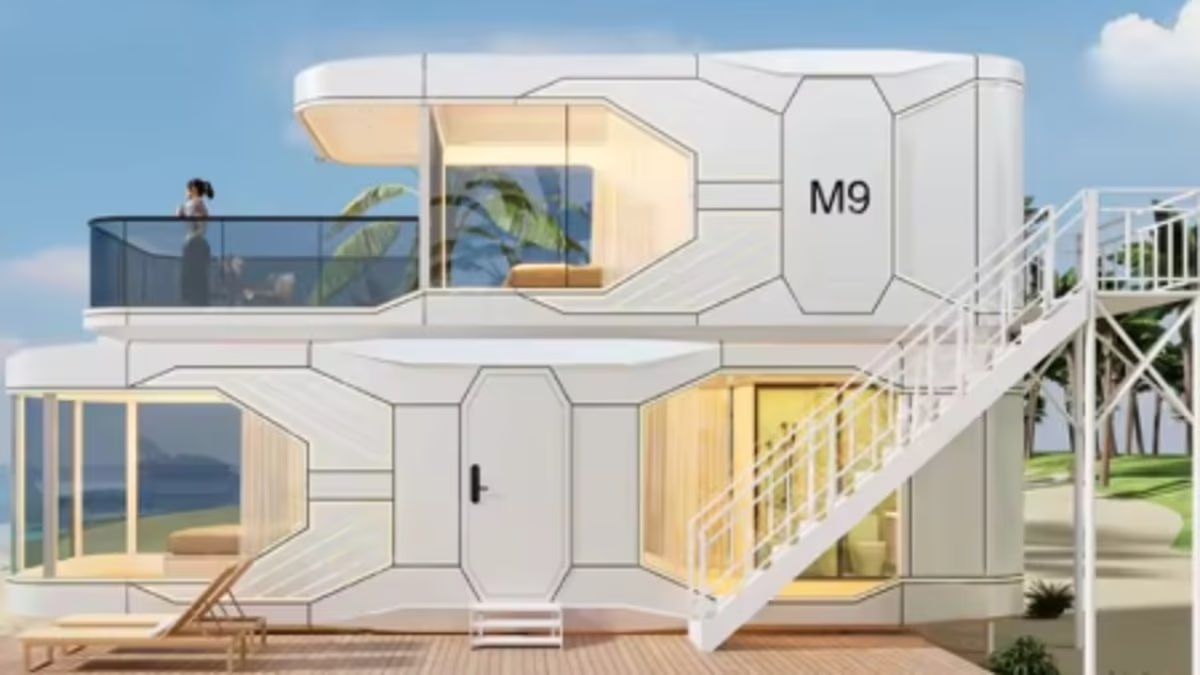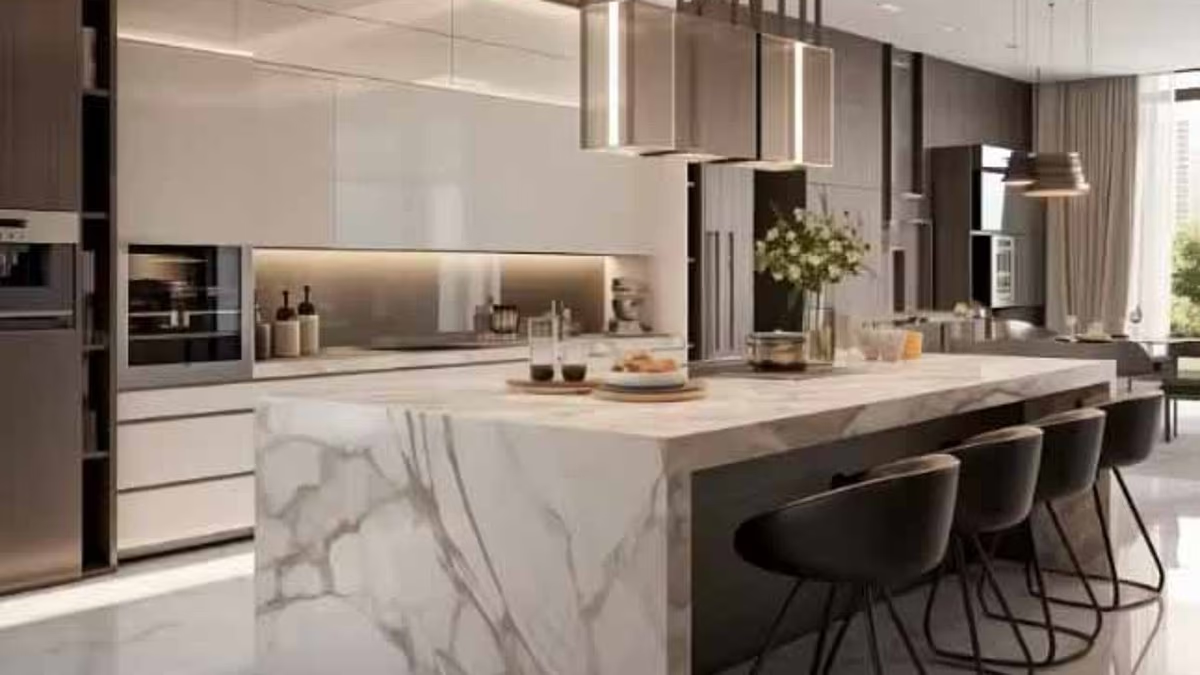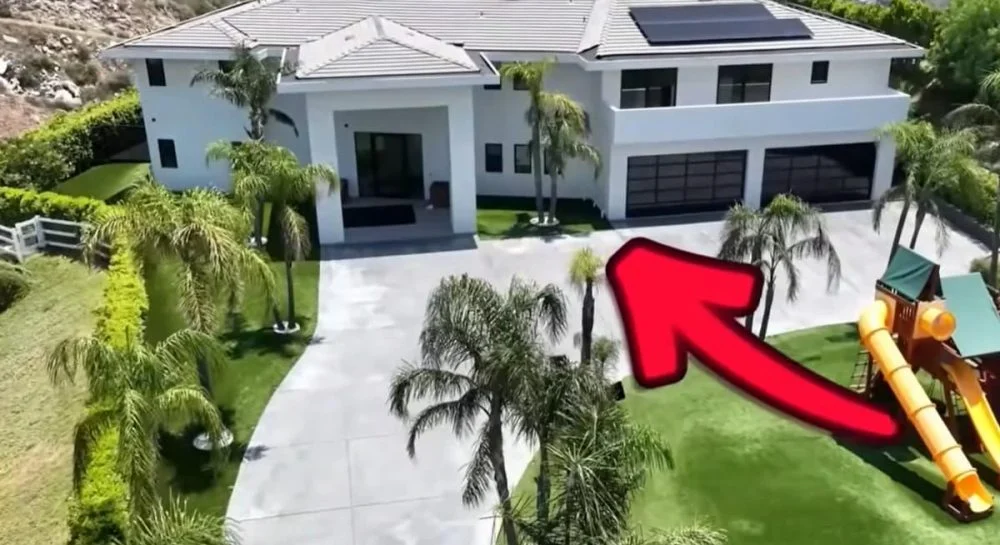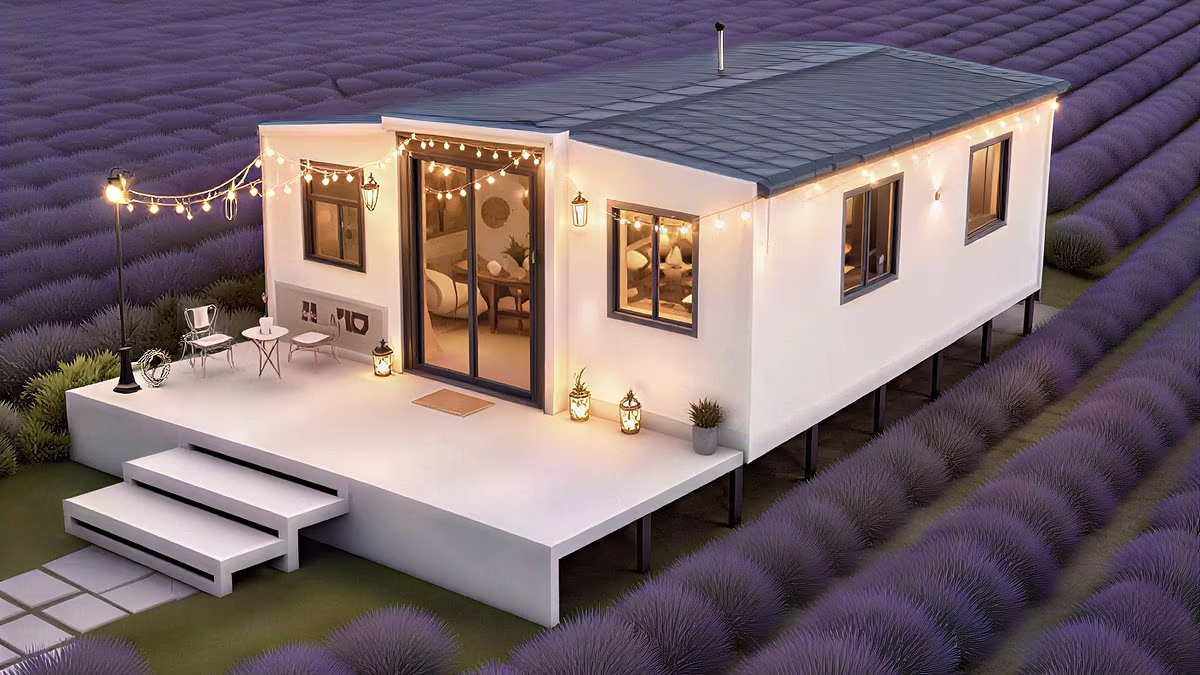
Purchasing a holiday home is a goal most aspire to, and thanks to AliExpress, it might just become reality with the e-tailer introducing cheap, pre-made 'getaway houses'.The Chinese website, famed for flogging goods at very low prices, has launched prefab holiday homes for as little as £4,940, boasting up to three bedrooms, alongside a kitchen, lounge, and even a customisable office space.The properties, which range from 20 to 40 feet, are built to last up to 40 years - and come with a three-year warranty and free delivery.Among the more 'luxury' homes is the Modern Modular villa, with a guide price of £11,064 depending on add-ons like air conditioning.According to the listing, the house, which comes with a glass sunroom 'flooding the space with natural light', is designed to 'star-hotel standards', while the bathroom boasts 'premium sanitary craftsmanship'.Other options include the £4,048 two-bedroom Luxury Villa, which comes with a porch for relaxing and is, according to the website, 'easily assembled, eco-friendly, and waterproof'.While it has a wooden appearance, it's made from a galvanised steel frame in Henan, China.Some of the expandable container houses arrive fully assembled and free of charge from China, while others are 'foldable' for 'those who love to travel'. AliExpress has launched prefab holiday homes - and shared AI images revealing what the properties could look like Though the ads might sound appealing enough, Sara Saadouni, a lecturer in Construction Management at Nottingham Trent University, revealed shoppers must consider other costs.Speaking to the Daily Mail, Saadouni said: 'The headline price is only part of the story. With a scheme like this, the real cost comes once you start adding shipping, import duties, VAT, cranage, foundations, groundworks, service connections, planning, building control, and the likelihood of some level of adaptation or remedial work.'In other words, the product price can look very attractive, but the project cost might be a different story.'A home like this will only work well if it has been properly designed for the climate, the orientation, and the site conditions it's going onto.'In the UK, that means thinking carefully about insulation, airtightness, ventilation, solar gain, overheating risk, and how robust the envelope is over time. One solution cannot suit every context.'From a carbon perspective, prefabrication is good in principle. It may reduce waste and improve factory control, but if the structure relies heavily on steel, or if it has to be shipped a long way, the embodied carbon can be significant.'The important question is not whether it is prefab, but what it is made of, where it comes from, and how it performs across its whole life. If the finishes last for only five years and then need to be replaced, that adds significantly to the carbon footprint.'Rico Wojtulewicz, the Head of Policy and Market Insight for the National Federation of Builders, agreed that the homes are likely to fail regulations. The homes, which cost as little as £4,940, typically boast modern designs and are customisable The prefab homes range from 20 to 40 feet in size - and are built to last between 30 and 40 years The homes come with up to three bedrooms - plus a kitchen and modern living area He told the Daily Mail: 'We desperately need new homes but these ones will not be covered by housing consumer codes, do not meet building regulations and are unlikely to get planning permission. 'However, if you do somehow get planning permission, in many places they would only need to last six months to be better value than rent.'The homes, made in China, are typically backed by a warranty or have free returns within 90 days – and Americans have shared stories of purchasing similar homes on the Chinese e-tailer, Temu.But most homes that will be in place for 28 days or more, including those purchased on Temu and AliExpress, typically require planning approval from the local authority, and, according to MPH Building Systems, it can be expensive, 'complicated, and can take a fair amount of time'.'Obtaining planning permission for a modular building can present several challenges, including local zoning restrictions, objections from neighbours, and compliance with environmental and aesthetic regulations.'These obstacles can delay the approval process and increase costs. To overcome these challenges, it's crucial to engage with the local community early on, addressing any concerns and demonstrating the benefits of the proposed development.'Conducting thorough site assessments and ensuring that your plans adhere to local planning policies can also enhance your application's prospects.'The application requires detailed plans and drawings revealing what the home will look like, including floor and location plans, and an access statement explaining the purpose of the building.MPH Building Solutions advised that an architect or planning consultant will, for a cost, help by checking that the application meets the relevant technical requirements to improve chances of approval.Other documents in planning application forms typically include environmental impact and flood risk assessments, with a covering letter explaining how the proposed property will meet local planning policies. What to include in a modular home planning application Application formSite location planSite planElevation drawingsFloor plansDesign and access statementSupport statements (where applicable)Application feeA typical timeline is between 10-14 weeks, but factors such as objections from neighbours and holiday periods might extend timescales. Source - MPH Building Solutions MPH Building Solutions explain: 'If you go ahead with a project that requires planning permission without securing that permission, you run the risk of being served with an 'enforcement notice', which would order you to undo all the changes that you have made.'Planning laws exist in the first place so that local planning authorities can ensure suitable developments. In doing this, they will consider such factors as how land and buildings will be used, the appearance of the buildings, landscaping, highway access, and what impact the changes will have on the environment.'So, purely from a legal and financial standpoint, you will want to be sure that you have planning permission for your intended modular building.'Many of the homes are advertised as coming with free shipping from Henan, China, with an estimated delivery time of two months. The exact price depends on the customisations.On TikTok, one man recorded his AliExpress house being delivered to Birmingham, while another, @kylethomas, had his 'damaged during transit' but was nonetheless delighted it 'actually arrived', adding 'it's massive'.The homes, can, according to AliExpress, be relocated by crane, and shoppers can combine units to create a bigger home.Unless savvy with electrics and plumbing, it's likely purchasers will have to hire a tradesperson to connect the house to local mains or independent tanks and the water supply. According to MyBuilder, the cost of hiring a builder to complete the utility connections, including water, electricity and gas, costs between £2,000 and £10,000. The purchases, which arrive pre-built, also can't be placed directly on the ground, but must be put on a concrete foundation to prevent them from sinking. One Australian woman, Tammy, featured in a YouTube video by Heads of Estate & Renovation to reveal what her prefab home looked like six months on.'It's still standing,' she said, adding, 'I'm pretty happy with what I've got,' before showing viewers her small home, but admitted she had issues with leaks.'You get what you pay for,' she added, before explaining she made the repairs, including fixing a leaking loo, on the cheap herself.Explaining who the homes would suit best, she said: 'It would mainly be something for a single person or a couple, you wouldn't fit anything more than that.' Over in the States, meanwhile, American YouTubers the Royalty Family purchased a house from Temu to allow their teenage son to have sleepovers without disturbing the rest of the family, and racked up 140 thousand likes in revealing the final product.Viewers were impressed with the outcome, with one writing: 'The Temu house is way better than I thought.'Another wrote: 'A lot of hard working homeless people would appreciate that house!' A third added: 'That's next-level shopping right there.'Elsewhere, US-based content creator Unspeakable purchased various outbuildings from Temu and joined them together to make a house.But when they tested the home against harsh weather conditions, including wind via an industrial fan, the building ended up 'vibrating'.
Would YOU stay in an AliExpress 'getaway house'?
The Chinese website, famed for flogging goods at very low prices, has launched prefab holiday homes for as little as £4,940.
1,357 words~6 min read