Over the past decade, software development has been shaped by two closely related transformations. One is the rise of devops and continuous integration and continuous delivery (CI/CD), which brought development and operations teams together around automated, incremental software delivery.
The other is the shift from monolithic applications to distributed, cloud-native systems built from microservices and containers, typically managed by orchestration platforms such as Kubernetes.
While Kubernetes and similar platforms simplify many aspects of running distributed applications, operating these systems at scale is still complicated. Configuration sprawl, environment drift, and the need for rapid, reliable change all introduce operational challenges. GitOps emerged as a way to address those challenges by extending familiar devops and CI/CD techniques beyond application code and into infrastructure and system configuration.
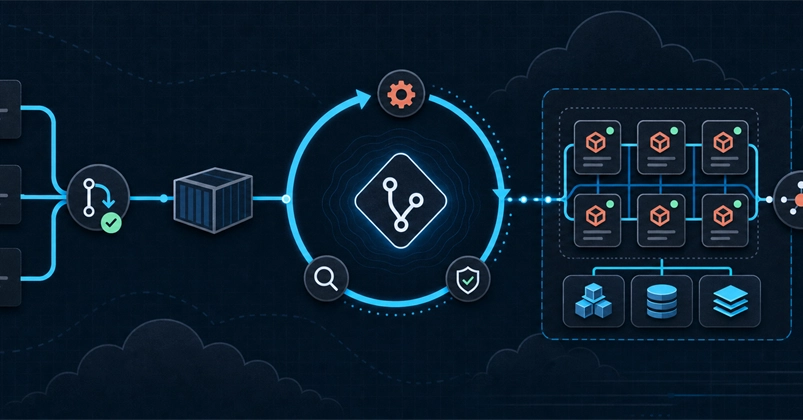
At the heart of GitOps is the concept of infrastructure as code (IaC). In a GitOps model, not only application code but also infrastructure definitions, deployment configurations, and operational settings are described in files stored in a version control system. Automated processes continuously compare the running system with those declarations and work to bring the live environment back into alignment when differences appear.