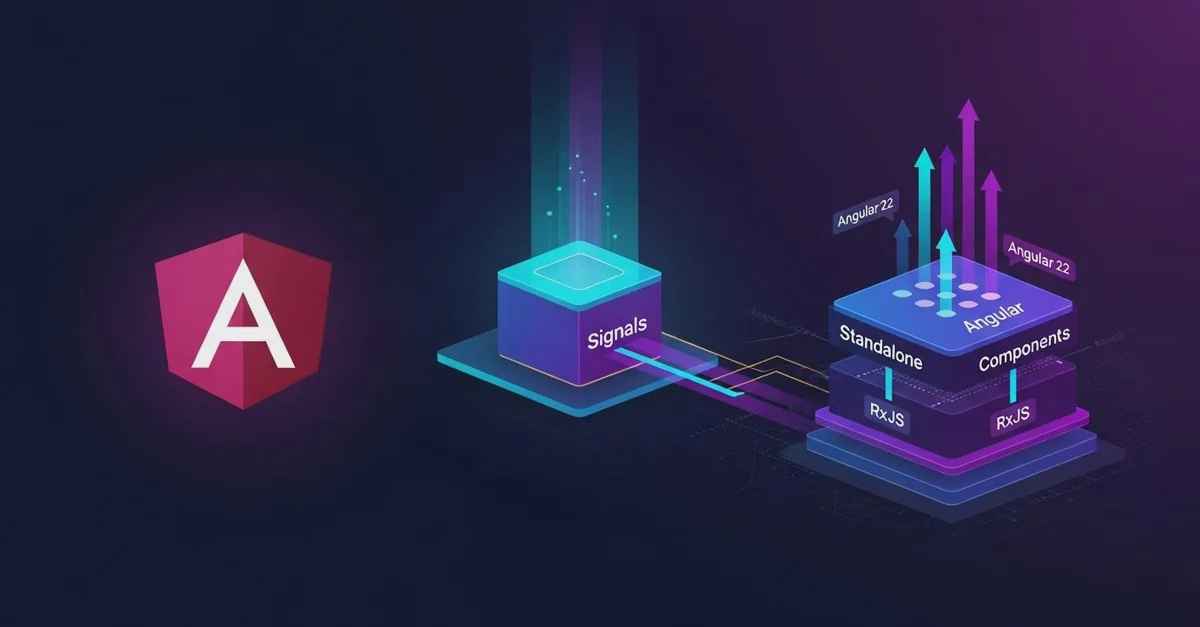
Angular is a cohesive, all-in-one reactive framework for web development. It is one of the larger reactive frameworks, focused on being a single architectural system that handles all your web development needs under one idiom. While Angular was long criticized for being heavyweight as compared to React, many of those issues were addressed in Angular 19. Modern Angular is built around the Signals API and minimal formality, while still delivering a one-stop-shop that includes dependency injection and integrated routing.
Angular is popular with the enterprise because of its stable, curated nature, but it is becoming more attractive to the wider developer community thanks to its more community engaged development philosophy. That, along with its recent technical evolution, make Angular one of the most interesting projects to watch right now.
Why choose Angular?
Choosing a JavaScript development framework sometimes feels like a philosophical debate, but it should be a practical decision. Angular is unique because it is strongly opinionated. It doesn’t just give you a view layer; it provides a complete toolkit for building web applications.
Like other reactive frameworks, Angular is built around its reactive engine, which lets you bind state (variables) to the view. But if that’s all you needed, one of the smaller, more focused frameworks would be more than enough. What Angular has that some of these other frameworks don’t is its ability to use data binding to automatically synchronize data from your user interface (UI) with your JavaScript objects. Angular also leverages dependency injection and inversion of control to help structure your application and make it easier to test. And it contains more advanced features like server-side rendering (SSR) and static-site generation (SSG) within itself, rather than requiring you to engage a meta-framework for either style of development.