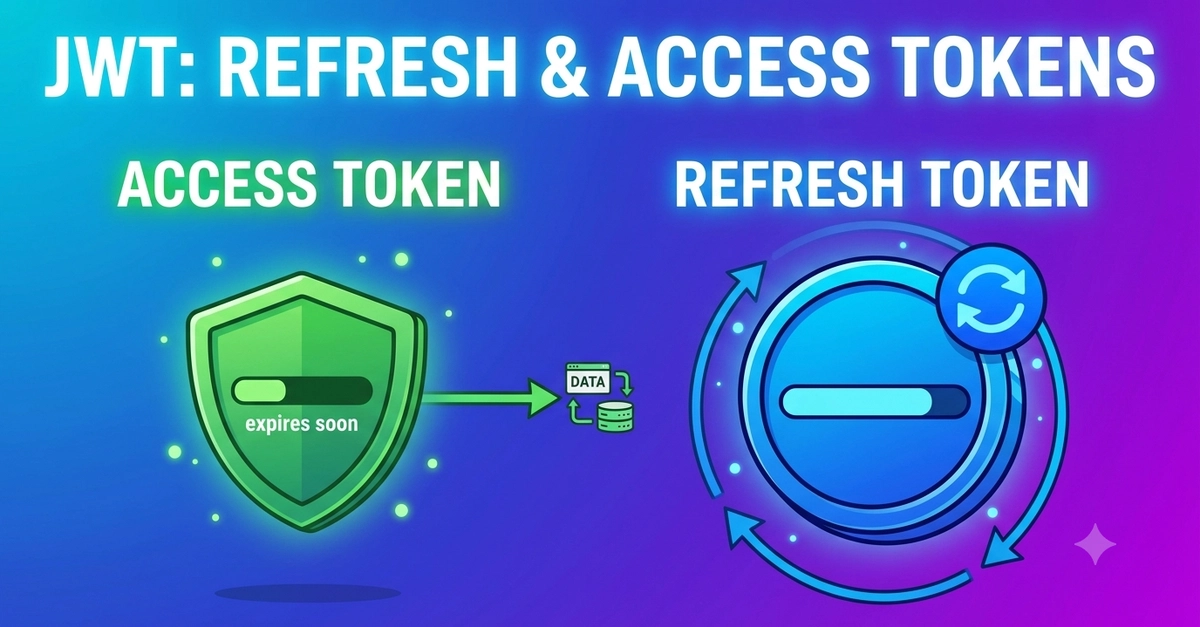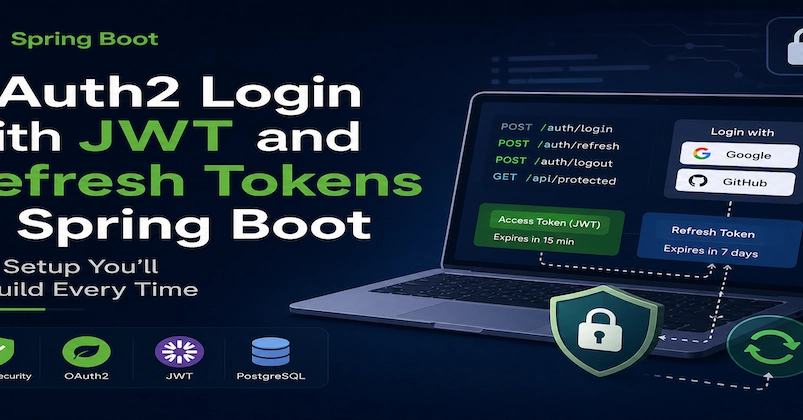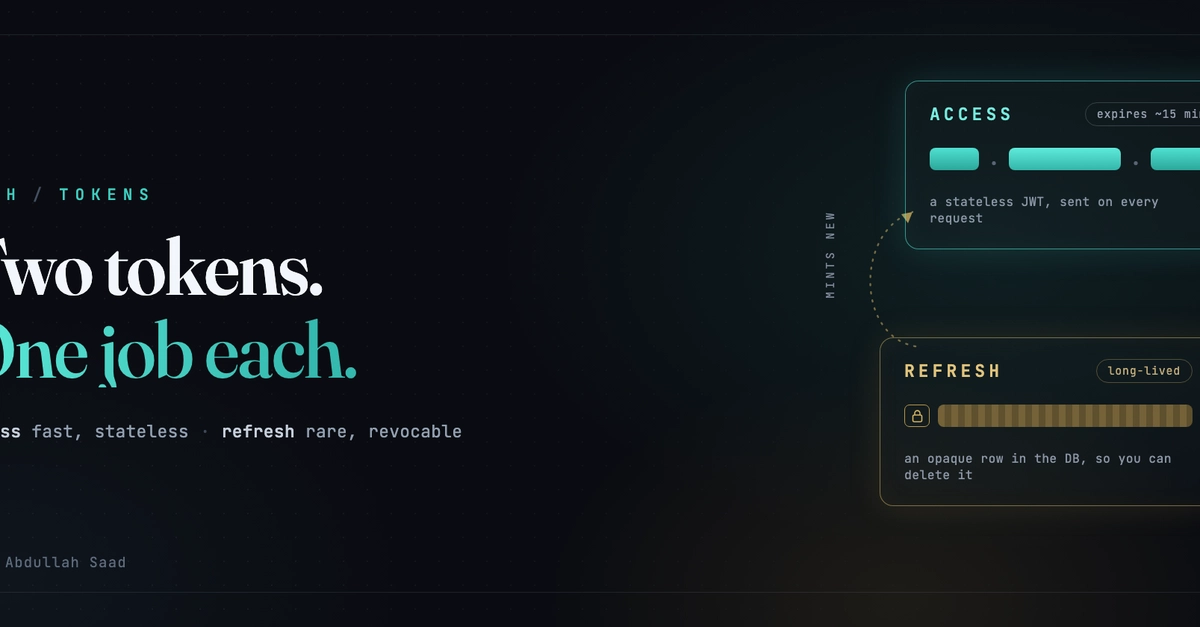
Years ago I was building a login API, and a colleague looked at what I was returning and asked why I only had one token. He said the newer APIs hand back two, an access token and a refresh token. Mine returned one. So I asked him the obvious thing: why two? What does the second one buy you?
He didn't really know either. He was a front-end dev, and he'd only ever seen the two tokens come back from the backend on a project he'd worked on. When he asked the person who built that side why there were two, all he got was "it's industry standard." That was the whole explanation. So he was passing that straight down to me: two tokens, that's just how it's done. He said he'd dig into the real reason and get back to me. Two developers standing there, and the actual why had already gone missing one hop up the chain, buried under "it's industry standard."
So I did what a confused junior does when the fancy version doesn't make sense. I called it overhead and shipped the simple one. One token, a JWT, and because I didn't want to think about expiry I gave it a life of something like seven years. No revocation. Once it was signed and handed out, it was valid until roughly the next World Cup, and there was nothing I could do to kill it. The only reason that never blew up in my face is that the project never went to production. I didn't get smart, I got lucky.