A newly disclosed kernel vulnerability forces a hard reassessment of the container isolation assumptions underpinning multi-tenant Kubernetes clusters.
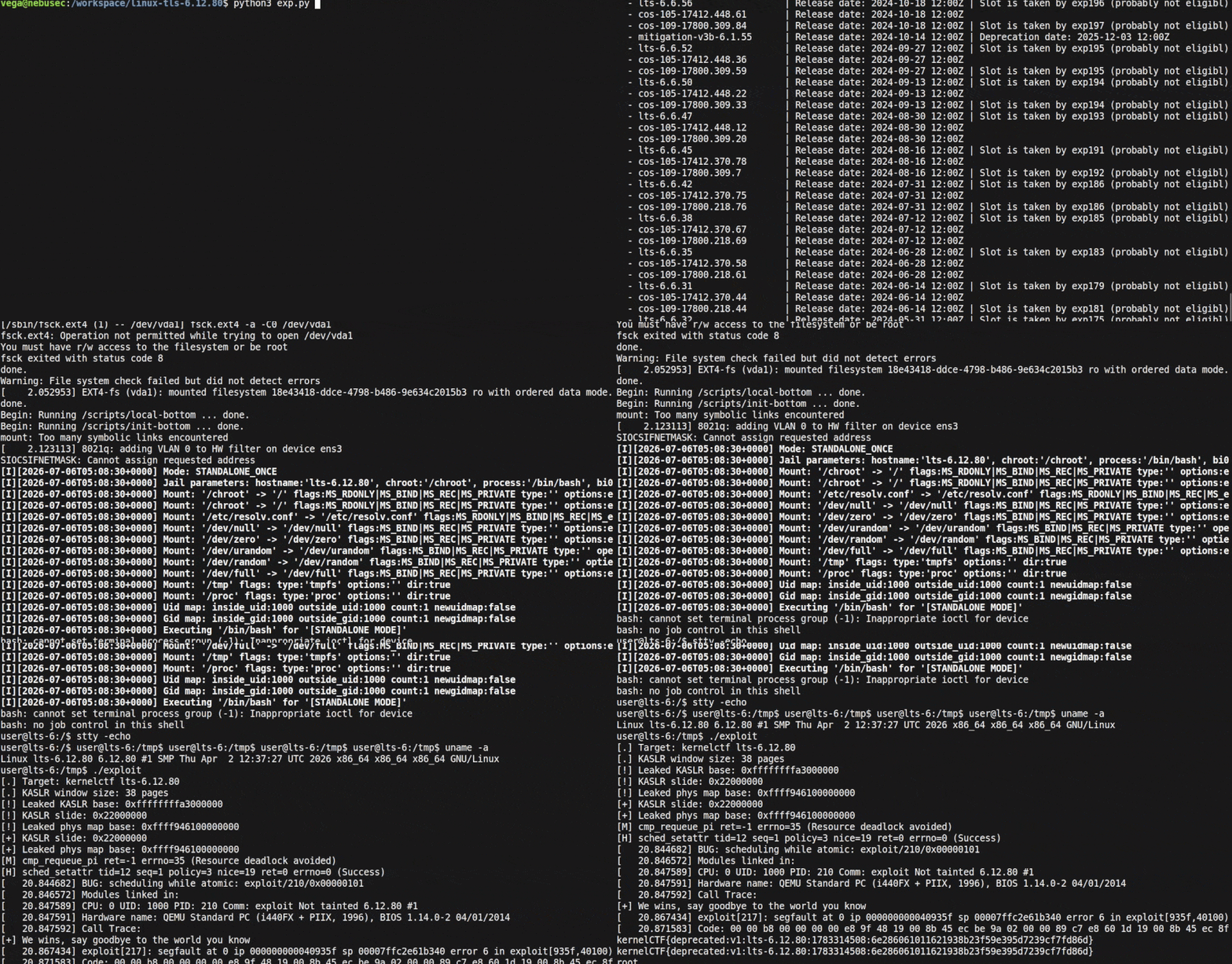
CVE-2026-43499, dubbed GhostLock, is a Linux kernel privilege escalation vulnerability that allows unprivileged processes to gain root-level access by exploiting flaws in kernel subsystems, effectively collapsing the security boundary between a container and its host node. Kubernetes operators running multi-tenant clusters are acutely exposed because Kubernetes-native controls like Pod Security Admission, seccomp profiles, and AppArmor all operate above the kernel layer and cannot compensate for an unpatched host kernel.
Why Kernel Privilege Escalation Hits Kubernetes Differently
Kubernetes delegates container isolation to Linux kernel primitives: namespaces partition process visibility, cgroups enforce resource boundaries, and capabilities constrain privileged operations. When a vulnerability like GhostLock allows an attacker inside a container to escalate to root on the host kernel, every one of those primitives becomes irrelevant. In a multi-tenant cluster where a single node may run hundreds of pods across different trust boundaries, a single exploitable container can become a foothold into the entire node and, from there, into cluster control plane credentials mounted via service account tokens. The Linux kernel averaged between 1,800 and 2,000 CVEs per year from 2020 to 2023 according to NVD data, with privilege escalation categories consistently representing the highest-severity subset, yet enterprise cluster upgrade cycles routinely lag behind kernel patch cadences, leaving nodes exposed for weeks or months at a time.