The first time you run two Claude Code agents at once, it usually works fine. Each one has a task, each one works through it, and you review two outputs instead of one. You get the work done faster.
The problem appears when agent A and agent B edit the same file. One agent's changes overwrite the other's. Or they both commit, and now you have a conflict that neither agent created intentionally but that you have to untangle manually. The more agents you run, the more likely this becomes. Scaling past a handful of parallel agents without some kind of isolation is a coordination problem waiting to happen.
What git worktrees actually do
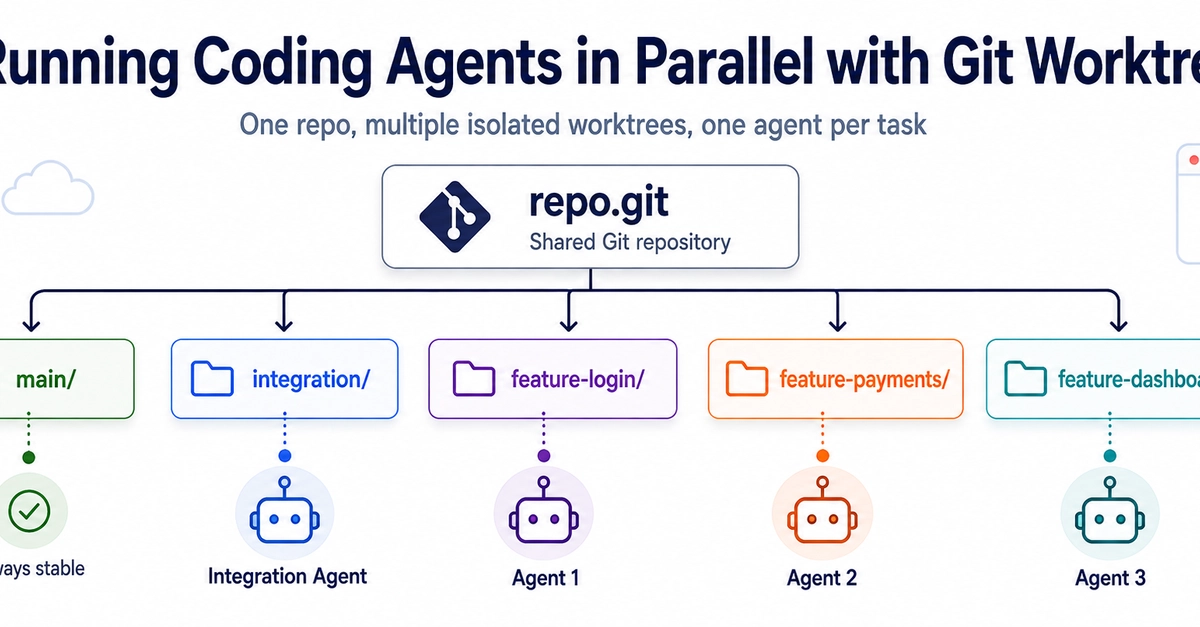
A git worktree is an additional working directory tied to the same repository. The repository has one object store — one set of commits, branches, and history — but multiple on-disk checkouts, each on a different branch, each with its own working tree and index. You can have ten worktrees open at once, each pointing to a different branch, none of them interfering with each other's file state.
For parallel Claude Code agents, the implication is direct. Instead of multiple agents operating in the same directory, each agent gets its own worktree on its own branch. Agent A modifies files in ../repo-feature-auth; agent B modifies files in ../repo-refactor-db; your main checkout at ../repo stays clean. No shared mutable state. No mid-run file conflicts. Isolation by design.