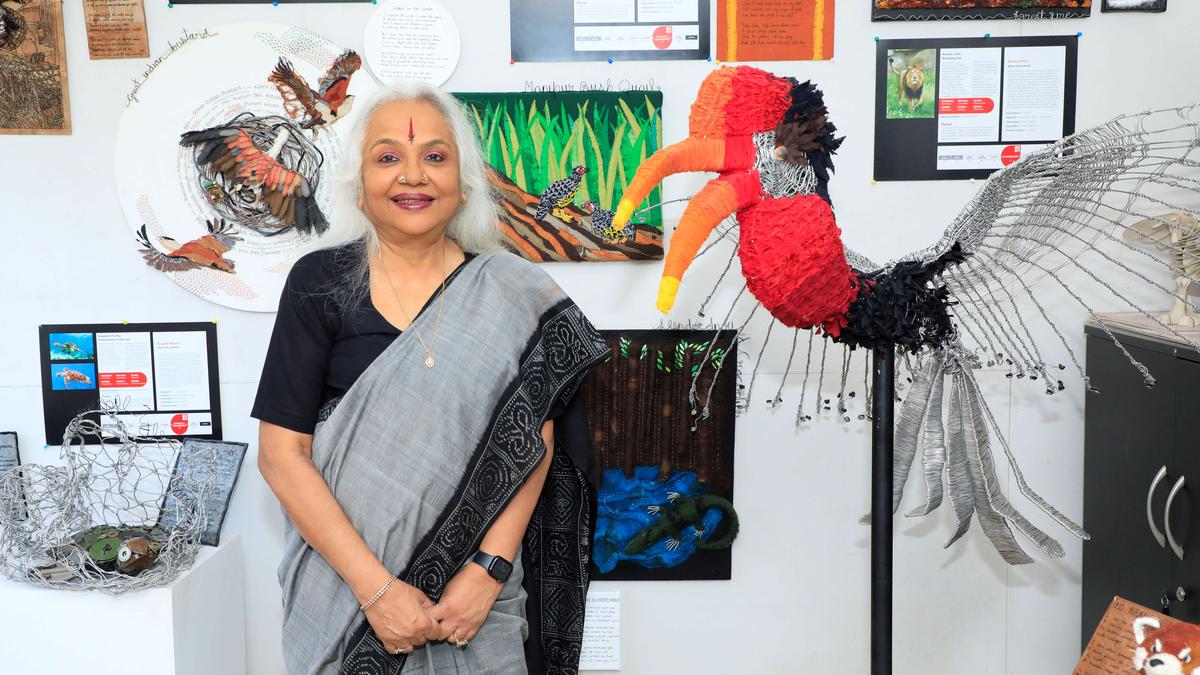
When artist Kalyani Pramod speaks about her work, there is a quiet optimism of not changing the world but making a difference. There is no call for dramatic protests; instead, she believes in the power of art to make people pause, observe, and introspect the world around them. “I don’t believe in protest marches alone,” she says. “Art is a great medium for creating awareness. It can tell people, subtly, that these are the areas of concern.” That philosophy is reflected in The Last Glimpse, her upcoming solo exhibition at Alliance Française of Madras, opening on July 18. The mixed-media textile exhibition brings together 73 artworks inspired by endangered species from across the world, each crafted using discarded materials such as textile scraps, metal wires, construction waste, newspaper and found objects. Through crochet, weaving, embroidery, punch needle, and sculptures, Kalyani transforms waste into portraits of birds and animals pushed towards extinction by human actions.
The Red Panda, a small mammal found in the forests of eastern Himalayas across India, Nepal, Bhutan, Myanmar, and China.
| Photo Credit:
For this Chennai-based fibre artist, environmental concerns have long been woven into her artistic practice. Her earlier exhibition, Bhoomi, also showcased immersive textile installations to confront the urgency of climate change. “When I was working on the climate change exhibit, I realised there were so many species getting endangered because of deforestation, forest fires, overfishing and habitat destruction,” she says. “Everything connected back to the human being.”That realisation prompted years of research. Kalyani began with the International Union for Conservation of Nature (IUCN) Red List (a global database that assesses the conservation status and extinction risk of plant and animal species) , studying not just endangered animals but the specific threats each one faces. By the time she was done with The Last Glimpse, she says, the number of endangered species had nearly doubled. Species such as the ibis and blackbuck, once critically endangered, have shown signs of recovery through sustained conservation efforts. “In this exhibition I am trying to say that if we do act upon it, we can save some,” she says. In all her conversations, hope seems to be a constant.