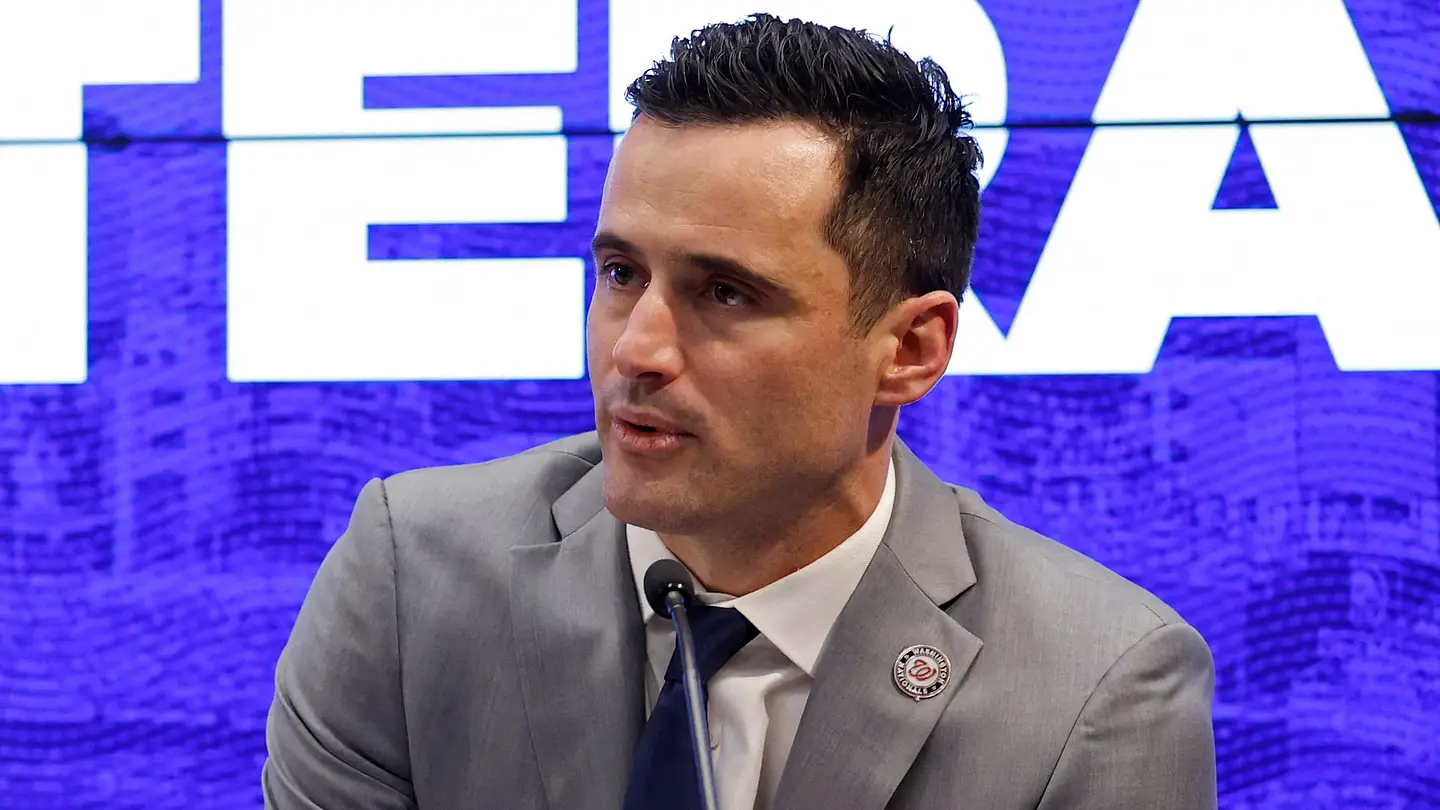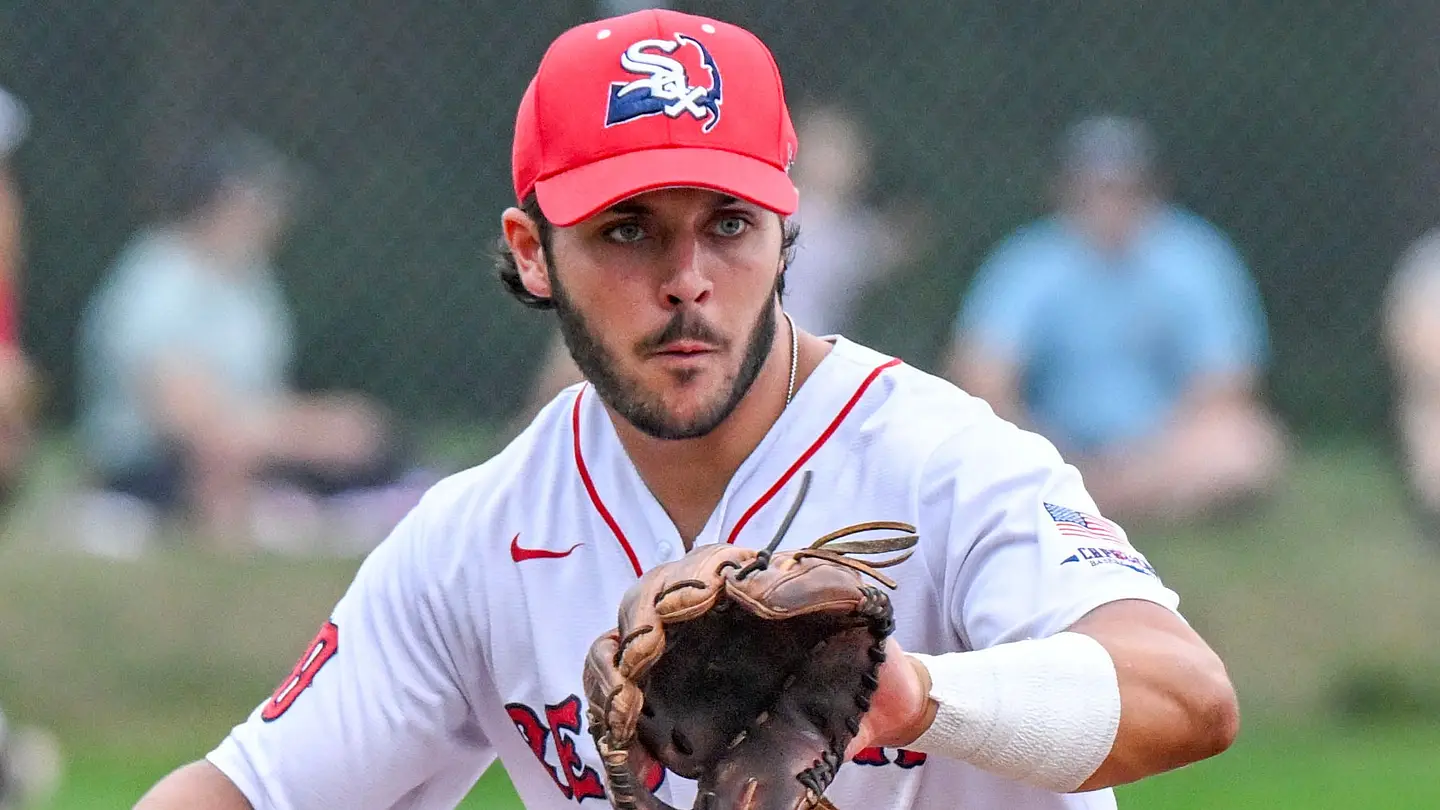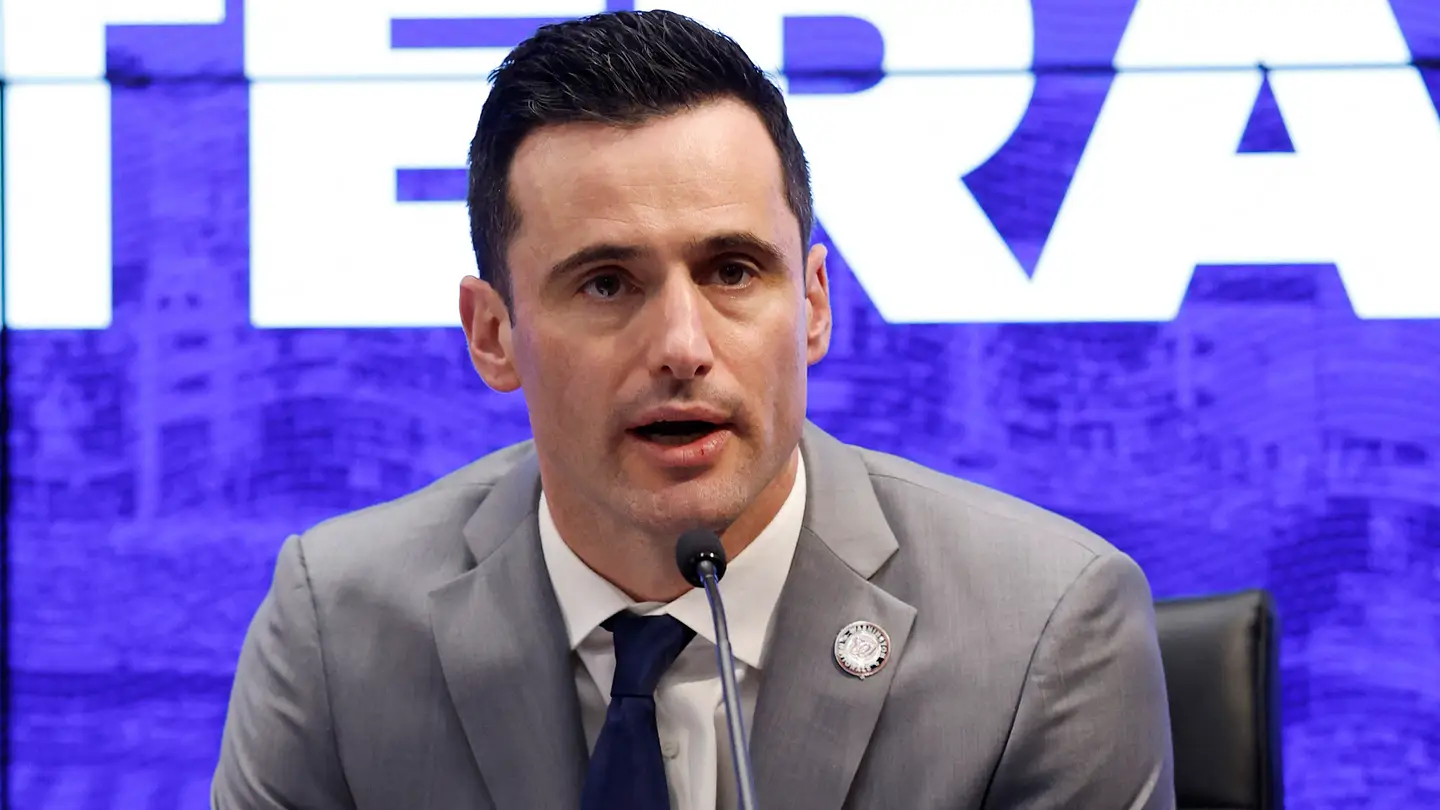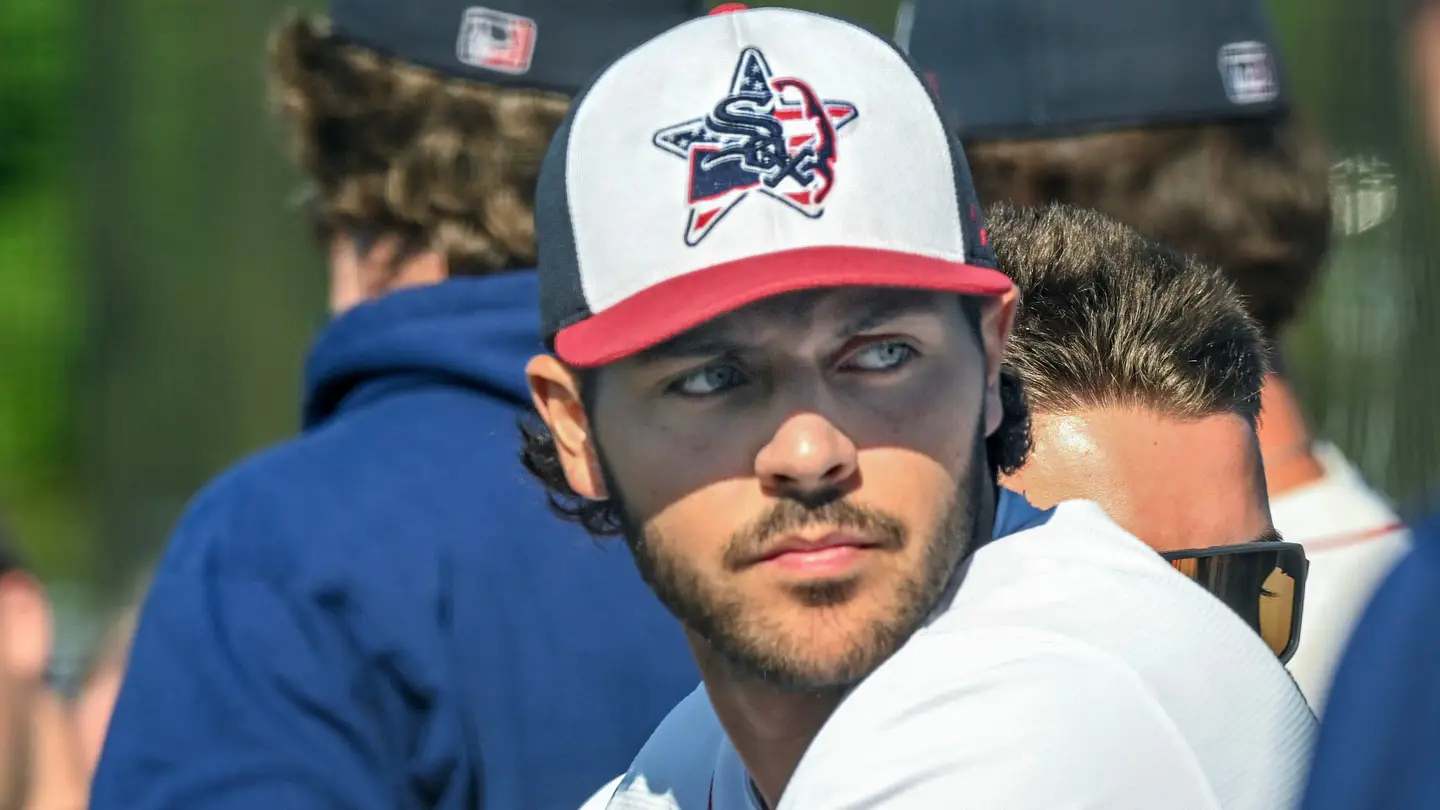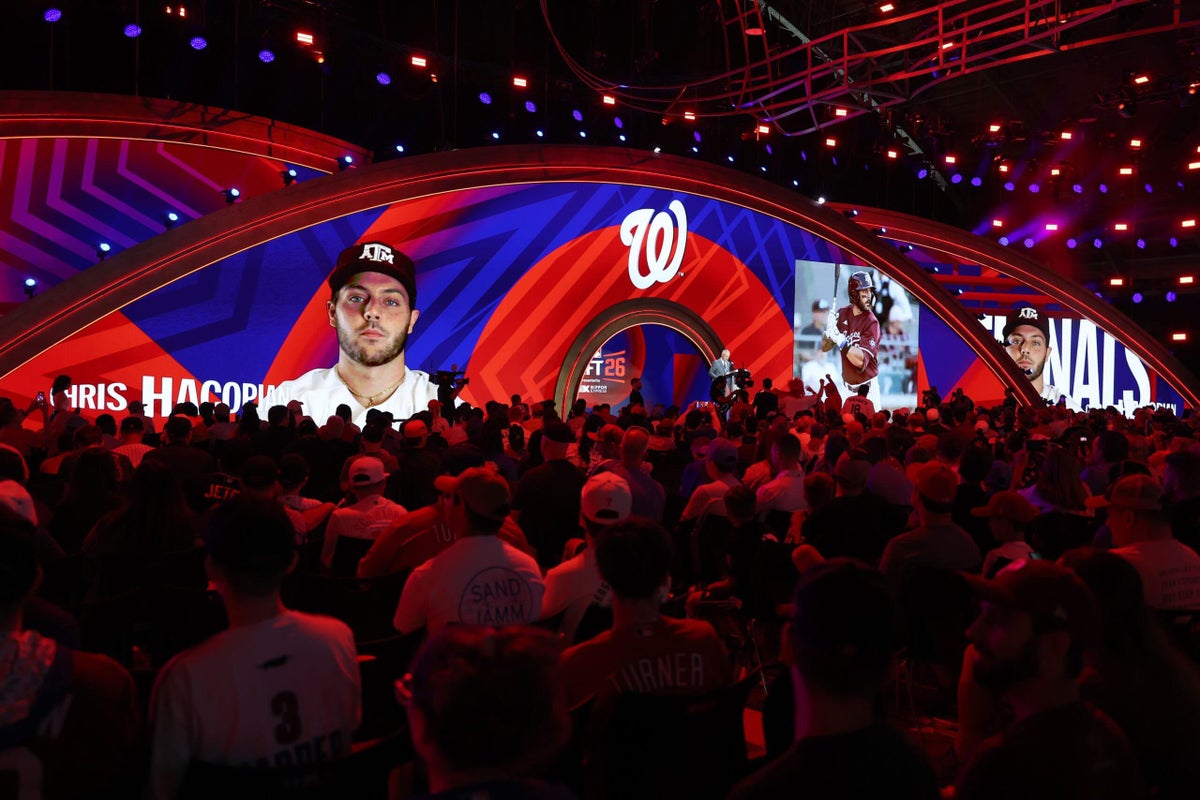
WASHINGTON — On his first day in office, Washington Nationals president of baseball operations Paul Toboni said he wanted to build a “scouting and player development monster.”Nine months later, an hour after Chris Hacopian’s dream came true, the team’s first-round pick started to talk about slideshows.There’s connective tissue here.Hacopian is a National because he makes a ton of contact in the zone, hits the ball really hard and makes elite swing decisions with good makeup. He is a National because those are among the tools they covet most, and because the areas where he needs to improve — lateral quickness defensively, lifting the ball in the air offensively — are traits they believe they can teach.Which teams fared well during MLB Draft Day 1?Keith LawAnd so, on the day he was drafted, Hacopian spoke of growing up a Nationals fan and cheering for Howie Kendrick in the 2019 World Series. He also talked about a slideshow. He was on the receiving end of a development plan, one of hundreds that the Nationals scouting and player development groups set up for their early-round targets that outlined strengths, weaknesses and a map for how they would be developed in the Nats’ system.“Truthfully, the other teams that I met with did not have a presentation as organized as the Nationals did,” Hacopian said. “It really did stand out how the Nationals presented their development plan. I will be honest, it was different.”Different is the right word to describe the Nationals’ 2026 draft process, according to extensive conversations with scouts, player development officials and executives from Nationals past and present, many of whom spoke on the condition of anonymity to speak candidly. After running one of MLB’s least productive draft and development processes from 2012 through 2023, then shaking it up again with Toboni’s hire last fall, several consistent themes popped up when they were asked to evaluate what has changed.Here’s what we know about their draft process, priorities and how they believe it will shape their future.“It is an unproven theory right now. But that’s one that we’re betting on.”The Nationals draft group tried to modernize over the past few seasons. They incorporated more data into the selection process and tried to improve the team’s draft model. But there was far too much catching up to do to fully integrate analytics into their in-person scouting operation.As the Nationals overhauled the front office this winter, those with hiring and firing power made a significant effort to keep coaches and scouts who they felt either fit the organization’s new data-driven philosophy or were open and willing to embrace it. And as they decided how they could arm their scouts with more information, they came to two conclusions: Many of their scouts had credentials that put them up alongside anyone else in MLB. Many were also working without much analytical experience.That meant homework was on the way.“If we are going to encourage and expect them to utilize those tools and information, then the onus is on us as a leadership group to help educate, teach, and develop those tools to help our scouts understand how best to use that information,” assistant general manager, acquisitions Justin Horowitz told The Athletic.The organization regularly held formal Zoom sessions with their scouts, walking them through the different tools at their disposal and the ways to get the most out of a proprietary plot, chart or even a camera angle. They hired two data-driven draft analysts and kept another, leaning on Taylor Choe, Jack Steele and Chase Walter to answer daily data-related questions from their scouts via Slack.One example: Because the organization hopes to be on the cutting edge of pitch design, their data-driven draft analysts helped the scouts understand what certain plots can reveal about a pitcher’s ability to add a pitch in the future. It then became the scout’s job to tell the front office whether they believed, through conversations with that player and their coach and their experience projecting talent, whether that pitcher could actually add what a plot suggested was a useful pitch.One American League executive said it is common to connect old-school thinkers with more data-driven thinkers in MLB. An NL executive said many teams create classes and regular coursework for their older scouts and coaches. “Most of the people who are thought of as traditional in this game are more curious than you think,” the first executive said. “You need to give them the tools to do it.”There is no guarantee, of course, that this will work. There is a case for siloing different departments, and keeping data out of the scouts’ hands, in order to develop a more independent evaluation of a prospect. Desmond McGowan, director, amateur acquisitions, sees some merit in that thought process.“But I do think that you’d probably leave something on the table in the long run by not having everyone be the best evaluator of talent that they possibly can be,” McGowan said. “It is an unproven theory right now. But that’s one that we’re betting on.”Betting the farm on the farmIn past years, the scouting and player development departments were rarely on the same page. It was not hard to understand why.In previous seasons, the scouting department had no say over how the players they picked were developed, and those prospects often received different instruction as they climbed through the Nationals’ system. On the flip side, the player development group lacked sway in the draft room, preventing them from exercising any sort of control over the types of players they felt equipped to develop. Communication between the departments was sparse.This season, one could argue, the departments effectively morphed into one.This winter, the player development group regularly met with the team’s scouts to talk through which profiles and traits they believed they were equipped to develop. During these sessions, the two groups sometimes went through a mock-scouting exercise with players who are currently in the farm system, talking through what a player’s swing, arm or body said about their ability to make meaningful changes once they got into the farm system.“Learning what they look for, I think that helps you become a better scout,” one Nationals scout said. “We can do a better job looking for opportunities.”Hacopian is a good example: Someone with all the offensive tools, except the ability to hit the ball in the air.As such, if the organization is now more focused on prospects who hit the ball in the air (like the Nationals), and their executives want to draft players who can develop that skill (broadly, the Nationals do), then the area scout can evaluate a prospect with two thoughts in mind:• They can watch the prospect’s swing and evaluate if there are characteristics in the swing that suggest the Nationals can teach them to hit (or even pull) the ball in the air — and, because the scouts knows it is a priority within the organization, they can spend more time researching and understanding what sort of traits in a player’s swing would lead them to learn that skill later on.• They can talk to the player’s coach and trainer to see whether they’ve emphasized launch angle before, and what has prevented them from actually hitting the ball in the air.At a meeting in January, they realized their group collectively had “more years of scouting experience than (the number of) years that the U.S. has been a country,” McGowan said. They wanted to lean on that.“I’ve been really impressed with how much experience these guys have,” McGowan said. “And if we aren’t all sharing our experience with each other, because we just aren’t comfortable reaching out to each other, we’re missing something.”What profiles they like — and how much of one characteristic is too much?The Nationals seem to have a type. Sort of.They like outlier traits. They appear to like hitters who make a lot of in-zone contact, consistently hit the ball hard and make excellent swing decisions. One of their organizational pillars is to acquire and develop players who strike guys out with “nasty s— in the zone,” leaning on athletic pitchers who throw fastballs at the top of the zone and filthy breaking pitches down.They appear qualified to teach certain hitters how to hit or pull the ball in the air, and others to add bat speed. They have taught some pitching prospects to add velocity and stuff, but needed to draft prospects with a certain baseline already.Last month, Toboni indicated that there are certain traits the Nationals feel more confident in developing. Though not named explicitly, their home run and walk rates on the farm have climbed dramatically from previous systems. But, he stressed, they do not want to be dogmatic about it; they want to keep an open mind about who fits into their plans and constantly reevaluate which characteristics are a good fit.The Nationals broadly believe that player development’s outsized role will have a significant impact on their early-round picks. They sent hitting coordinator C.J. Gillman and pitching coordinator Grayson Crawford to the draft combine to meet with many early-round prospects, as was first reported by NOTUS, to ask and answer questions about how a prospect might be coached in the Nationals’ farm system and present those development plans.Beyond Hacopian, the team selected TCU outfielder Chase Brunson, a well-rounded center fielder; prep shortstop Luke Williams, who has outlier bat speed and actual speed; and prep pitcher Cooper Harris, who they believe will one day have five quality pitches.The philosophy could also carry a substantial impact on the second day of the draft. As one person in the organization put it, the best way to own the later rounds — when the gap between players’ valuations shrinks — is to take players they feel their coaches can uniquely impact.As for whether this all works? Who knows. Washington took Eli Willits, Ethan Petry and Miguel Sime Jr. with a different process (though many of the same area scouts, including Cody Staab, who was assigned to three of their first four picks) last year, and the early returns on all three are very encouraging. But they now have conviction in their process — even if some of it was hodge-podged together given time constraints — McGowan said, and how it may iterate in the future.“So much of today was about really good preparation and process,” Toboni said on Saturday. “At the same time, we have a bunch of new people working with each other. And I think every additional time you go through that with similar people, I think it just becomes more refined, and the machine starts to run itself.”
How the Washington Nationals modernized their approach to the MLB Draft
Slideshows for draft prospects, homework for scouts, questions answered on Slack. Washington's new era is built on communication.
1,768 words~8 min read