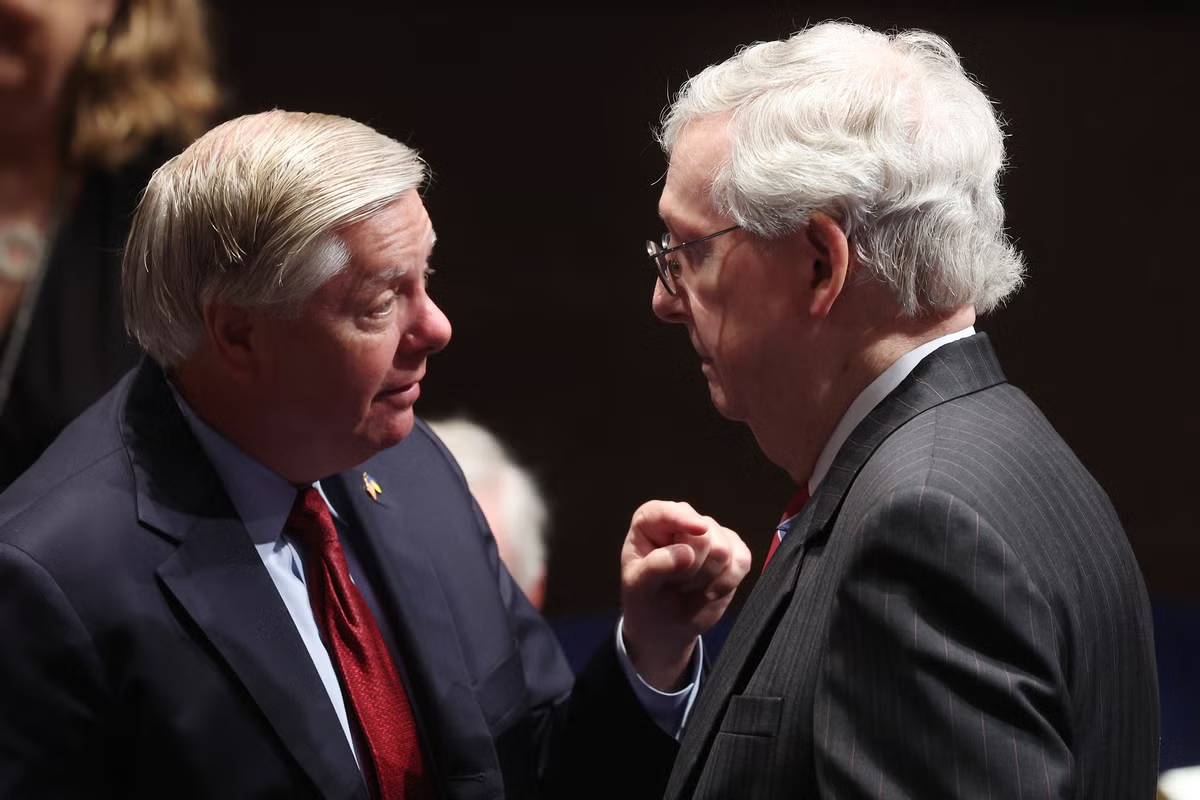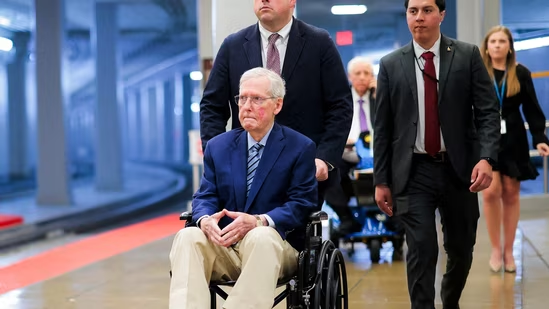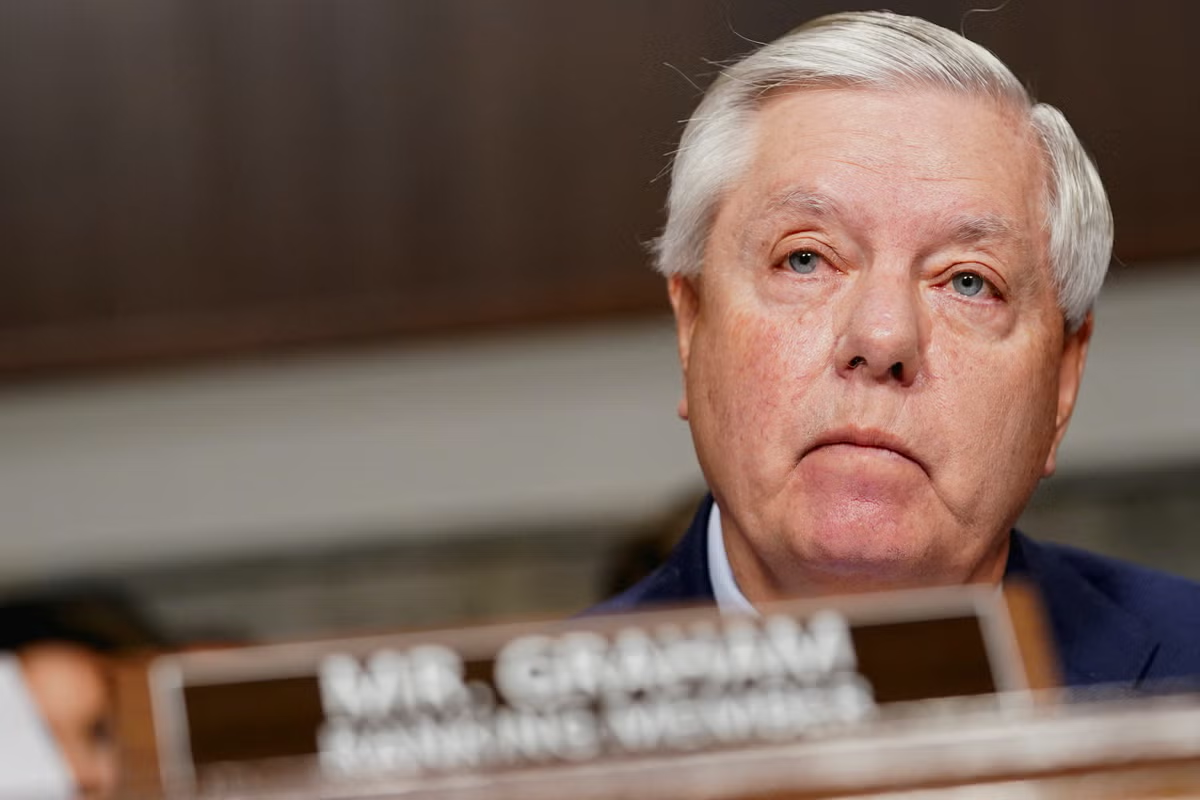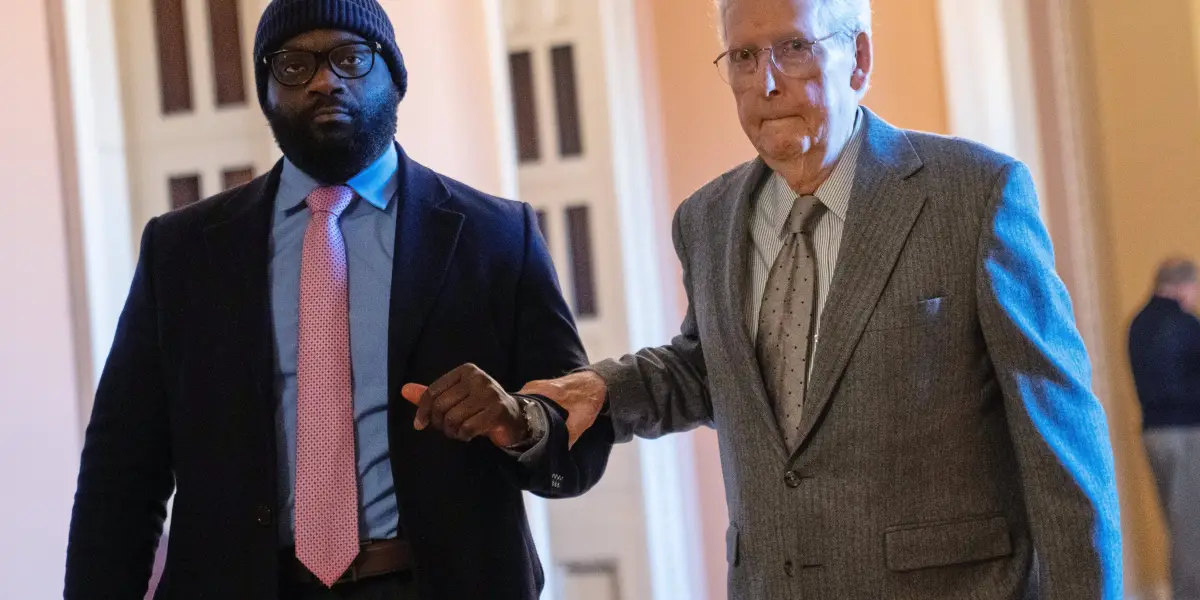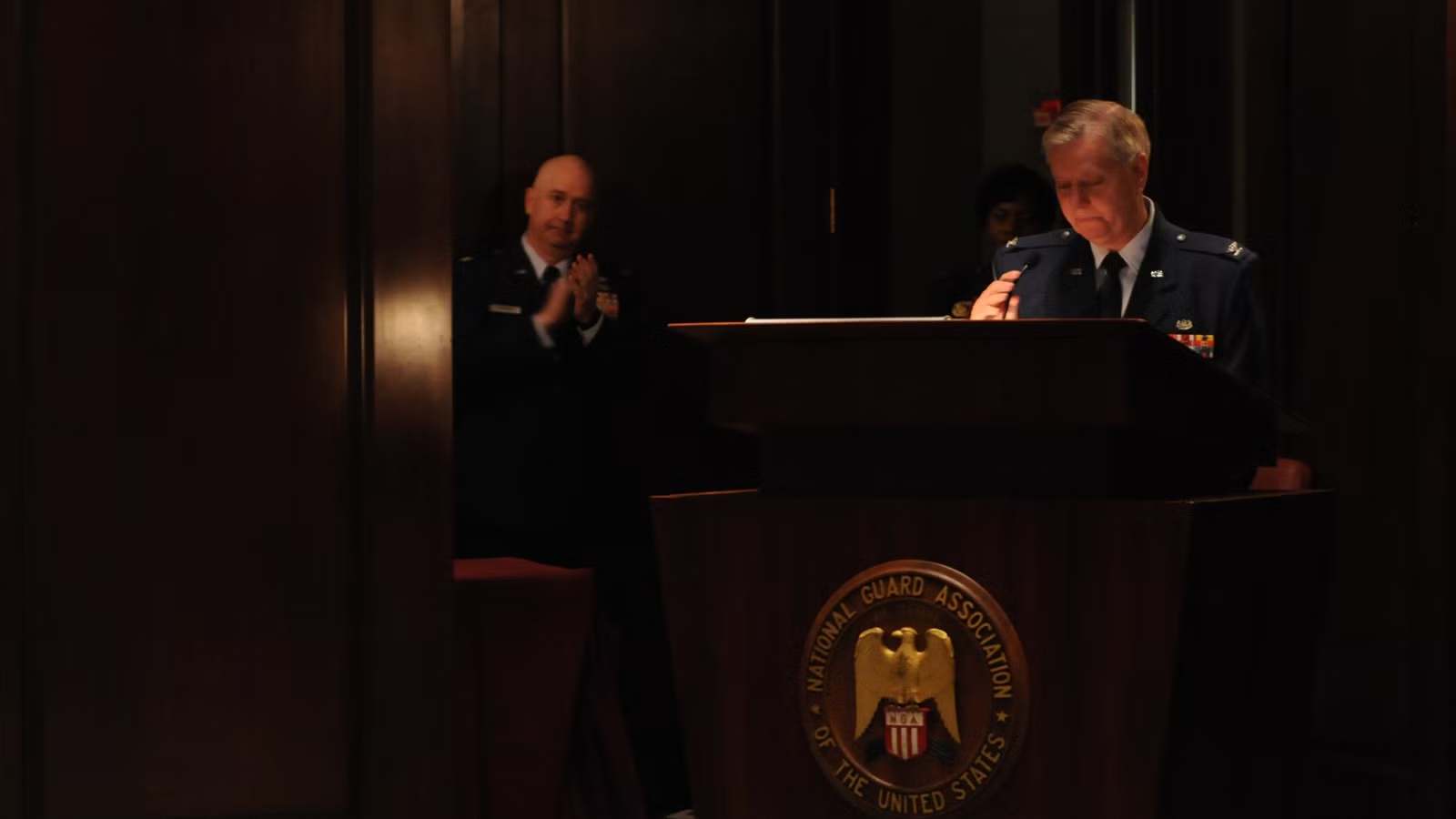
Twice in four weeks, Americans learned about the medical emergency of a sitting U.S. senator the same way: not from the U.S. Senate but from a police scanner. On June 14, responders performed CPR on a man in cardiac arrest at an address associated with Sen. Mitch McConnell (R-Ky.), according to scanner audio obtained by NBC News. His office confirmed a hospitalization but said little else for nearly a month. On Saturday night around 8:30, responders were dispatched to a Capitol Hill home owned by Sen. Lindsey Graham (R-S.C.) for a man suffering from chest pain, according to scanner audio obtained by The Washington Post. Graham died that night. He was 71 years old. His office initially said only that he died following a “brief and sudden illness.” Preliminary findings released Sunday by the District of Columbia medical examiner identified the cause as an aortic rupture associated with arteriosclerotic cardiovascular disease. A final death certificate remains pending toxicology and microscopic testing. Graham spent most of his adult life inside an institution that would not have treated medical fitness as a purely private concern.
The Standard
Graham served 33 years in the active-duty Air Force, Air National Guard and Air Force Reserve, retiring in 2015 as a colonel in the Judge Advocate General’s Corps. For much of that career, his health was subject to standards ordinary civilian officials never face. DOD Instruction 6130.03 establishes medical standards for appointment, enlistment, and induction. Separate retention, deployability and disability systems determine whether a condition prevents someone already in uniform from continuing to serve. Together, those systems operate on the same premise that when a person’s body affects the mission, the institution is entitled to ask whether that body can still perform it. A service member who may no longer meet retention standards can be referred to the Disability Evaluation System, where medical and administrative boards determine whether the member remains fit for service. The scrutiny becomes more meticulous in special-duty programs.