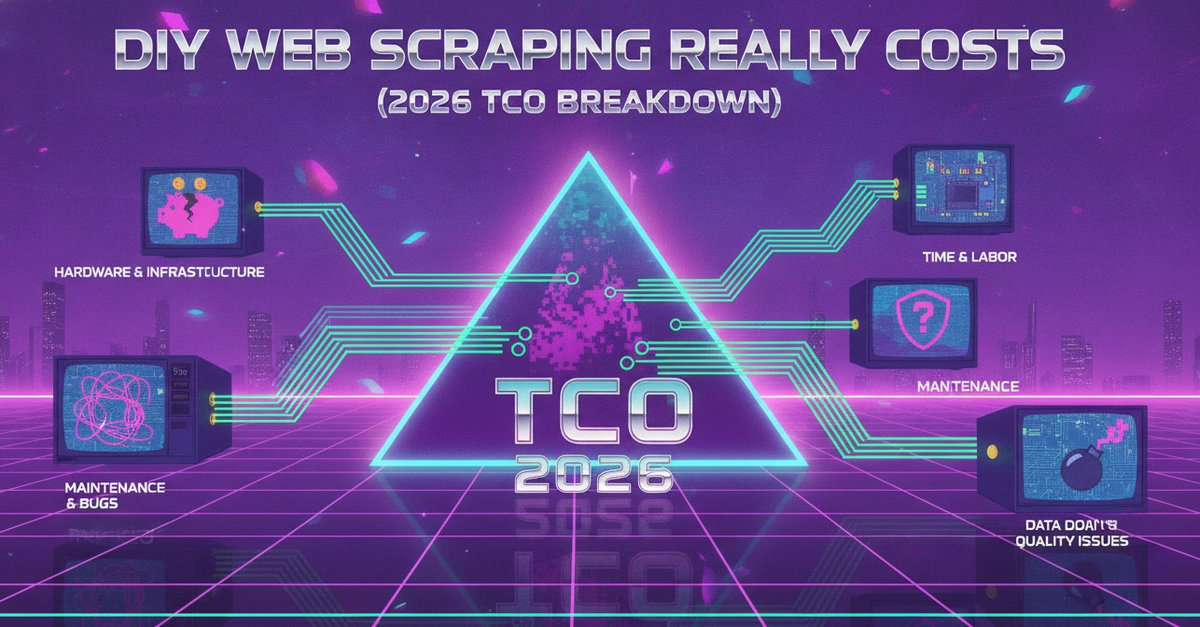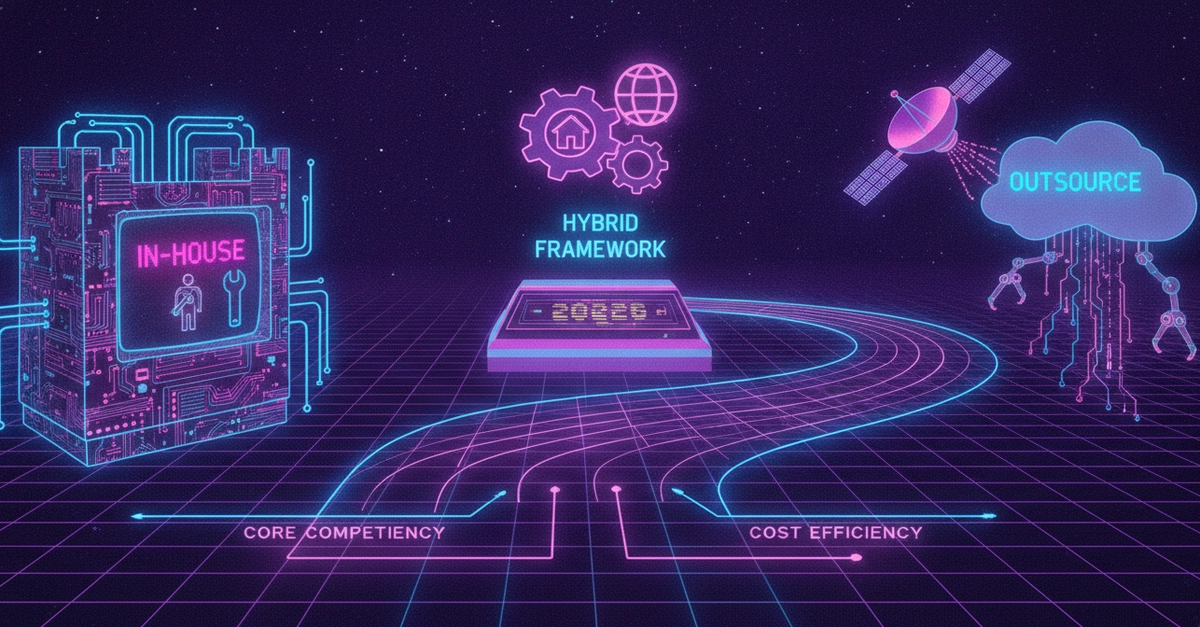
Most articles about the build-vs-buy decision for web scraping assume you are making it from scratch. You are not. You already built something. Maybe it was one scraper that became five, or a weekend project that is now owned by the data engineering team, or a stack you inherited from someone who left. The question you are actually asking is not "should we build this" but "should we keep maintaining what we have."
PromptCloud's 2026 Web Scraping Decision Guide, drawing on research from Imperva, IDC, EY, and Grand View Research, gives a six-indicator framework for answering that question. The guide was built for strategic decision-makers, but the indicators themselves are engineering signals. Here is how to read each one against your own stack.
Before the Audit: Measuring Your Actual Maintenance Load
The 2026 guide puts maintenance absorption at 20 to 40% of data-engineering capacity for programs past a few dozen sources. Before you run the six-indicator audit, spend ten minutes getting your own number.
Pull your last three sprints. Count the tickets that were: debugging a broken extraction, adapting to a source site layout change, handling a proxy failure, rotating credentials, updating a selector that stopped working, or investigating a failed run. Total the story points or hours. Divide by total sprint capacity.