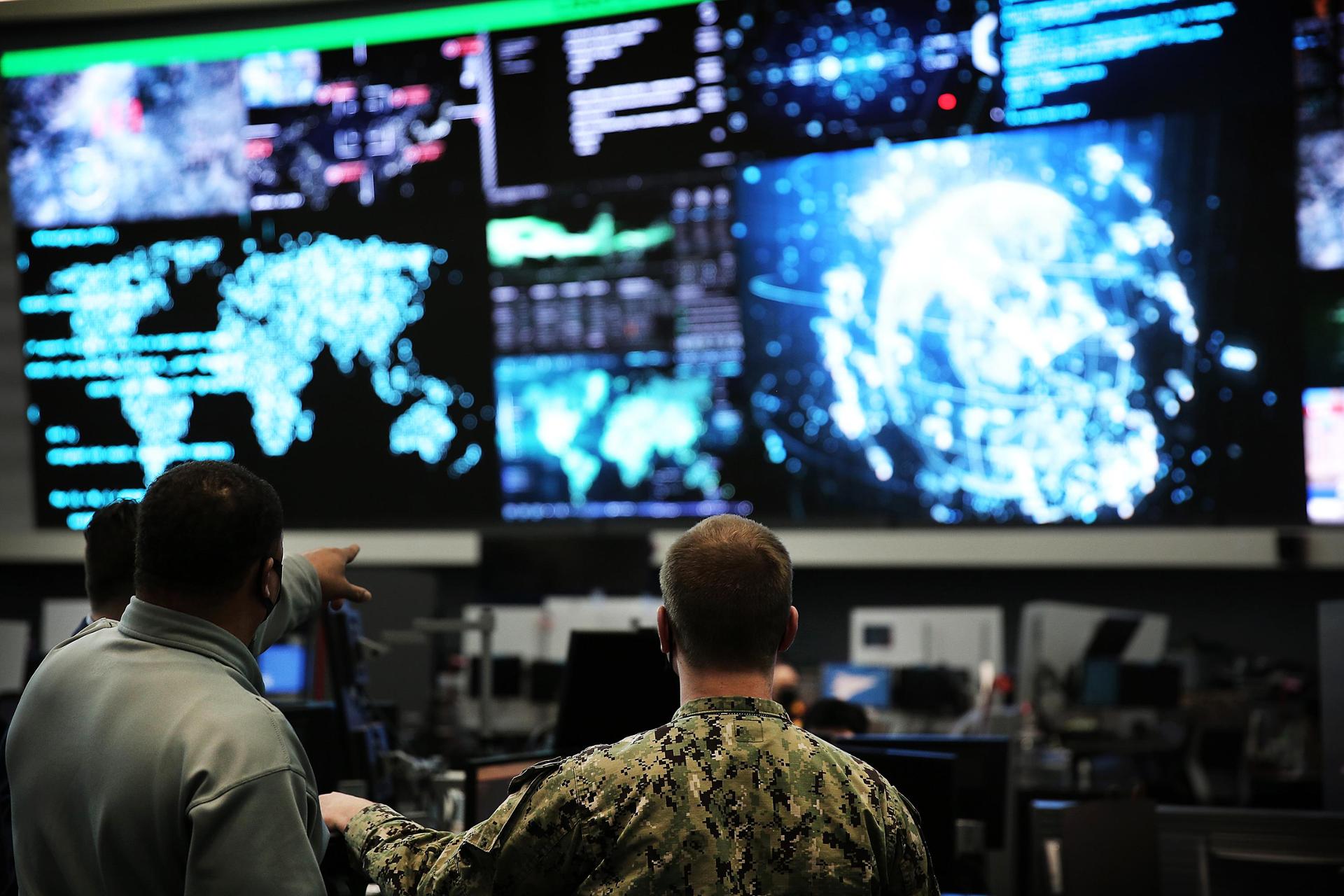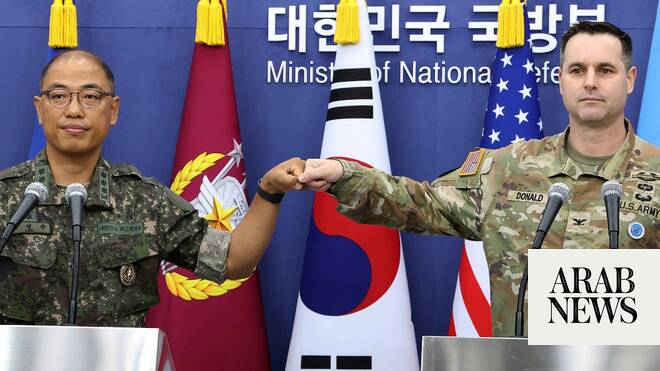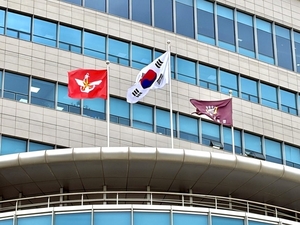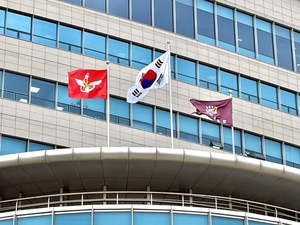
Defense Ministry headquarters in Seoul (The Korea Herald DB) South Korea and the United States held their first joint exercise for countering foreign disinformation and coordinating strategic communications during a crisis last week.According to military officials on Monday, South Korea’s Joint Chiefs of Staff, US Forces Korea, the South Korea-US Combined Forces Command and the United Nations Command held the exercise at the JCS headquarters in Yongsan-gu, Seoul, Thursday.Led by the JCS, the exercise also brought together South Korean officials from the ministries of defense, foreign affairs, culture and science, as well as the National Intelligence Service, the police and the country’s broadcasting regulator.No troops were deployed, as the event was conducted as a tabletop exercise in which participants worked through simulated scenarios.The participating agencies reviewed their roles in communicating with the public during a national security crisis and discussed how to better coordinate their responses.Military and government officials have previously held coordination meetings on wartime disinformation, but this was the first tabletop exercise involving South Korean and US military commands alongside a broad range of government agencies, according to the officials.USFK described it as the first comprehensive combined, interagency and multinational exercise specifically focused on synchronizing operations in the information environment.Citing the growing importance of the information environment in modern conflict, USFK said participants worked through complex threat scenarios and sought to improve coordination between military commands and civilian government agencies.The exercise focused on three areas: countering foreign disinformation, synchronizing responses to threats across cyberspace, physical space and the broadcast spectrum, and aligning strategic communications.Participants discussed how to quickly identify and counter foreign disinformation campaigns, challenge hostile narratives through public messaging and clearly communicate the allies’ intentions.The exercise comes as cognitive warfare has become an increasingly prominent feature of modern conflict, with state and nonstate actors using social media and other nonphysical means to influence public opinion and disrupt an adversary’s decision-making.Cognitive warfare refers broadly to efforts to shape how political leaders, military personnel and the public perceive events, with the aim of causing confusion, division or strategic miscalculation.“Modern warfare has evolved beyond physically destroying the enemy to reshaping how the other side sees the world and encouraging internal division,” said Ryu Dong-won, a former professor at Korea National Defense University.“The outcome of a war increasingly depends not on who has the stronger military, but on who can offer the more powerful narrative,” he added.Military officials are also considering incorporating lessons from the tabletop exercise into more detailed scenarios during Ulchi Freedom Shield, the allies’ annual combined exercise scheduled for next month, according to sources.
Allies hold 1st tabletop exercise against wartime disinformation
South Korea and the United States held their first joint exercise for countering foreign disinformation and coordinating strategic communications during a crisi
427 words~2 min read